Maddy summaryHRES 1034 is a non-binding resolution supporting Mathematics and Statistics Awareness Month, observed each April. It recognizes math and statistics as foundational to STEM fields, innovation in areas like medicine and cybersecurity, and daily life applications. The resolution urges the House to celebrate these disciplines, highlight their importance to U.S. economic prosperity, and acknowledge ongoing efforts to increase diversity in math and statistics education and careers. It does not create new laws or programs but formally endorses the annual observance.
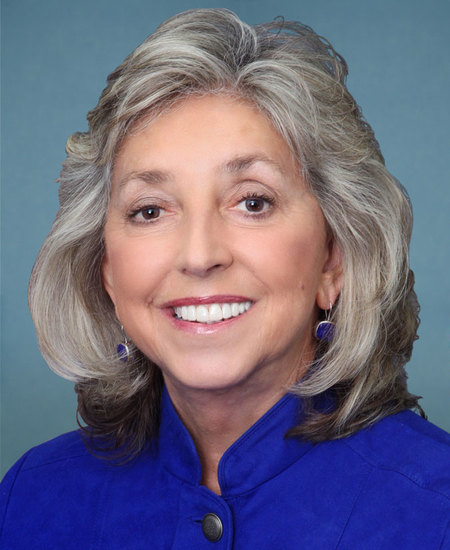
Rep. Dina Titus
Sponsored bills
Federal Contracting for Peace and Security Act This bill requires executive agencies to terminate their contracts with companies conducting business operations in Russia. This requirement ends when Russia takes steps to restore the safety, sovereignty, and condition of Ukraine. The bill shall not apply to the procurement of products or services for (1) the benefit, either directly or through the efforts of regional allies, of Ukraine; or (2) humanitarian purposes to meet basic human needs. The bill provides for a waiver where in the national interest of the United States.
School and Daycare Protection Act This bill establishes in the Department of Homeland Security (DHS) a council to ensure the coordination of activities, plans, and policies to enhance the security of early childhood education programs and schools against acts of terrorism and other homeland security threats. DHS must participate in federal efforts to maintain and publicize a clearinghouse of resources available to early childhood education programs, elementary schools, and secondary schools to enhance security against such threats. Further, DHS must report by January 30, 2023, and annually thereafter, to the congressional homeland security committees on (1) DHS activities, plans, and policies aimed at enhancing security; (2) the council's activities and contributions of DHS to federal efforts to maintain and publicize the clearinghouse; and (3) any metrics regarding the efficacy of such activities and contributions, and any engagement with stakeholders outside of the federal government.
Resilient Assistance for Mitigation for Environmentally Resilient Infrastructure and Construction by Americans Act or the Resilient AMERICA Act This bill addresses disaster resilience issues and expands coverage for hazard mitigation. The bill increases from 6% to 15% the estimated aggregate amount of grants that may be set aside for national public infrastructure pre-disaster hazard mitigation assistance; makes private nonprofit facilities eligible for technical and financial assistance for implementing cost-effective pre-disaster hazard mitigation measures; provides funding for water resources development projects; and expands the use of hazard mitigation assistance to cover certain activities pertaining to wildfires, tsunamis, and ice storms. Additionally, the Federal Emergency Management Agency (FEMA) must set aside 10% of funds made available for any given year to further the implementation and enforcement of the latest published editions of relevant consensus-based building codes. FEMA must require as a condition of providing nonemergency financial assistance for construction projects costing at least $1 million that the steel and iron used in the projects be produced in the United States, with certain exceptions. FEMA must carry out a residential resilience pilot program to provide grants for residential resilience retrofits (e.g., elevation of homes, floodproofing measures, wildfire retrofit and mitigation measures, and wind retrofits). The Government Accountability Office must study the challenges to states and territories in obtaining funds under public assistance alternative procedures.
Postal Service Reform Act of 202 2 This bill addresses the finances and operations of the U.S. Postal Service (USPS). The bill requires the Office of Personnel Management (OPM) to establish the Postal Service Health Benefits Program within the Federal Employees Health Benefits Program under which OPM may contract with carriers to offer health benefits plans for USPS employees and retirees. The bill provides for coordinated enrollment of retirees under this program and Medicare. The bill repeals the requirement that the USPS annually prepay future retirement health benefits. Additionally, the USPS may establish a program to enter into agreements with an agency of any state government, local government, or tribal government, and with other government agencies, to provide certain nonpostal products and services that reasonably contribute to the costs of the USPS and meet other specified criteria. The USPS must develop and maintain a publicly available dashboard to track service performance and must report regularly on its operations and financial condition. The Postal Regulatory Commission must annually submit to the USPS a budget of its expenses. It must also conduct a study to identify the causes and effects of postal inefficiencies relating to flats (e.g., large envelopes). The USPS Office of Inspector General shall perform oversight of the Postal Regulatory Commission.
This resolution reaffirms unequivocal support for the North Atlantic Treaty Organization (NATO) as an alliance founded on democratic principles. The resolution urges NATO to continue to provide unwavering support to the people of Ukraine as they fight for their sovereignty, territorial integrity, and a democratic future. The resolution calls on the President to use the voice and vote of the United States to adopt a new Strategic Concept for NATO that is clear about its support for shared democratic values and committed to enhancing NATO's capacity to strengthen democratic institutions within NATO member, partner, and aspirant countries. Finally, the resolution calls on the President to use the voice and vote of the United States to establish a Center for Democratic Resilience within NATO headquarters.
This bill prohibits using federal funds to support or facilitate (1) Russia's participation in a Group of Seven (G-7) proceeding, or (2) a reconstituted Group of Eight (G-8) that includes Russia. (The G-7 is an informal group consisting of seven of the world's largest advanced economies. In 2014, the G-8 became the G-7 when Russia 's membership was suspended following Russia's annexation of the Crimea region of Ukraine.)
Ensuring Lasting Smiles Act This bill requires private health insurance plans to cover diagnosis and treatment of congenital anomalies and birth defects, such as reconstructive services and items. Coverage must include services and items that functionally improve, repair, or restore any body part that is medically necessary for normal bodily functions or appearance, as determined by the treating physician. Coverage limits and cost-sharing requirements for such services and items may not be more restrictive than those applicable to all medical and surgical benefits under the plan.
Supply Chain Disruptions Relief Act This bill modifies the treatment of liquidations of new motor vehicle inventory as qualified LIFO (last in first out accounting method) inventory. It allows new motor vehicle dealers to elect to wait until the end of 2025 to replace their inventory for purposes of determining income attributable to the sale of such inventory during 2020 and 2021.
Marijuana Opportunity Reinvestment and Expungement Act or the MORE Act This bill decriminalizes marijuana. Specifically, it removes marijuana from the list of scheduled substances under the Controlled Substances Act and eliminates criminal penalties for an individual who manufactures, distributes, or possesses marijuana. The bill also makes other changes, including the following: replaces statutory references to marijuana and marihuana with cannabis , requires the Bureau of Labor Statistics to regularly publish demographic data on cannabis business owners and employees, establishes a trust fund to support various programs and services for individuals and businesses in communities impacted by the war on drugs, imposes an excise tax on cannabis products produced in or imported into the United States and an occupational tax on cannabis production facilities and export warehouses, makes Small Business Administration loans and services available to entities that are cannabis-related legitimate businesses or service providers, prohibits the denial of federal public benefits to a person on the basis of certain cannabis-related conduct or convictions, prohibits the denial of benefits and protections under immigration laws on the basis of a cannabis-related event (e.g., conduct or a conviction), establishes a process to expunge convictions and conduct sentencing review hearings related to federal cannabis offenses, directs the Government Accountability Office to study the societal impact of state legalization of recreational cannabis, directs the National Highway Traffic Safety Administration to study methods for determining whether a driver is impaired by marijuana, directs the National Institute for Occupational Safety and Health to study the impact of state legalization of recreational cannabis on the workplace, and directs the Department of Education to study the impact of state legalization of recreational cannabis on schools and school-aged children.