

Maddy summaryHR 2402, the Alan Reinstein Ban Asbestos Now Act of 2023, bans the manufacture, processing, use, and sale of commercial asbestos (including specific types like chrysotile and crocidolite) in the U.S. starting one year after enactment, with key exceptions. It allows the chlor-alkali industry to continue using asbestos for diaphragm manufacturing until two years after enactment and permits limited national security exemptions for up to three years with public disclosure. The bill also requires the EPA and HHS to create public education resources about asbestos health risks and mitigation options. This directly affects manufacturers, distributors, and users of commercial asbestos products, excluding asbestos present only as an impurity.
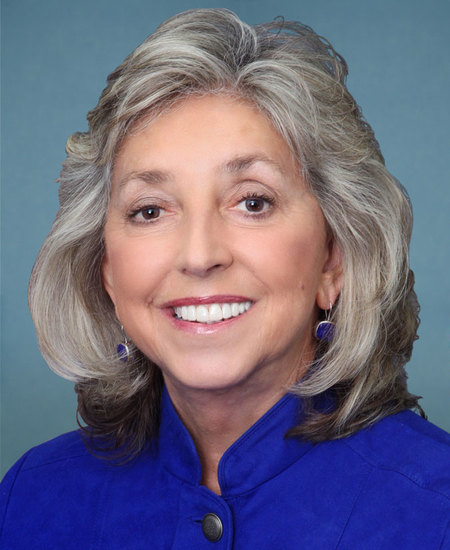
Rep. Dina Titus
Sponsored bills
Maddy summaryThis bill creates a 2-year pilot program to establish or improve state-based nursing workforce centers. It provides $1.5 million annually (2024-2025) for up to six state or regional centers, requiring non-Federal matching funds (1:4 ratio). These centers will analyze nursing workforce data - including education, retention, and shortages - and develop strategies to recruit, retain, and diversify nurses, especially in rural and underserved areas. The program mandates annual reports to Congress on outcomes and best practices for addressing nursing shortages. It directly affects states, nursing schools, healthcare employers, and nursing workforce centers through federal grants and data-driven planning.
Maddy summaryThe CALM Modernization Act of 2023 updates the law requiring consistent audio levels between TV commercials and programming to include video streaming services. It directs the Federal Communications Commission (FCC) to create a new rule within one year that prevents streaming services from making commercial audio louder than the surrounding video content, similar to existing TV requirements. The rule would take effect 180 days after publication but allows up to one year of delay for streaming services facing significant financial hardship. The bill also mandates a government report to evaluate the current law's effectiveness in moderating commercial loudness.
Resident Physician Shortage Reduction Act of 2023 This bill increases the number of residency positions eligible for graduate medical education payments under Medicare for qualifying hospitals, including hospitals in rural areas and health professional shortage areas. Current law provides for an increase of up to 200 positions per fiscal year beginning in FY2023, with a total increase of 1,000 positions; each hospital may receive up to 25 additional positions. Current law also provides for an additional increase of up to 200 positions for FY2026, with at least 100 of these positions for psychiatry or related specialties; each hospital may receive up to 10 additional positions. The bill provides for an additional increase of 2,000 positions per fiscal year from FY2025-FY2031; during this period, each hospital may receive up to 75 additional positions in total under the bill and current law. Additionally, one-third of the positions that are made available under the bill must be allocated to hospitals that are already operating above applicable resident limits. The bill also requires the Government Accountability Office to report on strategies to increase the diversity of the health professional workforce, including with respect to representation from rural, low-income, and minority communities.
Maddy summaryThe Women's Health Protection Act of 2023 would protect access to abortion services by prohibiting states from imposing restrictions that are more burdensome than those for comparable medical procedures. The bill would ensure people can obtain abortion services before fetal viability without unnecessary limitations like mandatory waiting periods or biased counseling, and after viability when necessary to protect the patient's life or health. It would preempt state laws that conflict with these protections and allow for civil enforcement actions to challenge restrictive state laws. This bill directly affects people seeking abortion services (including transgender and nonbinary individuals who can become pregnant), health care providers, and states that have implemented abortion restrictions.
Maddy summaryThis resolution (HRES 279, introduced April 6, 2023) designates April 10 as "Dolores Huerta Day" to symbolically honor Dolores Huerta's civil rights work. It recognizes her role co-founding the farm workers movement, advocating for labor rights (including the California Agricultural Labor Relations Act), promoting women's equality, and originating the "Sí Se Puede" slogan. The resolution has no binding policy effect - it is purely commemorative, celebrating her legacy without creating new laws or affecting any group directly. It was introduced by multiple House members as a formal expression of support for her contributions to social justice.
Maddy summaryHR 2501, titled "Sunset for the 2001 Authorization for Use of Military Force Act," would end the 2001 law (Public Law 107-40) that authorized military force following the September 11 attacks. The bill directly affects military operations currently justified under that 2001 authorization, requiring future actions to seek new congressional approval. It mandates the repeal of the 2001 AUMF 240 days after the bill becomes law, ending its legal authority. The bill states Congress finds the 2001 authorization has been used too broadly, conflicting with constitutional war powers.
Maddy summaryHR 1465, "Violet’s Law," requires federal research facilities to establish standards for placing eligible animals (dogs, cats, primates, guinea pigs, hamsters, rabbits) no longer needed for research with animal rescue organizations, sanctuaries, shelters, or individuals. Federal departments and agencies operating such facilities must create these placement standards within one year of the law's enactment. The law mandates that animals must be vet-certified as healthy (free of infectious disease or physical issues) before placement and prohibits facilities from using animals for commercial trade, breeding, or public exhibitions. This policy directly affects federal research facilities and aims to provide permanent homes for research animals through defined, safe pathways.
Maddy summaryThe Free to Grow Act of 2023 repeals a specific felony provision related to hemp production under federal law. It removes Section 297B(e)(3)(B) of the Agricultural Marketing Act of 1946, which previously classified certain hemp production violations as felonies. This change directly affects hemp producers by eliminating the risk of felony charges for regulatory non-compliance in hemp cultivation. The bill simplifies legal consequences for growers by aligning penalties with the current federal regulatory framework for hemp.
Maddy summaryHR 1274, the Lake Tahoe Restoration Reauthorization Act, extends the authorization period for the existing Lake Tahoe Restoration program through 2034. It amends two key sections of the original 2000 law: changing the funding timeframe to end on September 30, 2034, and adjusting the cooperative authorities period to begin with this bill's enactment. This procedural bill directly affects the U.S. Army Corps of Engineers and the Lake Tahoe Restoration Program by ensuring continued funding and operational authority for the project.