

Maddy summaryHR 2414 extends CHAMPVA health coverage for children of veterans from age 21 to 26, regardless of marital status. This change directly affects children of veterans enrolled in the CHAMPVA program who would otherwise lose coverage upon turning 21. The bill amends Section 1781(c) of Title 38, U.S. Code, to update eligibility rules for medical care provided after the law's enactment. It does not impact existing coverage for children under a specific subsection (section 101(4)(A)(ii)).
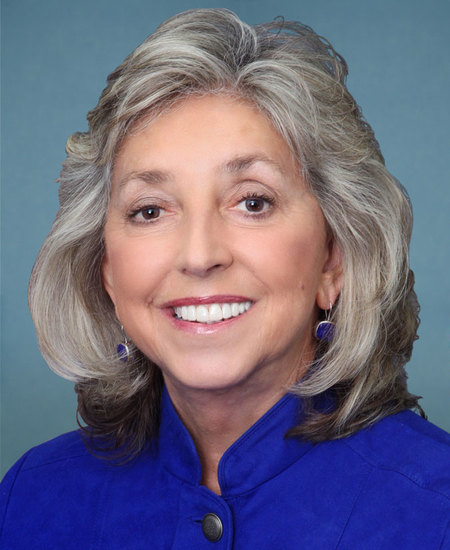
Rep. Dina Titus
Sponsored bills
Maddy summaryThe Veterans Equal Access Act (HR 2431) allows Department of Veterans Affairs (VA) health care providers to give recommendations and opinions to veterans about participating in state-legal marijuana programs. It directly affects veterans living in states, the District of Columbia, Puerto Rico, U.S. territories, or federally recognized tribes where marijuana is permitted under state law. The bill requires the VA Secretary to authorize VA physicians and staff to provide these recommendations, complete related forms, and override any conflicting federal restrictions that previously prohibited such advice. This change enables veterans to receive guidance from VA providers regarding state marijuana programs without fear of VA disciplinary action.
Maddy summaryThe Panama Canal Zone Veterans Act of 2023 creates a presumption that veterans who served in the Panama Canal Zone between 1958 and 1999 (or until the last military member left) and developed specific illnesses are automatically eligible for VA benefits without needing to prove a direct link between their service and the condition. It lists 16 illnesses, including prostate cancer, lung cancer, diabetes, Parkinson's disease, and several other cancers, as qualifying for this presumption due to presumed exposure to herbicides like Agent Orange during service. The VA will use regulations based on medical evidence to determine which illnesses qualify under this provision. This change directly affects veterans who served in the Panama Canal Zone during the covered period and later developed one of the listed conditions.
Avi Kwa Ame National Monument Establishment Act of 2023 This bill establishes the Avi Kwa Ame National Monument in Nevada, consisting of approximately 445,000 acres of federal land administered by the Bureau of Land Management (BLM). It is the purpose of the monument to conserve, protect, and enhance for the benefit and enjoyment of present and future generations the cultural, ecological, scenic, wildlife, recreational, dark sky, historical, natural, educational, and scientific resources of the monument. The Department of the Interior shall manage the monument as a component of the National Landscape Conservation System. Interior shall ensure access to the monument by members of Indian tribes for traditional cultural purposes. Interior shall develop a comprehensive plan for the long-term management of the monument. The bill withdraws federal land located in the monument from entry, appropriation, and disposal under the public land laws; location, entry, and patenting under the mining laws; and operation of the mineral leasing, mineral materials, and geothermal leasing laws. Any land or interest in land within the boundary of the monument that is acquired by the United States shall become part of the monument and be withdrawn as specified above. Interior shall establish the Avi Kwa Ame National Monument Advisory Council to advise Interior on the preparation and implementation of the management plan, including budgetary matters related to the monument. Interior shall transfer administrative jurisdiction of any Bureau of Reclamation land within the monument to the BLM.
Freedom to Decide Act This concurrent resolution expresses the sense of Congress to (1) affirm that federal law authorizes the distribution of medication abortion, including by mail, as stated in a 2022 Department of Justice memorandum; and (2) condemn restrictions on the access and coverage of reproductive health care, including medication abortion.
Maddy summaryHR 2584, the SAVE Act, creates a new federal criminal offense for assaulting or intimidating hospital employees while they're performing their duties, punishable by up to 10 years in prison, with enhanced penalties for using weapons, causing injury, or during public emergencies. The bill authorizes $25 million annually in federal grants to hospitals for violence prevention programs, including staff training, security technologies like panic buttons and video surveillance, and coordination with law enforcement. It defines "hospital" broadly to include various medical facilities such as long-term care hospitals, rehabilitation facilities, and critical access hospitals. The legislation directly affects hospital workers and medical facilities by establishing federal criminal penalties for violence against employees and providing funding to improve workplace safety. The law aims to address the rising problem of workplace violence against healthcare workers, which the bill states has increased since 2011.
Maddy summaryThe Family Violence Prevention and Services Improvement Act of 2023 amends the Family Violence Prevention and Services Act to improve services for victims of domestic violence, dating violence, and family violence. The bill authorizes $270 million annually for fiscal years 2024-2028, with specific allocations including 12.5% for Tribal grantees, 2.5% for culturally specific services, and funds for national hotlines and resource centers. It establishes a national domestic violence hotline, a National Indian Domestic Violence Hotline, and resource centers for Alaska Native and Native Hawaiian populations, requiring all services to be trauma-informed, culturally relevant, and accessible to underserved populations including racial and ethnic minorities, people with disabilities, and Tribal communities. The bill also mandates a study on financial stability support for survivors of domestic violence.
Maddy summaryHR 2630, the Safe Step Act, requires group health plans and health insurance issuers to establish a clear, transparent process for patients or their doctors to request exceptions to medication step therapy protocols. These protocols typically force patients to try cheaper drugs first before covering more expensive alternatives. The bill mandates that plans must approve exceptions when prior treatments failed, delay would cause serious harm, a treatment is unsafe, or a patient is stable on a previously approved drug, with strict 72-hour (or 24-hour in emergencies) decision timelines. It also requires plans to publish the exception process online and limit documentation requests to only necessary medical information. This law directly affects health insurers, employers offering health plans, and patients using step therapy for prescription drugs.
Maddy summaryHJRES 54 proposes a constitutional amendment stating that only natural persons (human beings) have rights protected by the U.S. Constitution, explicitly denying constitutional rights to corporations, limited liability companies, and other artificial entities. It would require governments to regulate or restrict corporate political contributions and spending to ensure equal access to elections, mandate public disclosure of all political spending, and clarify that campaign finance rules do not violate the First Amendment. This amendment directly affects corporations and other artificial entities by removing their constitutional standing in legal challenges and subjecting their political activities to stricter government oversight. If passed, it would fundamentally change how corporations interact with election laws and constitutional protections, though it preserves press freedom under Section 3. The bill is a proposed amendment requiring ratification by 3/4 of state legislatures to become part of the Constitution.
Maddy summaryThe School Meals Expansion Act (HR 2567) amends the National School Lunch Act to make it easier for schools to provide free meals to all students. It lowers the income threshold to 25% (from a higher previous rate) and increases the eligibility multiplier to 2.5 for school years starting July 1, 2023. This means school districts with 25% or more students from low-income families can now qualify for full federal funding to offer free meals to all students without requiring individual applications. The bill directly affects local school districts that choose to participate in the community eligibility program under the National School Lunch Act.