

Maddy summaryHR 3009, the Military Suicide Prevention in the 21st Century Act, requires the Secretary of Defense to launch a two-year pilot program pre-loading the Virtual Hope Box app (a military behavioral health tool) and pre-programming the National Suicide Hotline and Veterans Crisis Line numbers into smartphones and other smart devices issued to service members. This directly affects active-duty military personnel who receive such devices from the Department of Defense. The pilot program mandates training on these resources during existing suicide awareness education and requires a final report with expansion recommendations. The bill focuses on making critical mental health tools immediately accessible on service-issued devices during crises.
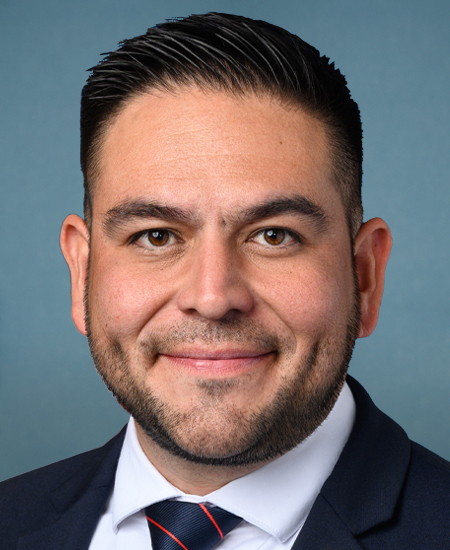
Rep. Gabe Vasquez
Sponsored bills
Maddy summaryHR 3011 establishes a 15-member task force within the Department of Defense to review and assess mental health services for active-duty military members, reservists, and their families. The task force, requiring half DOD personnel (including service surgeons and family members) and half external experts (like VA and SAMHSA staff), must submit a report within 12 months detailing improvements needed in areas like access to care, telehealth, reducing stigma, and transitioning care to veterans' services. The report will include specific recommendations for legislative or administrative changes, followed by annual progress reports to Congress over five years on implementing those recommendations. This bill creates a review mechanism but does not directly change existing mental health programs or funding.
Maddy summaryThis bill protects living organ donors from insurance discrimination by prohibiting life, disability, and long-term care insurers from denying coverage, raising premiums, or altering policy terms solely because someone donated an organ while alive. It also updates the Family and Medical Leave Act to include recovery from organ donation surgery as a qualifying health condition, allowing donors to take protected leave for this purpose. Additionally, the bill requires the Health and Human Services Secretary to update public educational materials about living donation benefits, risks, and insurance protections within six months of enactment. These changes directly affect living organ donors, insurers, employers, and healthcare systems by ensuring fair access to insurance and workplace leave.
Economic Opportunity for Border Communities Act This bill requires the Department of Commerce to develop a national strategy for supporting economic opportunity in border communities. The goals of the strategy include increasing the number of jobs in border communities, strengthening U.S. competitiveness in manufacturing, reducing the costs of exports and imports, and increasing opportunities for workforce development. Border communities are municipalities located not more than 15 miles from a land port of entry.
Expanding Regional Airports Act This bill directs the Department of Transportation (DOT) to establish a grant program for general aviation and nonprimary commercial service airports to improve passenger and flight capacity. Grants may be used for (1) activities that improve passenger and flight capacity at the airport, including the expansion of passenger and property screening facilities, runway lengthening, hangar construction, and improving passenger facilities; and (2) costs incurred to comply with certain operational and security requirements. DOT must provide 3 to 10 grants per fiscal year to eligible airports (i.e., general aviation or nonprimary commercial service airports that serve a community with a population of at least 75,000).
Performing Artist Tax Parity Act of 2023 This bill modifies the above-the-line tax deduction for the expenses of performing artists (including commissions paid to managers or agents) to provide for a phaseout of such deduction for taxpayers whose adjusted gross income exceeds $100,000 ($200,000 for joint return filers). The $100,000 phaseout threshold is adjusted for inflation annually for taxable years beginning after 2023.
Maddy summaryHR 2915, the Farm Workforce Support Act of 2023, requires the Comptroller General to study the H-2A visa program and submit a report to specific congressional committees within two years. The report must examine how the program affects hiring (including impacts on domestic and guest workers), challenges in providing housing for guest workers, wage rate effects on employer recruitment, economic impacts of lost wages for guest worker families, and compliance with working condition guarantees. This bill does not create new policy but mandates a detailed analysis of the existing H-2A program's operations and impacts. The study will directly inform Congress on the program's current functioning and potential issues.
Maddy summaryHR 1788, the "Goldie’s Act," strengthens USDA enforcement of the Animal Welfare Act. It requires annual inspections of all regulated animal businesses (like dealers, research facilities, and exhibitors) and mandates immediate, humane confiscation of animals suffering due to violations, while prohibiting owners from destroying animals during this process. The bill increases civil penalties to $10,000 per violation, requires hearing panels including veterinarians, and mandates that penalties consider business size and violation severity. It also requires USDA to share violation records with local animal control within 24 hours.
Maddy summaryHR 1756, the Dairy Pricing Opportunity Act of 2023, requires the U.S. Department of Agriculture to hold national hearings within 180 days of enactment to review the Federal milk marketing system, specifically focusing on the formula used to set the Class I skim milk price (the price for milk used in fluid products like milk and cheese). The bill mandates that the Secretary of Agriculture collect input from dairy producers and the industry on this pricing formula and other related matters during these hearings. It also amends federal law to require dairy processors to report detailed cost and yield information for all products made at their facilities, with the Secretary required to publish reports on this data every two years. This bill directly affects dairy producers, processors, and the regulatory framework governing milk pricing.
Maddy summaryThe Military Family Nutrition Act of 2023 amends the Food and Nutrition Act to exclude a military member's basic housing allowance (BAH) from income calculations when determining eligibility for nutrition assistance programs like SNAP. This change directly affects military families who receive BAH as part of their housing benefit but currently have that allowance counted as income, potentially disqualifying them from food assistance. The key provision adds a specific exclusion for BAH paid to or on behalf of uniformed service members under Title 37, U.S. Code. As a result, military families will have their housing costs subtracted from their income for program eligibility, making it easier for them to qualify for nutrition support.