

Maddy summaryHRES 1594 is a symbolic House resolution supporting the designation of "National Rural Health Day," observed annually on the third Thursday of November. It recognizes rural health care providers and the communities they serve, highlighting challenges like hospital closures, workforce shortages, and access barriers in rural areas. The resolution expresses the House's commitment to improving rural health care accessibility and affordability but does not create new laws or allocate funding. It is a non-binding gesture aligning with an existing observance since 2011, organized by the National Rural Health Association.
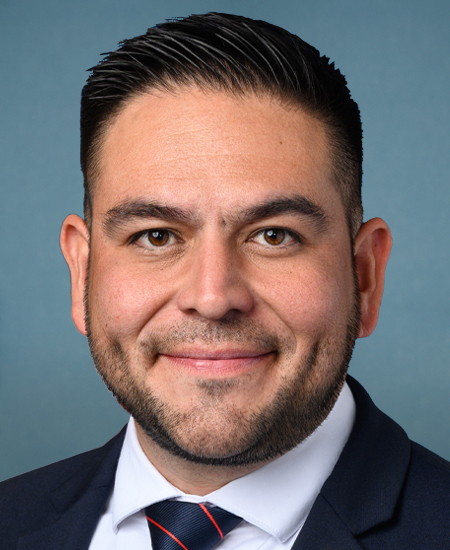
Rep. Gabe Vasquez
Sponsored bills
Maddy summaryThis bill requires the U.S. Department of Agriculture to create a strategy expanding the use of livestock grazing on federal lands to reduce wildfire risks. It specifically directs the Secretary of Agriculture to develop plans for using grazing during droughts or wildfires, implementing targeted grazing, issuing temporary permits for fuel reduction, and incorporating grazing into postfire recovery efforts. The strategy would apply to livestock permit holders on federal lands and aim to leverage grazing as a tool for managing vegetation that fuels wildfires. The bill does not mandate specific actions but sets a requirement for the agency to develop these approaches using existing legal authorities.
Maddy summaryHR 6441, the Ranching Without Red Tape Act of 2023, simplifies minor improvements for ranchers on federal grazing lands managed by the U.S. Forest Service (USFS) and Bureau of Land Management (BLM). It requires the agencies to issue regulations within one year allowing permittees to make small fixes - like repairing fences, wells, or water pipelines - without lengthy approvals. Specifically, ranchers must notify the local manager 30 days in advance; if no response is given within that period, the work can proceed. The bill also mandates that agencies respond to improvement requests within 30 days and expedite approved projects using existing administrative tools. This directly affects ranchers holding grazing permits on USFS and BLM lands.
Maddy summaryThe Parity for Tribal Law Enforcement Act would allow tribal law enforcement officers working under federal contracts or compacts (via the Indian Self-Determination Act) to enforce federal law on tribal lands, provided they complete equivalent training, pass background checks, and receive Bureau of Indian Affairs certification. It designates these officers as federal law enforcement officers for legal protections under specific federal laws, such as the Federal Tort Claims Act. The bill requires the Secretary of the Interior to establish a credentialing process within 24 months and directs the Attorney General to coordinate federal public safety efforts in Indian communities through improved data collection and training. This policy change directly affects tribal officers and communities by expanding their enforcement authority and legal recognition.
Maddy summaryThe VA Employee Fairness Act of 2024 modifies collective bargaining rules for employees of the Veterans Health Administration (VHA). It removes existing subsections (b), (c), and (d) from the law governing VHA employee bargaining and renumbers the remaining provision. This change streamlines the collective bargaining framework but does not alter the Secretary of Veterans Affairs' existing authorities over incentive pay and expedited hiring. The bill directly affects VHA employees by changing how their collective bargaining rights are structured under federal law. The law remains neutral, focusing solely on procedural adjustments to the existing bargaining framework.
Maddy summaryHRES 1538 is a symbolic resolution supporting the designation of the week beginning October 13, 2024, as "National Wildlife Refuge Week." It does not create new laws or funding but formally recognizes the National Wildlife Refuge System’s role in conserving habitats, supporting biodiversity (including 380+ threatened species), and boosting local economies through recreation (e.g., 68 million annual visits generating $3.2 billion). The resolution encourages public events to highlight the system’s benefits, such as protecting waterfowl habitat, engaging diverse communities through urban refuges, and honoring Tribal partnerships. It directly affects the public, local economies, and the U.S. Fish and Wildlife Service’s conservation efforts, though it has no binding policy impact.
Maddy summaryHRES 1517 is a symbolic resolution expressing the U.S. House of Representatives' support for designating October 7-12, 2024, as "National 4-H Week." It does not create new laws or policies but formally recognizes 4-H, the nation’s largest youth development program, which engages nearly 6 million young people through hands-on learning in health, science, and leadership. The resolution highlights 4-H’s role in developing youth leadership via its network of volunteers, land-grant universities, and the Department of Agriculture. It has no direct impact on any specific group or program, as it only serves as a formal acknowledgment of the organization’s work.
Maddy summaryHR 1719, the Honoring Our Fallen Heroes Act of 2023, establishes a presumption that certain cancers diagnosed in public safety officers (like police and firefighters) are work-related if linked to their duties. It defines 22 specific cancers (including lung, mesothelioma, and WTC-related cancers) as "exposure-related," allowing officers or their families to receive benefits without proving direct work connection, provided they were diagnosed within 15 years of leaving active service. The bill also creates a process for adding new cancers to the list based on scientific evidence, requiring the Bureau to review petitions and make decisions within 180 days. This applies to deaths or disabilities occurring on or after January 1, 2023, directly affecting officers who developed covered cancers during service.
Maddy summaryThis bill directs the Secretary of the Interior to transfer ownership of approximately 7,167 acres of Bureau of Land Management land in Sandoval County, New Mexico, into trust for the San Felipe Pueblo tribe. Key provisions include maintaining a 1.8-mile access road easement for the Baca Family inholding, allowing other federally recognized tribes access for cultural and religious practices, and requiring the Pueblo to maintain the road to existing standards. Existing grazing leases on the land will continue unchanged, and the bill explicitly prohibits the use of this land for tribal gaming activities. The transfer affects the San Felipe Pueblo directly by expanding their land holdings under federal trust management.
Maddy summaryThe DISPOSE Act authorizes the U.S. government to partner with Colombia, Mexico, and Peru to safely destroy chemicals used in illegal drug production. It requires the State Department, in coordination with Justice and Defense, to create a detailed implementation plan within 90 days - including timelines, budgets, and measurable goals - and provide annual progress reports to Congress on chemical destruction efforts. The initiative aims to prevent these chemicals from re-entering drug manufacturing, free storage space for future seizures, and reduce environmental harm from hazardous waste.