

Maddy summaryHR 2238, the Ranching Without Red Tape Act of 2025, streamlines minor maintenance projects for ranchers holding grazing permits on U.S. Forest Service (USFS) and Bureau of Land Management (BLM) public lands. It requires the USFS and BLM to respond to rancher requests for minor improvements - such as repairing fences, wells, water pipelines, or stock tanks - within 30 days, or the request is automatically approved. The bill also mandates agencies to expedite such projects using existing administrative tools if approved. This directly affects ranchers with grazing permits on federal lands managed by the USFS or BLM, reducing bureaucratic delays for routine land maintenance.
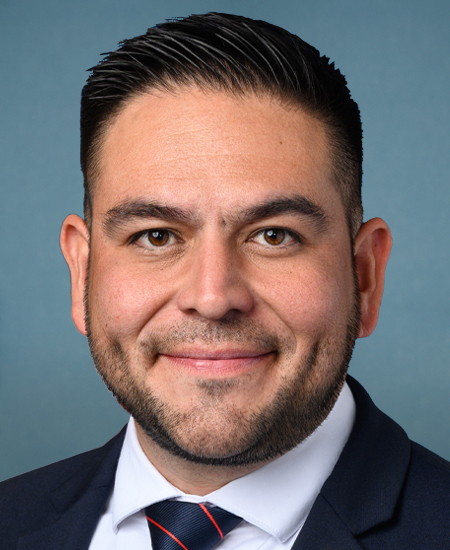
Rep. Gabe Vasquez
Sponsored bills
Maddy summaryHR 2235, the Habitat Connectivity on Working Lands Act of 2025, amends key USDA conservation programs to prioritize wildlife habitat connectivity, particularly for big game species like deer and elk. It adds habitat connectivity and migration corridors as conservation goals in the Environmental Quality Incentives Program (EQIP) and Conservation Stewardship Program (CSP), allowing payments for activities like planning and maintenance on grasslands enrolled in the Conservation Reserve Program (CRP) that are ecologically significant. The bill increases the maximum rental payment limit for CRP grasslands from $50,000 to $125,000 per year and requires the USDA to incorporate nonstructural methods (like virtual fencing) into conservation standards. It also directs research grants to study virtual fencing technology and its impacts on sensitive habitats used by big game species.
Maddy summaryThe Fight Fentanyl Act increases annual funding for fentanyl-related law enforcement efforts to $333 million from 2025 through 2030. It requires the Office of National Drug Control Policy to report annually on how HIDTA (High Intensity Drug Trafficking Area) funds target fentanyl trafficking, including seizure data and threat assessments. The bill also mandates the Attorney General to prioritize fentanyl prosecutions by temporarily reassigning U.S. attorneys to these cases. These provisions directly affect federal, state, local, and tribal law enforcement agencies working on fentanyl interdiction and prosecution.
Maddy summaryThe Advancing Water Reuse Act creates a 30% tax credit for businesses investing in qualifying water recycling systems. It directly affects industrial, manufacturing, data center, and food processing facilities that replace freshwater use with recycled water from municipal sources, as well as projects building municipal water recycling infrastructure to serve these sectors. The credit covers 30% of the cost for eligible equipment, such as new onsite recycling systems or municipal infrastructure upgrades. This policy is available for projects completed by December 31, 2032, with specific rules allowing businesses to claim the credit even if equipment is later transferred to water utilities.
Maddy summaryHR 2921, the Federal Firefighter Cancer Detection and Prevention Act of 2025, requires the Department of Defense (DOD) to provide free, regular cancer screenings during annual health assessments for its firefighters. It mandates specific screenings: biannual mammograms for female firefighters aged 40-49, annual for those 50+, colon cancer screenings starting at age 45 with options like colonoscopy, and annual prostate-specific antigen tests for male firefighters aged 50+ or high-risk individuals (e.g., African American firefighters or those with family history). The bill also requires DOD to document screening rates, cancer trends, and share anonymized data with the CDC for research, while allowing firefighters to opt out of any screening. This applies exclusively to DOD firefighters, not all firefighters nationwide.
Maddy summaryThe Neighborhood Homes Investment Act creates a new tax credit for developers who build or rehabilitate affordable homes in distressed communities. The credit is calculated as the lesser of (1) the difference between development costs and sale price, (2) 40% of development costs, or (3) 32% of the national median home price. It applies only to homes sold to qualified homeowners with income up to 140% of area median income in designated "qualified census tracts" (areas with high poverty rates, low median home values, and low median family income). Developers must meet quality standards and repay the credit if the home is sold within 5 years of the affordable sale. This credit aims to address the "value gap" that prevents housing development in distressed communities by incentivizing affordable home construction and rehabilitation.
Maddy summaryThis bill directs the Secretaries of Agriculture and the Interior to complete the Continental Divide National Scenic Trail as a continuous route within 10 years of enactment, using existing land acquisition authorities under the National Trails System Act. It establishes a joint Forest Service-Bureau of Land Management "Trail Completion Team" to coordinate with federal, state, Tribal, local governments, and landowners to identify trail gaps, explore land agreements, and develop a comprehensive 3-year plan. The plan must detail trail gaps, opportunities for land easements, and specific development costs. The bill explicitly states it does not create new land acquisition authority or prioritize trail land purchases over other federal land needs.
Maddy summaryThe M.H. Dutch Salmon Greater Gila Wild and Scenic River Act designates specific segments of rivers in New Mexico - including the Gila River system, Apache Creek, and Black Canyon Creek - as "wild" or "recreational" rivers under the federal Wild and Scenic Rivers system. It withdraws federal lands within these designated segments from mining, grazing, and other development activities while preserving existing rights like water rights, grazing permits, and mining operations outside the designated areas. The bill also modifies boundaries of the Gila Cliff Dwellings National Monument and Gila National Forest by transferring approximately 440 acres from the Forest Service to the National Park Service. Management plans must be created for these rivers, requiring consultation with tribal governments and local communities. The bill ensures existing water infrastructure, native fish habitat projects, and treaty rights for Native American tribes are protected.
Maddy summaryHR 2812, the Youth Lead Act, amends an existing agricultural act to allocate $5 million annually for youth organizations from fiscal years 2026 through 2030. This funding is specifically designated for youth organizations under the amended section of the Agricultural Research, Extension, and Education Reform Act of 1998. The bill does not create new eligibility rules or define "youth organizations," but directs existing federal funds toward this purpose. It directly affects qualifying youth organizations that receive these annual grants. The provision is a straightforward funding mechanism with no other substantive policy changes.
Maddy summaryHR 2861, the Chaco Cultural Heritage Area Protection Act of 2025, blocks oil and gas development on federal lands surrounding Chaco Culture National Historical Park in New Mexico. The bill terminates non-producing oil and gas leases on these lands and withdraws them from future mineral leasing, protecting the area’s cultural resources and dark skies. It directly affects oil and gas companies holding leases in the designated area and aims to safeguard sacred sites, prehistoric roads, and the park’s status as an International Dark Sky Park. The law preserves the cultural landscape for Pueblo Tribes, Navajo Nation, and Hopi Tribe, who have ongoing ceremonial ties to the region.