

Maddy summaryHR 6282, the Humane Accountability Act, requires the Department of Homeland Security (DHS) and Department of Health and Human Services (HHS) to jointly submit a report to Congress within one year of the bill's enactment. The report must detail specific incidents in immigration detention, including assaults requiring medical care, sexual assaults with investigation findings, detainee deaths, and complaints about abuse, neglect, or lack of legal access. Following this report, the Government Accountability Office (GAO) must then provide Congress with recommendations to address these issues within 90 days. The bill focuses on increasing transparency and accountability in immigration detention facilities, directly affecting CBP, ICE, and ORR custody operations.
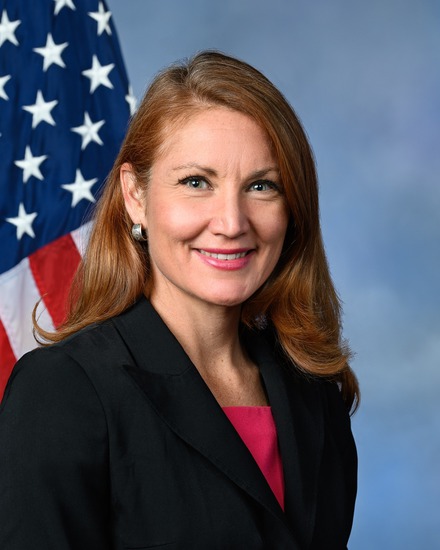
Rep. Melanie A. Stansbury
Sponsored bills
Maddy summaryHR 6172, the AMMO Act, requires federal firearms licensees (dealers/manufacturers) to implement new rules for selling ammunition to non-licensed buyers. It prohibits transfers exceeding 100 rounds of .50 caliber or 1,000 rounds of other calibers within any 5-day period and mandates written certification from buyers confirming they haven’t exceeded these limits. Licensees must also conduct background checks through the National Instant Criminal Background Check System (NICS) before selling ammunition to non-licensed individuals, similar to firearm sales. The bill includes recordkeeping, signage, and reporting requirements for violations, with penalties including fines up to $250,000 for licensees and $50,000 for buyers making false statements.
Maddy summaryHR 5976, the Youth Mental Health Research Act, establishes a new NIH research initiative led by the National Institute of Mental Health. The bill directs collaboration between three NIH institutes to coordinate research on youth mental health, focusing specifically on building community resilience for at-risk youth and improving how mental health services reach young people in schools, communities, and other settings where they live and work. It authorizes $100 million annually for fiscal years 2024 through 2028 to fund this research. The bill does not create direct services but aims to generate evidence to inform future mental health support strategies for young people.
Maddy summaryThe Healthcare Workforce Resilience Act (HR 6205) reallocates unused employment-based immigrant visas from fiscal years 1992-2021 to directly support foreign nurses and physicians seeking permanent residency in the U.S. It creates 40,000 new visas - 25,000 for nurses and 15,000 for physicians - available only to those with petitions filed within three years of the bill’s enactment. The bill includes expedited processing without fees, exempts these visas from country limits, and requires employers to attest that hiring foreign workers won’t displace U.S. workers. This policy change specifically targets healthcare staffing shortages by streamlining pathways for qualified foreign healthcare professionals.
Maddy summaryHR 5702, the Expanding Access for Online Veteran Students Act, allows veterans using the Post-9/11 GI Bill to receive a housing stipend while taking summer online courses that last less than 12 weeks. It directly affects veterans enrolled in qualifying short-term, entirely distance-learning summer programs. The bill creates a new stipend calculation based on the national average housing allowance for military members with dependents, adjusted by the veteran's course load relative to full-time requirements (capped at 100%). This provides partial housing support for veterans pursuing online summer education, effective August 1, 2024.
Maddy summaryHRES 832 is a symbolic resolution recognizing Día de los Muertos (Day of the Dead) as an annual cultural observance in the U.S. and globally. It acknowledges the holiday's origins in Mesoamerican traditions, its significance in honoring deceased loved ones through altars (*ofrendas*), and its role in celebrating Latino cultural heritage. The resolution specifically highlights the contributions of Mexican and Mexican American communities to U.S. society and culture, without creating new laws or obligations. It is a ceremonial gesture by Congress, not a policy with concrete effects on individuals or communities.
Maddy summaryHR 5983, the Clean Water Act of 2023, redefines "protected water resources" under federal law to explicitly include all interstate and intrastate waters (such as intermittent and ephemeral streams), wetlands, and their tributaries. This directly affects federal agencies like the EPA, states managing water quality, and developers or landowners needing permits for activities near these waters. The bill eliminates the Supreme Court’s narrow "navigable waters" definition from Sackett v. EPA (2023), restoring protections for tens of millions of acres of wetlands and millions of miles of small streams. Key mechanisms require the EPA to annually review and adjust exclusions from protections based on scientific evidence, ensuring water bodies critical to drinking water, flood control, and ecosystems remain safeguarded.
Maddy summaryHRES 819 is a symbolic resolution recognizing the 5-year anniversary of the October 27, 2018, antisemitic attack at Pittsburgh’s Tree of Life Synagogue, which killed 11 people. It condemns antisemitism and references rising hate incidents, including the Anti-Defamation League’s 2022 report of record antisemitic activity (3,697 incidents). The resolution honors the victims, expresses solidarity with affected Jewish communities, and reaffirms the U.S. commitment to combatting hate and protecting religious freedom. As a procedural resolution (not a law), it has no binding effect but serves as a formal statement of congressional stance.
Maddy summaryHR 6079, the CHILD Labor Act, strengthens protections against child labor by defining "oppressive child labor" more clearly and expanding prohibitions on children under 18 working in dangerous occupations like mining, manufacturing, and meat processing. The bill requires Federal contractors and recipients of Federal financial assistance to prevent child labor throughout their supply chains, with new reporting requirements and significant penalties for violations including fines up to $750,000 per violation causing death or serious injury. It creates a new "child labor tag" system to identify goods produced with child labor and establishes a system for victims to seek compensatory and punitive damages. The bill also mandates regular reports to Congress on work-related injuries and deaths, with data collection to be conducted in consultation with the Department of Health and Human Services.
Maddy summaryHRES 771 is a non-binding resolution expressing the U.S. House of Representatives' support for Israel following Hamas' October 7, 2023, attack. It condemns Hamas' actions, affirms Israel's right to self-defense, and calls for the immediate release of hostages. The resolution also urges enforcement of existing laws restricting aid to terrorists and sanctions against Iran for supporting Hamas. It does not create new policies or allocate funds, as it is a symbolic statement of congressional support.