

Maddy summaryHR 7056, the Access to Family Building Act, establishes federal rights for individuals to access assisted reproductive technology (ART) like IVF without unreasonable restrictions, directly affecting patients seeking fertility treatments and health care providers offering ART services. The bill prohibits states from imposing limitations on ART that are more burdensome than those for comparable medical procedures, fail to advance safety, or unduly restrict access, while allowing health and safety regulations that are necessary and least restrictive. It creates federal enforcement mechanisms, including lawsuits by the Attorney General or affected individuals to challenge violating state laws, and preempts conflicting state regulations. The bill explicitly preserves state authority over health/safety regulations and does not alter existing state insurance coverage laws for ART.
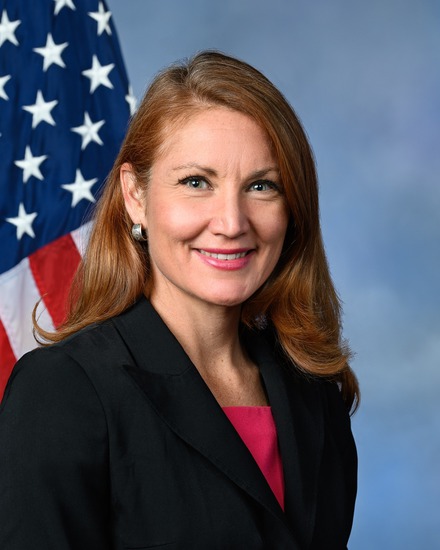
Rep. Melanie A. Stansbury
Sponsored bills
Maddy summaryThe Nurse Faculty Shortage Reduction Act of 2024 creates a new federal grant program to address nursing faculty shortages. It authorizes $28.5 million annually (2024-2028) to help nursing schools supplement faculty salaries, covering the gap between clinical nurse pay and teaching salaries. Schools must submit detailed salary data and plans to sustain higher pay after the 3-year grant period. The program prioritizes schools in high-need areas, serving vulnerable populations, or recruiting underrepresented faculty, with a report required to Congress after 3 years.
Maddy summaryThe Stronger Communities through Better Transit Act establishes a new federal grant program to improve public transportation service. It provides funding to urban areas, states, and Indian tribes to cover up to 50% of public transit operating costs (up to 80% in persistent poverty areas and 100% for Indian tribes), with requirements to report on service frequency, access to jobs, and conduct community surveys. The program mandates that a majority of funds must benefit underserved communities and areas of persistent poverty, defined as census tracts with high poverty rates or minority populations. Recipients must maintain their transit funding levels and report on improvements in access to essential services. The bill authorizes $20 billion annually for fiscal years 2024-2027.
Maddy summary# Summary of "Protecting Communities from Plastics Act" (Title II) This comprehensive legislation addresses the environmental, health, and environmental justice impacts of plastics production and use. Key provisions include: ## Environmental Justice Protections - Requires environmental justice assessments for permits of "covered facilities" (plastics manufacturing facilities) - Mandates consultation with "fenceline communities" (communities near facilities) including: * Prompt notification in multiple languages * Public hearings with translation services * Community benefit agreements - Establishes a 45-day waiting period before approving permits after public hearings ## Regulatory Requirements - Amends Clean Air Act to establish new source performance standards for plastics facilities - Requires continuous monitoring of air emissions (benzene, nitrogen oxides, etc.) - Amends Clean Water Act to prohibit discharge of plastic pellets in wastewater - Requires financial assurance for facility closure and emergency response - Prohibits new facility permits within 5 miles of community buildings (schools, hospitals, etc.) ## Research and Monitoring - Requires study of microplastics in food (including fish, meat, fruits, vegetables) - Mandates research on microplastics in human bodies (urine, breastmilk, stool) - Establishes a pilot program to test technologies for microplastic removal - Requires inventory of plastics manufacturing and distribution ## Additional Provisions - Temporary permitting moratorium on new plastics facilities (during "temporary pause period") - Requires listing of discarded polyvinyl chloride as hazardous waste - Limits National Recycling Strategy to exclude chemical recycling technologies - Creates grants to reduce single-use plastics in agricultural packaging - Requires biodegradable alternatives to plastic weed barriers The legislation aims to address the disproportionate environmental and health impacts of plastics production on vulnerable communities while establishing comprehensive regulatory frameworks for plastics manufacturing and disposal.
Maddy summaryHR 5970, the SNAP Tribal Food Sovereignty Act of 2023, allows federally recognized tribes to manage their Supplemental Nutrition Assistance Program (SNAP) benefits locally through contracts or compacts with the USDA. Tribes must request this option via a tribal resolution, replacing the current federal administration of SNAP for tribal members. The agreements would follow the same rules as existing tribal self-determination contracts under the Indian Self-Determination Act. This change aims to support tribal self-governance over nutrition assistance programs.
Maddy summaryHR 7007, the BEST Act, provides federal grants to states to establish or improve Seal of Biliteracy programs recognizing students proficient in English and one additional language. It requires states to include Native American languages as a base language (allowing proficiency in them to substitute for English) and ensures equitable access for English learners, students with disabilities, and heritage language learners. The $10 million annual funding (2024-2028) supports program administration, public outreach, and subsidizing testing for low-income students. States must award students a permanent seal on diplomas or transcripts upon meeting state-set proficiency criteria for speaking and writing in both languages.
Maddy summaryHRES 963 is a symbolic resolution honoring Korean American Day, which commemorates the January 13, 1903 arrival of the first large wave of Korean immigrants to the U.S. It recognizes Korean Americans' contributions to U.S. society, including their economic, cultural, and military impacts, and marks the 121st anniversary of this historic migration. The resolution urges all Americans to observe Korean American Day to appreciate these contributions. As a commemorative measure, it does not create new policies or affect specific groups beyond this ceremonial recognition.
Maddy summaryHR 6959, the "Fix FEDVIP Age Act," amends federal law to extend dental and vision insurance coverage under the FEDVIP program to dependent children up to age 26, instead of the current age limit of 22. This change directly affects federal employees and their children who are under 26 and currently lose coverage at age 22. The bill modifies Section 8901(5) of Title 5, U.S. Code, by replacing "22" with "26" in the eligibility criteria. The policy change ensures continuity of health insurance for dependent children during a common transitional period, without altering other FEDVIP benefits or costs.
Maddy summaryThis bill creates a 25% pay incentive for Department of Justice employees with specialized cyber skills (such as expertise in computers, networks, or internet technology) who work directly on detecting, preventing, or prosecuting online fentanyl trafficking. It applies specifically to DOJ positions requiring these skills to combat fentanyl trafficking cases. The incentive pay is added to an employee's base salary for retirement calculations but is excluded from annual pay limits. The bill directly affects DOJ personnel in cyber-focused roles targeting online drug trafficking operations.
Maddy summaryHR 6935, the Creative Workforce Investment Act, authorizes $300 million in federal grants (2024-2026) to fund community-based arts programs that employ creative workers. It directly affects nonprofit organizations, local governments, and community groups that create public arts projects while hiring individuals facing employment barriers, including marginalized communities. Key provisions require grantees to avoid outsourcing jobs, maintain collective bargaining agreements, and document diverse histories through public art, performances, and storytelling. The bill mandates annual reports tracking employment outcomes and median earnings for participants after program completion, ensuring transparency in how funds create accessible cultural opportunities.