Maddy summaryThis bill requires states to ensure autonomous vehicle (AV) licensing doesn't discriminate against people with disabilities, aligning with existing civil rights law. It mandates a National Academies study to identify physical infrastructure changes - like curb designs, dedicated pickup zones, and non-visual access tools - that would help individuals with disabilities safely access driverless ride-hail vehicles during pickup and dropoff. The study, funded by $5 million, focuses on practical solutions for navigating sidewalks, curbs, and vehicle entry/exit. The bill directly affects people with disabilities using AV services, states issuing vehicle licenses, and ride-hail companies operating driverless vehicles.
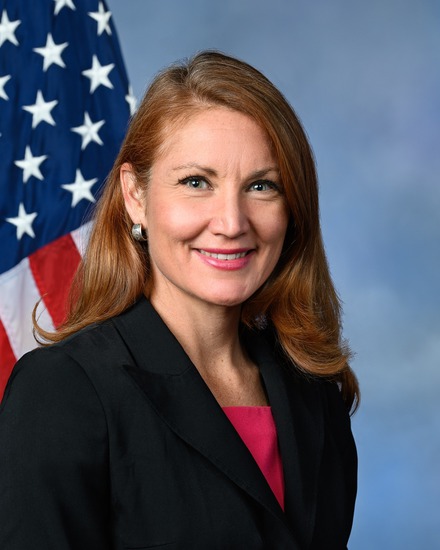
Rep. Melanie A. Stansbury
Sponsored bills
Maddy summaryThe Community TEAMS Act of 2024 creates a new federal grant program to support medical student training in rural and medically underserved communities. It provides funding for 1-5 years to partnerships between medical schools and community health providers (such as rural clinics, Federally Qualified Health Centers, or facilities in underserved areas) to expand outpatient clinical rotations. The goal is to help train physicians who will practice long-term in high-need communities by increasing access to community-based training. Grant applicants must include detailed project plans, sustainability strategies, and evaluation methods in their proposals.
Maddy summaryThis resolution condemns violence, oppression, and abuse against ethnic minorities in eastern Democratic Republic of the Congo (DRC), particularly targeting Rwandophones like the Banyamulenge and Congolese Tutsi communities. It urges the DRC government to investigate security forces and armed groups (including the M23 rebel group) for human rights abuses, hold perpetrators accountable, and improve protections for displaced civilians. The resolution also calls for U.S. actions such as appointing a special envoy for the Great Lakes region, prioritizing refugee access for affected groups, and coordinating sanctions against human rights abusers - though it is a symbolic statement, not a binding law.
Maddy summaryThis symbolic resolution (HRES 989) urges the U.S. House of Representatives to recognize January as "Muslim-American Heritage Month" to honor the contributions of Muslim Americans. It highlights their historical and contemporary roles in U.S. society across fields like business, science, sports, and public service. The resolution calls for public observance through ceremonies and programs but has no legal effect or policy changes. It does not allocate funding, alter laws, or directly affect any specific group beyond raising awareness of Muslim-American heritage.
Maddy summaryHR 7127, the FAIR Act, establishes pay adjustments for federal employees in 2025. It increases base pay by 4% for most federal workers under statutory pay systems and for "prevailing rate" employees (like those in specific geographic areas), while raising locality pay rates by 3.4%. The bill directly affects all federal employees receiving pay under these systems, as it modifies their 2025 salary calculations. These changes are based on statutory formulas under Title 5 of the U.S. Code, with no new policy mechanisms beyond the specified percentage increases. The adjustments apply to pay rates in effect as of the end of fiscal year 2024.
Maddy summaryThe ACCESS Act of 2024 creates a federal grant program to help clinics and health care providers expand abortion and reproductive health services in states where abortion is legal (outside of life or health exceptions). It authorizes $200 million annually for fiscal years 2024-2028 to fund specific capacity-building activities, including facility expansions, hiring clinical staff, telehealth services, and culturally appropriate patient resources. Priority is given to providers in states experiencing the highest increases in out-of-state patients seeking abortion care. The bill directly supports health care entities serving patients who travel across state lines for services, aiming to reduce wait times and improve access for vulnerable communities.
Maddy summary# Summary of the Clean Electricity and Transmission Acceleration Act of 2023 This comprehensive legislation establishes significant reforms across environmental policy, energy infrastructure, and community engagement frameworks. Key provisions include: 1. **Environmental Justice Framework**: - Creates an Office of Environmental Justice and External Civil Rights at EPA - Establishes a White House Environmental Justice Interagency Council - Prohibits disparate impact discrimination under Title VI of the Civil Rights Act - Requires community impact reports for Federal actions affecting environmental justice communities 2. **NEPA Reforms**: - Mandates 90-day public comment periods for environmental justice communities - Requires translation of documents into languages spoken by 5%+ of affected communities - Requires assessment of cumulative impacts, including historical pollution - Requires climate change impact assessments using social cost of carbon - Establishes searchable digital archives of NEPA documents 3. **Community Engagement Requirements**: - Creates "Senior Community Engagement Officers" and "Tribal Community Engagement Officers" at all federal agencies - Requires community benefits agreements for major projects - Establishes grants for capacity building in environmental justice communities - Creates an E-NEPA permitting portal for public access to documents 4. **Energy Policy Provisions**: - Includes reforms for FERC (Federal Energy Regulatory Commission) environmental justice liaison - Establishes requirements for intervenor funding at FERC - Contains provisions for transmission planning and infrastructure 5. **Tribal Consultation**: - Strengthens tribal consultation requirements for projects affecting tribal lands - Requires government-to-government relationships with tribal nations The legislation represents a significant shift toward integrating environmental justice considerations throughout the federal permitting and review process, with specific requirements for meaningful community engagement, transparency, and consideration of cumulative impacts on vulnerable populations. It also establishes new funding mechanisms and administrative structures to support these environmental justice goals.

Maddy summaryHR 6525, the Wildfire Resilient Communities Act, allocates $30 billion in federal funding to reduce wildfire risks on public lands. It requires agencies like the Forest Service and National Park Service to prioritize hazardous fuels reduction projects - such as clearing flammable vegetation - near at-risk communities, high-value watersheds, or areas with high wildfire potential. The bill also adds $3 billion for community wildfire defense grants (2027-2031) and establishes a County Stewardship Fund, directing 25% of federal contract receipts to counties for local wildfire resilience efforts. These provisions directly affect communities in wildfire-prone areas, federal land managers, and local governments receiving funds.
Maddy summaryThis bill updates the broadband speed standards for the Community Connect Grant Program, which provides funding to expand high-speed internet in rural areas. It raises the minimum required downstream speed from "less than" to "less than 100 Mbps" and upstream speed to "at least 20 Mbps," while increasing service speed requirements from 10/1 Mbps to 25/3 Mbps for grant recipients. The program's funding authorization is extended from ending in 2023 to 2028. This directly affects rural communities and service providers receiving these grants by setting clearer, higher technical standards for qualifying broadband service.
Maddy summaryThe Farmers First Act of 2023 amends the Farm and Ranch Stress Assistance Network program to expand mental health support for farmers and ranchers. It increases annual funding from $10 million to $15 million for fiscal years 2024-2028, adds crisis lines to the program’s services, and expands referral options to connect individuals with certified community clinics, health centers, rural clinics, Federally Qualified Health Centers, and critical access hospitals. These changes directly affect agricultural workers facing mental health or substance use challenges by improving access to specialized care. The bill focuses on strengthening existing support infrastructure rather than creating new programs.