

Maddy summaryHR 9337, the "Don’t STEAL Act," requires employers to pay employees the full wage rate specified in their employment contracts (including collective bargaining agreements) if it exceeds the minimum rate under the Fair Labor Standards Act (FLSA). This directly affects workers engaged in commerce or production for commerce, ensuring they receive agreed-upon higher wages. The bill adds criminal penalties for willful wage theft, including fines and up to 5 years in prison for violations exceeding $1,000, with penalties based on severity and business size. It also directs fines collected from violations to fund the Department of Labor’s Wage and Hour Division enforcement efforts. The law applies to unpaid wages or overtime violations occurring 90 days after enactment.
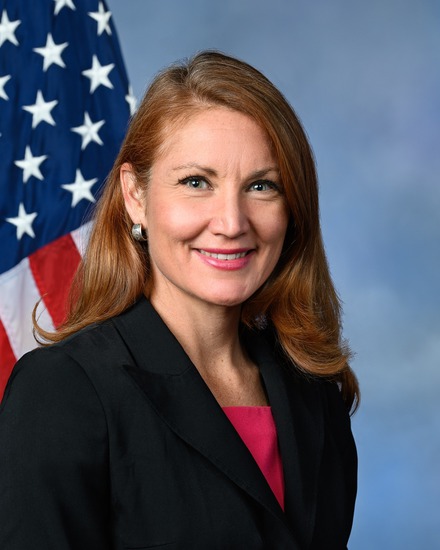
Rep. Melanie A. Stansbury
Sponsored bills
Maddy summaryThis bill creates a new program to provide emergency grants to farm worker organizations during covered disasters. It directly affects migrant and seasonal farm workers who lose income or cannot work due to events like hurricanes, wildfires, pandemics, or extreme weather. The grants fund immediate relief (including direct cash or aid), building community resilience, infrastructure support, and emergency services. Funds remain available until spent, and the program requires consultation with eligible organizations, defined as farm worker groups or qualified nonprofits with relevant experience.
Maddy summaryThe SCOPE Act directs the Environmental Protection Agency (EPA) to develop standardized guidance for reporting scope 3 emissions - indirect emissions from a company’s supply chain and product use - within 12 months of enactment. It requires the EPA to establish reporting thresholds, calculation methods, monitoring frequency, data quality standards, and recordkeeping procedures for facilities already subject to EPA greenhouse gas reporting rules (like major industrial plants). The guidance will help direct emitters (facilities currently reporting under EPA regulations) understand how to measure and report these indirect emissions. This bill does not mandate reporting but creates a framework for future EPA rules on scope 3 emissions.
Maddy summaryHR 9274, the SHAWL Act, establishes two new Smithsonian museums: the National Museum of the American Latino and the American Women’s History Museum. It authorizes both museums to be located within the National Mall’s "Reserve" area, overriding prior restrictions, and requires federal agencies managing potential sites to transfer jurisdiction to the Smithsonian after notifying congressional committees. The bill mandates that both museums accurately represent diverse cultures, histories, and viewpoints within Latino and women’s communities through exhibits and programs, requiring input from a broad range of community experts. It also requires the Smithsonian to submit biennial reports to Congress detailing compliance with these representation requirements.
Maddy summaryThis bill establishes the Great Bend of the Gila National Monument, protecting approximately 376,963 acres of land in Arizona for the preservation of Indigenous heritage, cultural landscapes, archaeological sites, and natural resources. The monument's management requires consultation with a Tribal Commission representing interested Native American tribes, incorporates Traditional Ecological Knowledge into planning, and protects sacred sites while maintaining existing tribal treaty rights. Key provisions include prohibiting new permanent roads within the monument, requiring meaningful tribal engagement in management decisions, and ensuring continued access for traditional tribal uses like cultural and religious activities. The bill maintains existing grazing, water rights, and tribal treaty rights while emphasizing the protection of natural quiet, dark night skies, and scenic attributes. It creates a framework for tribal co-stewardship through the Tribal Commission, which provides guidance on management plans and policies.
Maddy summaryHR 9229, the MAIL Act, requires the U.S. Postal Service to provide free post office boxes to unhoused or housing unstable individuals without fees. Eligibility is based on proof of income below the poverty line or participation in specific federal assistance programs, including housing vouchers (like Section 8), Medicaid, or the Supplemental Nutrition Assistance Program (SNAP). The bill defines "unhoused or housing unstable" using existing federal standards for homelessness or risk of homelessness. It mandates the Postal Service to issue regulations within one year of enactment and report on implementation to Congress. This policy change directly affects low-income individuals facing housing insecurity by removing a financial barrier to secure mail access.
Maddy summaryThis bill establishes the Destination Reception Services Program to provide medium-term support to certain immigrants in the U.S., including those granted parole, placed in removal proceedings, or with pending asylum applications. It authorizes $3 billion annually (2025-2028) to fund services like housing assistance, healthcare, job training, legal aid for work authorization/asylum, childcare, and transportation through local government and nonprofit organizations. The program is managed by a federal Board and local community boards that identify high-need areas and allocate funds based on criteria like immigrant population density and service gaps. It explicitly states the program is not an "alternatives to detention" initiative and prioritizes services to help new arrivals achieve self-sufficiency.
Maddy summaryThe HEALTHY BRAINS Act of 2024 establishes a new NIH research program to study how environmental factors - like pollution, chemicals in air/water, and heavy metals - may contribute to neurodegenerative diseases (e.g., Alzheimer’s, Parkinson’s). It creates "Collaborative Centers for Neurodegenerative Disease Environmental Research" (CCNDERs) at universities and medical institutions, requiring them to conduct interdisciplinary research, develop nationwide data systems, and share findings with the public. The bill authorizes $50 million annually (2026-2030) for this program and mandates biennial reports to Congress on research progress. It directly affects NIH-funded research institutions and aims to advance prevention strategies, not patients or specific communities.
Feed the Community Act This bill allows a tax exemption for charitable donations of food transportation vehicles and food storage equipment to tax-exempt charitable organizations for providing food to individuals and communities in need.
Maddy summaryThis resolution designates the week of August 26-30, 2024, as "National Community Health Worker Awareness Week" to honor community health workers (CHWs). CHWs are frontline public health workers who connect underserved communities to health and social services through culturally competent outreach, education, and advocacy. The resolution symbolically supports CHWs’ work by raising awareness of their role in reducing health disparities, without creating new laws or funding. It directly affects CHWs and the communities they serve by highlighting their contributions to health equity. The House encourages collaboration at all levels to recognize CHWs’ efforts, but the resolution has no binding policy impact.