

Maddy summaryThis bill creates a new Medicare payment model (the "Comprehensive Alternative Response for Emergencies Model") that allows Medicare Part B to cover ground ambulance services provided in response to emergency medical calls *without* a full transport. It directly affects Medicare beneficiaries receiving emergency ambulance care and ambulance providers, ensuring they are paid for services like dispatch and initial response that don't include transport. The model requires payment rates to align with standard transport payments, mandates compliance with state protocols, and operates for a 5-year test period. A report by the Comptroller General will evaluate the model's impact on beneficiary access, outcomes, and regional differences after 4 years.
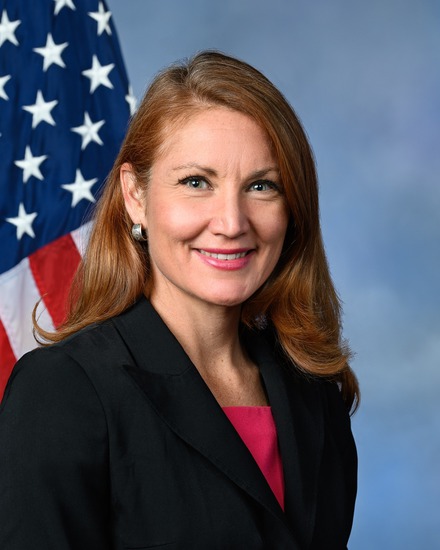
Rep. Melanie A. Stansbury
Sponsored bills
Workplace Violence Prevention for Health Care and Social Service Workers Act This bill requires the Department of Labor to address workplace violence in health care, social service, and similar sectors. Specifically, Labor must issue an occupational safety and health standard that requires certain employers to take actions to protect workers and other personnel from workplace violence. The standard applies to employers in the health care sector, in the social service sector, and in sectors that conduct activities similar to those in the health care and social service sectors. Among other elements, the standard must require each employer to (1) develop a workplace violence prevention plan, (2) promptly investigate incidents of workplace violence, and (3) provide relevant training and education to employees. The bill requires certain hospitals and skilled nursing facilities to comply with this standard as a condition of Medicare participation.
Maddy summaryHR 2586, the Reentry Act of 2025, amends Medicaid rules to allow incarcerated individuals to receive Medicaid coverage during the 30 days immediately before their release from prison or jail. This directly affects people leaving correctional facilities, ensuring they can access health care as they transition back into communities. The bill requires a report within 18 months analyzing current health care standards in prisons, the number of people who would gain coverage, and current discharge practices to improve Medicaid enrollment for newly released individuals. The report will also assess how to better connect people with community health services and addiction treatment after release.
Maddy summaryHR 2553, the Capping Prescription Costs Act of 2025, limits out-of-pocket costs for prescription drugs under health insurance. It sets a $2,000 annual cap per individual or $4,000 per family for covered prescriptions starting in 2026, with annual adjustments based on the medical care CPI. The bill applies directly to people with employer-sponsored group health plans, individual health insurance plans, and plans covered under the Affordable Care Act. It requires insurers and plan sponsors to ensure cost-sharing for prescriptions does not exceed these limits, effective for plan years beginning January 1, 2026.
Maddy summaryThis symbolic resolution (HCONRES 23) expresses Congress's support for International Transgender Day of Visibility, observed annually on March 31. It encourages Americans to recognize and celebrate transgender community achievements while acknowledging ongoing challenges like discrimination in employment, healthcare, and public accommodations. The resolution does not create new laws or policies but formally endorses the day's purpose through non-binding statements of support and recognition. It directly affects the broader public by promoting awareness and respect for transgender individuals' rights and contributions.
Maddy summaryHR 2485, the Arts Education for All Act, requires states and school districts to integrate arts education into K-12 curricula and report on its availability. It mandates states to describe how they will support arts courses, increase certified arts educators (especially in high-need schools), and use arts to enhance teaching in core subjects like math and science (Section 202). Schools must track and report on arts course offerings, teacher qualifications, and student access - including disaggregated data by school poverty levels (Section 203). The bill also expands arts access in juvenile justice programs (Section 301) and funds research on effective arts education methods (Section 401). It directly affects public schools, arts educators, and youth in after-school and correctional settings.
Maddy summaryHR 2527, the Early Detection of Vision Impairments for Children Act of 2025, provides federal grants to states, territories, tribes, and urban Indian organizations to establish statewide vision screening and intervention programs for children. The bill requires grantees to implement vision screenings in medical, home, educational, and early learning settings, develop data systems for tracking outcomes, and improve access to care for underserved children in rural and low-income communities. It also authorizes technical assistance grants through the CDC to help develop screening systems, share best practices, and conduct research on vision care programs. The bill allocates $5 million annually for fiscal years 2026-2030 to fund these activities, targeting early detection to prevent vision-related learning and developmental challenges.
Maddy summaryHR 1906, the Rural Wellness Act, extends a deadline for rural development funding to 2029 and requires that 17% of funds prioritize projects offering behavioral and mental health services like prevention, treatment, and recovery. It directs grant administrators to give preference to rural community facilities providing these services and employing staff trained in mental health care. The law applies to programs under the Consolidated Farm and Rural Development Act and the Rural Development Act of 1972. This affects rural communities seeking health facility grants and changes how funding is allocated to address mental health needs.
Maddy summaryThis bill establishes an Agriculture Climate Scientific Research Advisory Committee to develop national research priorities for climate-smart agriculture and standardize data collection protocols, and creates a Rural Climate Alliance Network to connect agricultural producers, researchers, and technical assistance providers. The committee will identify research gaps, develop biennial research agendas, and recommend annual budget priorities for climate research. The network will facilitate sharing of climate data, improve communication about climate risks, and support implementation of climate-resilient practices across the agriculture sector. These changes aim to strengthen coordination of climate-related research, data systems, and technical assistance to better address climate change impacts on farming and rural communities.
Maddy summaryThe CALL Act (HR 1853) requires the U.S. Department of Agriculture to conduct a comprehensive study on barriers to conservation practice adoption on leased agricultural land. It examines factors like lease agreements, landowner awareness, and regional differences affecting farmers (who operate leased land but don’t own it) and landowners. The study will analyze existing data, including the TOTAL Survey, and assess how lease structures influence conservation efforts, with special focus on Black, Indigenous, and beginning farmers. The USDA must submit a final report by December 2026 with recommendations for improving conservation participation on leased land. This is a research-focused bill with no immediate policy changes, aiming to inform future USDA actions.