

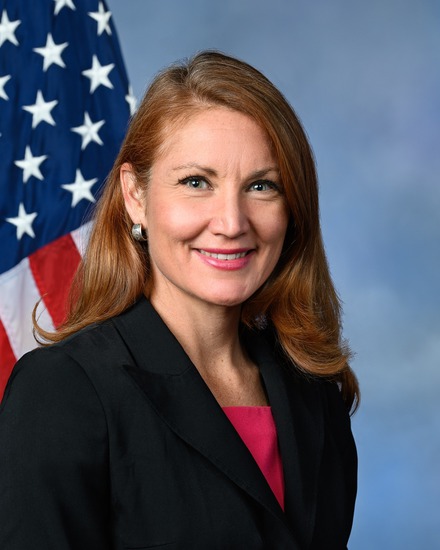
Photo of Melanie A. Stansbury
D United States House · District 1 · New Mexico On the 2026 ballot

Rep. Melanie A. Stansbury

Compare
Total votes
2,694
all sessions
Attendance
98%
52 missed
Near the chamber average
With party
98%
of cast votes
Higher than 85% of chamber peers
Bipartisan score
1%
crosses aisle rarely
Lower than 86% of chamber peers
Sponsored
1,707
bills & resolutions
Higher than 90% of chamber peers
Committees
5
assignments
1,707 bills and resolutions

Sponsored bills

Total
1,707
Primary
56
Co-sponsor
1,651
This page
1,707
matching current filters
Co-sponsor HR 3620
In committee · United States House · Co-sponsor
Cosmetic Safety for Communities of Color and Professional Salon Workers Act of 2023

Maddy summaryThis bill establishes research programs to study health impacts of cosmetic chemicals on communities of color and professional salon workers. It requires manufacturers to provide translated safety data sheets for professional cosmetics in multiple languages, including Spanish, Vietnamese, Chinese, and Korean. The bill funds two resource centers: one focused on beauty justice for communities of color and another specifically for salon worker health and safety. It also allocates funds for research into developing safer cosmetic alternatives, particularly for products marketed to women and girls of color and used by salon workers.

In committee May 26, 2023 1 co-sponsor
Co-sponsor HR 3621
In committee · United States House · Co-sponsor
Cosmetic Fragrance and Flavor Ingredient Right to Know Act of 2023

Cosmetic Fragrance and Flavor Ingredient Right to Know Act of 2023 This bill imposes disclosure and labeling requirements on cosmetic products that contain certain ingredients. A cosmetic product that fails to meet such requirements may not be sold. Within two years of this bill's enactment, a cosmetic product's labeling or packaging must include a full list of its ingredients, as well as a specified statement that directs consumers to the brand owner's website for the health impacts of any ingredient that (1) is identified on specified lists of harmful or potentially harmful chemicals, such as chemicals identified as carcinogenic to humans by the Environmental Protection Agency or toxic air contaminants under California regulations; or (2) must be disclosed under certain European Union laws and is present in a product above specified concentrations. The Food and Drug Administration must publish and periodically update on its website a list of the ingredients subject to this requirement. Within one year of this bill's enactment, a brand owner must disclose the full list of ingredients for each cosmetic product on its website, as well as whether a cosmetic product contains any fragrance or flavor ingredient that is subject to this bill's labeling or packaging requirement and, if so, the ingredient's functional purpose.

In committee May 26, 2023 1 co-sponsor
Co-sponsor HR 3622
In committee · United States House · Co-sponsor
Cosmetic Supply Chain Transparency Act of 2023

Cosmetic Supply Chain Transparency Act of 2023 This bill requires the Food and Drug Administration (FDA) to maintain a list of certain nonfunctional constituents in cosmetics that are harmful to human health or the environment, authorizes the FDA to request from a brand owner (i.e., the entity bringing a cosmetic to market) certain information about a cosmetic's ingredients, and addresses related issues. For each listed nonfunctional constituent, the list must identify the ingredient or cosmetic (or category of ingredient or cosmetic) in which the constituent is known or reasonably expected to be present. The FDA must also (1) establish procedures for petitions to add substances to the list, (2) issue guidance for industry related to testing and detecting such nonfunctional constituents, and (3) establish a committee to provide advice on creating the list and developing the required industry guidance. Within a year of a nonfunctional constituent being added to the list, a supplier of an ingredient or cosmetic must test for that constituent and provide a brand owner the results and other information before selling the ingredient or cosmetic to the brand owner. A supplier of an ingredient or cosmetic must provide additional information about the item upon a brand owner's request. Brand owners must maintain records with information about the suppliers of ingredients and raw materials used in their cosmetics and provide such information to the FDA upon request. The bill also imposes civil penalties for brand owners and suppliers that violate this bill's provisions.

In committee May 26, 2023 1 co-sponsor
Co-sponsor HR 3702
In committee · United States House · Co-sponsor
Access Technology Affordability Act of 2023

Maddy summaryThis bill creates a new tax credit for expenses related to "qualified access technology for the blind" under the Internal Revenue Code. It allows taxpayers to claim a credit of up to $2,000 per year (adjusted for inflation) for costs paid for hardware, software, or IT that converts visual information into formats usable by blind individuals, covering the taxpayer, their spouse, or a dependent who is blind. The credit is limited to $2,000 over any three consecutive tax years per blind individual and expires after 2028. It directly affects blind individuals and their families who purchase qualifying assistive technology. The credit cannot be claimed for expenses already covered by other tax deductions or credits.

In committee May 25, 2023 1 co-sponsor
Co-sponsor HRES 439
In committee · United States House · Co-sponsor
Expressing the sense of the House of Representatives that Congress should take all appropriate measures to ensure that the United States Postal Service remains an independent establishment of the Federal Government and is not subject to privatization.

Maddy summaryHRES 439 is a non-binding resolution expressing the House of Representatives' support for keeping the U.S. Postal Service (USPS) as an independent federal agency, not subject to privatization. It highlights USPS's constitutional role, self-sustaining nature (relying on service revenue, not taxpayer funds), and its importance to rural communities, e-commerce, and over 600,000 employees. The resolution urges Congress to take action to preserve USPS's independence, emphasizing that privatization could raise prices, reduce services, and harm the nation's mail infrastructure. As a procedural resolution, it does not change law but formally states the House's position.

In committee May 23, 2023 1 co-sponsor
Co-sponsor HR 3607
In committee · United States House · Co-sponsor
SYLLABLE Act of 2023

Maddy summaryHR 3607, the SYLLABLE Act of 2023, creates a federal grant program to fund high-quality dual language immersion programs for students from low-income families, English learners, and minority children. It authorizes up to $15 million in funding for fiscal year 2024 to award no more than five grants to local educational agencies, requiring partnerships between schools, early childhood programs, and technical assistance providers. The grants support bilingual programs from preschool through fifth grade that use the partner language for at least half of instruction, include teacher training in dual language teaching, and measure student progress in both English and the partner language. The program must serve high-need schools and evaluate outcomes like literacy development, academic achievement, and program effectiveness over five years.

In committee May 23, 2023 1 co-sponsor
Co-sponsor HR 3606
In committee · United States House · Co-sponsor
FLUENT Act

Maddy summaryHR 3606 (FLUENT Act) creates a federal grant program to expand family literacy services for English language learner families, targeting caregivers with limited English proficiency. It authorizes $50 million annually (2024-2028) for grants up to $1 million each to organizations providing research-based programs that include interactive caregiver-child literacy activities, adult education, and school collaboration. The program requires grantees to improve children's English language skills, primary language literacy, and caregivers' ability to support education, with measurable outcomes tracked across seven key areas. It prioritizes "hardest-to-reach" families and mandates services for children under age 8 with caregivers aged 16+.

In committee May 23, 2023 1 co-sponsor
Co-sponsor HR 3605
In committee · United States House · Co-sponsor
Reaching English Learners Act

Maddy summaryHR 3605, the Reaching English Learners Act, creates a new federal grant program to improve teacher preparation for educators working with English learners. The bill authorizes competitive grants to partnerships between colleges and school districts (high-need local educational agencies or early childhood programs) to develop or strengthen teacher training programs. These grants fund evidence-based strategies like bilingual education and dual-language instruction, clinical classroom experiences with English learners, and training on supporting students with disabilities who are English learners. Partners must contribute 50% of costs from non-Federal sources and track outcomes like teacher certification rates and employment in high-need schools. The program aims to ensure future teachers meet state requirements to effectively support English learners in early childhood, elementary, and secondary education.

In committee May 23, 2023 1 co-sponsor
Co-sponsor HR 3610
In committee · United States House · Co-sponsor
Neighbors Not Enemies Act

Maddy summaryHR 3610, the Neighbors Not Enemies Act, repeals specific sections (4067-4070) of the Alien Enemies Act of 1798 from U.S. law. This bill removes the legal authority allowing the president to detain or deport non-citizens during wartime based on that historical statute. The repeal directly affects the federal legal framework governing emergency powers over non-citizens, eliminating a provision dating to the Quasi-War with France. The bill makes no new policy changes but formally removes this outdated legal mechanism from the U.S. Code.

In committee May 23, 2023 1 co-sponsor
Primary HCONRES 47
In committee · United States House · Lead sponsor
Expressing the need for the Senate to provide advice and consent to ratification of the United Nations Convention on Biological Diversity.

Maddy summaryHCONRES 47 is a non-binding resolution urging the U.S. Senate to provide "advice and consent" for ratifying the UN Convention on Biological Diversity (CBD), which the U.S. signed in 1993 but has never ratified. Currently, the U.S. participates only as an observer in CBD negotiations without voting rights, limiting its influence on global biodiversity policies that affect national security and economic interests. The resolution notes the U.S. is already legally compliant with the CBD’s obligations under existing law and is a top international conservation funder. It argues that ratification would restore U.S. voting power and alignment with global efforts to address biodiversity loss, which impacts all Americans.

In committee May 22, 2023 0 co-sponsors
Showing 1,061 to 1,070 of 1,707 bills