

Maddy summaryHR 3879, the Supporting Families through Addiction Act of 2023, provides federal grants to nonprofit organizations that support families with members struggling with substance use disorder. The bill authorizes $5 million annually (2024-2028) to fund community-based family support services, including education, stigma reduction, and connecting families to treatment resources. Grants cover up to 85% of costs and require organizations to be led by experts, including families with lived experience. This directly affects families navigating addiction in their households by expanding access to evidence-based support programs and improving provider knowledge about family impacts.
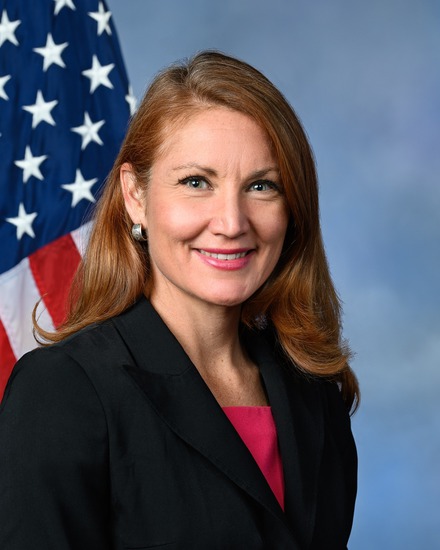
Rep. Melanie A. Stansbury
Sponsored bills
Maddy summaryThe American Family Act establishes a monthly child tax credit of $250 per month for each child under age 6 and $300 per month for each child aged 6-18, with income limits of $150,000 for joint filers and $112,500 for other filers. The credit is refundable, meaning it can be paid even if the taxpayer owes no income tax, and will be adjusted annually for inflation. The bill includes detailed rules for determining eligibility, including requirements that the child resides with the taxpayer for more than half the month and provisions to prevent fraud through recapture of improperly received payments. The credit will be paid monthly in advance rather than as a single annual payment, with specific mechanisms for calculating and distributing the payments.
Maddy summaryThe Urban Indian Health Confer Act (HR 630) requires federal health agencies, including the Indian Health Service, to consult with urban Indian organizations when implementing health care programs for Native Americans. It amends the Indian Health Care Improvement Act to mandate that the Secretary of Health and Human Services must confer with these organizations to the maximum extent practicable. This directly affects urban Indian organizations - which provide health services to American Indians and Alaska Natives in cities - and federal agencies managing Indian health care. The key provision is a procedural requirement for collaboration, ensuring urban Native communities' input in health care planning without creating new funding or services.
Maddy summaryHR 698, the Assault Weapons Ban of 2023, prohibits the sale, manufacture, transfer, and possession of specific firearms and ammunition devices commonly referred to as "assault weapons" and "large capacity magazines" in interstate commerce. The bill defines "semiautomatic assault weapons" to include rifles like AR-15s and AK-47s, as well as firearms with specific features such as folding stocks, pistol grips, threaded barrels, and detachable magazines holding more than 15 rounds. It exempts law enforcement, military, antique firearms, and weapons already lawfully owned before the law's enactment (known as "grandfathered" weapons). The bill also requires new identification markings on these weapons and large capacity magazines, and adds background check requirements for transfers of grandfathered weapons.
Maddy summaryThis bill removes a barrier for college students seeking food assistance by amending the SNAP program rules. It directly affects students enrolled at least half-time in recognized colleges or training programs, who were previously automatically ineligible unless they met separate requirements. The key change eliminates the prior restriction (in section 6(e)) that barred most higher education students from SNAP, allowing them to qualify under the new provision in section 3(m)(5)(F). The changes take effect January 2, 2024.
Maddy summaryThe Closing the Meal Gap Act of 2023 amends the Food and Nutrition Act to update how SNAP (Supplemental Nutrition Assistance Program) benefits are calculated. It replaces the "thrifty food plan" with a "low-cost food plan" based on a specific 4-person family diet, requiring the government to reevaluate this plan by 2029 and every 5 years after. The bill also updates medical expense deductions, eliminates time limits on benefits, and allows Puerto Rico to join SNAP with specific transition requirements. These changes directly affect SNAP recipients, particularly in Puerto Rico, Hawaii, and Alaska, by adjusting benefit calculations to better reflect current food costs.
Maddy summaryHR 3776, the Family Stability and Opportunity Vouchers Act of 2023, creates a new housing voucher program targeting families with young children facing instability. It provides up to 50,000 incremental vouchers annually (2024-2029) for families who either have a child under 6, will welcome a minor child within 300 days, and are homeless, unstably housed, living in high-poverty areas, or at risk of displacement from neighborhoods with high-performing schools. Public housing agencies receiving funds must offer mobility services to help these families relocate to areas with quality schools or childcare, without requiring participation as a voucher condition. The bill defines key terms like "opportunity area for children" and mandates evidence-based services to support family transitions. This policy directly affects low-income families with young children in unstable housing situations seeking better educational opportunities.
Maddy summaryThe Cady Housh and Gemesha Thomas Student Suicide Prevention Act of 2023 requires states to establish a policy mandating annual suicide prevention training for school staff and high school students (grades 9-12). The training must be evidence-based, cover recognizing suicide warning signs, appropriate responses, and referrals to mental health services, while including cultural competency. It allocates $48 million in federal funds, with at least 15% dedicated to supporting this training program, and requires states to collaborate with mental health experts. The bill directly affects school staff and high school students in states that adopt the policy and receive federal funding.
Maddy summaryThe PREVENT HPV Cancers Act of 2023 requires the CDC to launch a national public awareness campaign to increase HPV vaccination rates, particularly among males and underserved communities. It mandates culturally tailored materials targeting rural areas, Black and Hispanic women, LGBTQ+ individuals, and populations with high HPV cancer rates, while combating misinformation about vaccine safety. The campaign, funded at $5 million annually from 2024-2028, will use media, community partnerships, and provider outreach to promote vaccination for adolescents aged 9-17. Additionally, the bill increases annual funding for the Breast and Cervical Cancer Early Detection Program to $300 million per year through 2028. The bill directly affects adolescents, healthcare providers, and communities facing HPV cancer disparities.
Maddy summaryHR 3619, the Toxic-Free Beauty Act of 2023, bans the intentional addition of specific chemicals - including formaldehyde, certain parabens, phthalates, mercury, and two dyes - to cosmetic products sold across state lines. It directly affects cosmetic manufacturers and retailers, requiring them to reformulate products to remove these substances. The ban prohibits these chemicals in cosmetics introduced into interstate commerce starting January 1, 2025. This policy change updates federal safety standards under the Federal Food, Drug, and Cosmetic Act to restrict the use of identified chemicals in beauty products.