

Flood Level Observation, Operations, and Decision Support Act or the FLOODS Act This bill addresses forecasting and the communication of flood, tornado, and hurricane events by the National Oceanic and Atmospheric Administration (NOAA). Among other provisions, the bill directs NOAA to establish a National Integrated Flood Information System to better inform and provide for more timely decision-making to reduce flood-related effects and costs; establishes partnerships with institutions of higher education and federal agencies to improve total water predictions; designates a service coordination hydrologist at each National Weather Service River Forecast Center to increase impact-based decision support services at the state and local level; requires NOAA to evaluate and improve flood watches and warnings and communication of information to support preparation and responses to floods; ensures that the tornado warning improvement and extension program periodically examines the value of incorporating innovative observations, such as acoustic or infrasonic measurements, observations from phased array radars, and observations from mesonets; requires NOAA to estimate and communicate the frequency of precipitation; establishes an Interagency Coordinating Committee on Water Management to ensure that federal agencies that engage in water-related matters, including water storage and supplies, water quality and restoration activities, water infrastructure, transportation on rivers and inland waterways, and water forecasting, work together where such agencies have joint or overlapping responsibilities; and directs NOAA to conduct an analysis of gaps in the availability of snow-related data to assess and predict floods and flood impacts.
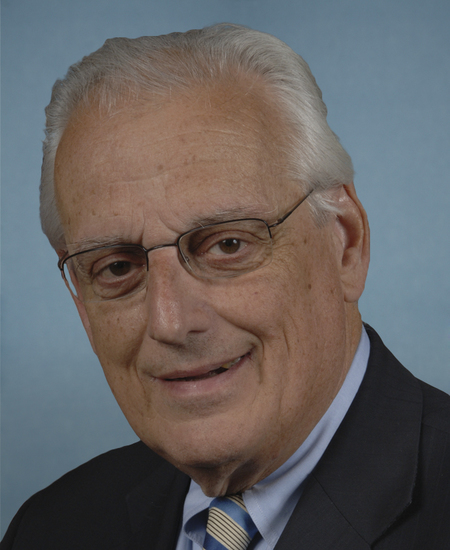
Rep. Bill Pascrell, Jr.
Sponsored bills
This resolution condemns Iranian state-sponsored terrorist attacks against U.S. citizens and officials and Iranian dissidents and expresses support for the people of Iran who are engaged in legitimate and peaceful protests against the Iranian regime.
International Human Rights Defense Act of 2021 This bill establishes in the Department of State a permanent Special Envoy for the Human Rights of LGBTQI (lesbian, gay, bisexual, transgender, queer, or intersex) Peoples who shall serve as the principal State Department advisor regarding human rights for LGBTQI people and represent the United States in diplomatic matters relevant to the human rights of LGBTQI people. The special envoy shall periodically provide Congress with a U.S. global strategy to prevent and respond to criminalization, discrimination, and violence against LGBTQI people. The State Department and the U.S. Agency for International Development may provide assistance to prevent and respond to such activities against LGBTQI people. The bill also requires that annual country reports on human rights practices include information on criminalization, discrimination, and violence based on sexual orientation and gender identity.
This joint resolution nullifies the rule finalized by the Social Security Administration on November 16, 2020, that outlines when its administrative appeals judges may hold hearings and issue decisions on individual cases. Currently, these judges serve an appellate function where they review, at the request of Social Security claimants, the decisions of the administrative law judges who issue decisions in individual cases.
This resolution urges the Department of State to take action on unpaid Peruvian agrarian reform bonds by encouraging Peru to negotiate in good faith with U.S. bondholders regarding payment of these bonds.
Public Servants Protection and Fairness Act of 2021 This bill establishes an alternative formula to calculate Social Security retirement benefits for those who receive pensions for certain non-covered employment. (The existing formula is known as the windfall elimination provision.) The alternative formula adjusts an individual's total lifetime earnings based on the proportion of covered earnings (i.e., earnings subject to Social Security payroll taxes). It applies to individuals who (1) first become eligible for benefits after 2022, (2) have earnings from non-covered service performed after 1977, and (3) have less than 30 years of coverage (i.e., years in which a beneficiary is considered to have contributed a substantial amount into the Social Security trust funds). Beneficiaries receive the higher benefit amount as calculated under the alternative method or the existing formula. In addition, the bill provides rebates for certain beneficiaries currently impacted by the existing formula. The Social Security Administration must include non-covered earnings in Social Security account statements, and the Government Accountability Office must study the availability of certain information related to retirement plans maintained by state and local governments.
Bring Jobs Home Act This bill (1) grants business taxpayers a tax credit for up to 20% of insourcing expenses incurred for eliminating a business located outside the United States and relocating it within the United States, and (2) denies a tax deduction for outsourcing expenses incurred in relocating a U.S. business outside the United States. The bill requires an increase in the taxpayer's employment of full-time employees in the United States in order to claim the tax credit for insourcing expenses. The bill eliminates the temporary suspension (for taxable years 2018 through 2025) of the tax deduction for moving expenses.
PPP Extension Act of 2021 This bill extends the Paycheck Protection Program, established to support small businesses in response to COVID-19 (i.e., coronavirus disease 2019), through June 30, 2021. Currently, the program is set to expire on March 31, 2021. For the final 30 days of the program (i.e., from June 1 until June 30), the Small Business Administration may only process applications submitted prior to June 1, and it may not accept any new loan applications. The bill excludes the budgetary effects of this bill from PAYGO scorecards under the Statutory Pay-As-You-Go Act of 2010 and from Senate PAYGO scorecards.
This bill treats property transferred by gift or upon the death of a decedent as sold at its fair market value (thus requiring recognition of gain realized over the property's basis). Under current law there is a step up in basis of such property which allows for an exclusion of gain for gifts and estate property. The bill allows an exception to this fair market value rule for U.S. citizen spouses, charities, and certain tangible property. The bill allows a taxpayer an exclusion from income for up to $1 million (indexed for inflation) in gain resulting from transfers at death. The bill imposes certain information reporting requirements for gifts or bequests subject to this bill's fair market value rule. It also allows taxpayers to pay any tax due in two or more, but not more than seven, equal installments.
Resident Physician Shortage Reduction Act of 2021 This bill increases the number of residency positions eligible for graduate medical education payments under Medicare for qualifying hospitals, including hospitals in rural areas and health professional shortage areas. Current law provides for an increase of up to 200 positions per fiscal year beginning in FY2023, with a total increase of 1,000 positions; each hospital may receive up to 25 additional positions. The bill provides for an additional increase of 2,000 positions per fiscal year from FY2023-FY2029; during this period, each hospital may receive up to 75 additional positions in total under the bill and current law. Additionally, one-third of the positions that are made available under the bill must be allocated to hospitals that are already operating above applicable resident limits. The bill also requires the Government Accountability Office to report on strategies to increase the diversity of the health professional workforce, including with respect to representation from rural, low-income, and minority communities.