

Maddy summaryHR 6751 authorizes the U.S. Mint to produce commemorative coins honoring Roberto Clemente, a Hall of Fame baseball player and humanitarian, including 50,000 $5 gold coins, 400,000 $1 silver coins, and 750,000 half-dollar coins. The coins must feature Clemente's image and inscriptions like "Roberto Clemente" and "2027," with all sales including a surcharge ($5-$35 per coin) paid to the Roberto Clemente Foundation. The foundation, which supports youth sports, education, and disaster relief programs, will use these funds for its mission, while the U.S. Treasury must recover all production costs. The coins will be sold exclusively in 2027, with no net cost to the government.
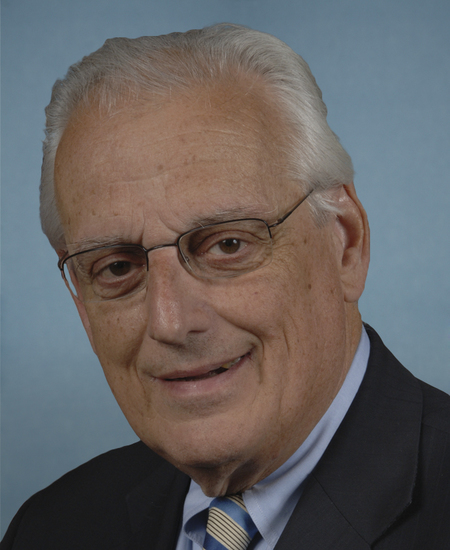
Rep. Bill Pascrell, Jr.
Sponsored bills
Maddy summaryThe Working Dog Commemorative Coin Act (HR 807) directs the U.S. Treasury to mint three types of commemorative coins honoring working dogs' service: $5 gold coins, $1 silver coins, and half-dollar coins with specific weight and composition requirements. Each coin will carry a surcharge ($35 for $5 coins, $10 for $1 coins, $5 for half-dollars) that will be paid directly to America's VetDogs to support their programs providing service dogs for veterans, the disabled, and others. The coins will be issued in 2027 with designs reflecting working dogs' roles in military, detection, therapy, and assistance work. The legislation specifies that all surcharge revenue must fund America's VetDogs' operations without creating new government programs. This is a commemorative measure focused on honoring working dogs' contributions through coin sales, with all surcharge funds going to a specific nonprofit organization.
Maddy summaryThis bill establishes a Truth and Healing Commission to investigate the history and impacts of U.S. Indian Boarding School policies on Native American communities, including cultural, emotional, and physical effects on survivors, descendants, and tribal communities. The Commission will document these impacts through research, public meetings, and testimony, working with two advisory committees focused on Native American perspectives and Federal agency coordination. The Commission will operate for six years, with annual reports to Congress and a final report containing recommendations for Federal action. The bill also includes provisions for managing burial sites related to boarding schools and ensures the Native American Graves Protection and Repatriation Act applies to remains found on Federal lands related to these schools.
Maddy summaryThis resolution urges Ukraine to reverse its 2022 suspension of adoptions by foreign nationals, including U.S. citizens. It specifically asks Ukraine to review its decision and resume such adoptions, prioritizing cases where U.S. prospective parents had already completed Ukrainian adoption requirements before the suspension or where children were part of pre-existing Ukrainian hosting programs. The resolution does not change U.S. law but formally requests Ukraine address mutual concerns to protect children's best interests. It directly affects U.S. families seeking to adopt Ukrainian children and Ukraine's adoption policies.
Maddy summaryHR 1719, the Honoring Our Fallen Heroes Act of 2023, establishes a presumption that certain cancers diagnosed in public safety officers (like police and firefighters) are work-related if linked to their duties. It defines 22 specific cancers (including lung, mesothelioma, and WTC-related cancers) as "exposure-related," allowing officers or their families to receive benefits without proving direct work connection, provided they were diagnosed within 15 years of leaving active service. The bill also creates a process for adding new cancers to the list based on scientific evidence, requiring the Bureau to review petitions and make decisions within 180 days. This applies to deaths or disabilities occurring on or after January 1, 2023, directly affecting officers who developed covered cancers during service.
Maddy summaryHR 7208 reauthorizes three existing programs under the Public Health Service Act through 2029, extending current funding periods that previously expired after 2024. It updates the authorization periods for (1) traumatic brain injury prevention efforts, (2) state grants for TBI-related projects, and (3) state grants supporting protection and advocacy services for people with disabilities. The bill directly affects states receiving federal grants under these programs by allowing continued funding for services like TBI care coordination, community support, and legal advocacy. No new policies or funding levels are created - only the timeline for existing programs is extended. This is a procedural reauthorization, not a policy change.
Maddy summaryThis bill modifies Medicaid and CHIP rules to let eligible out-of-state healthcare providers enroll without extra state screening. It applies to providers already in Medicare or their home state program, with low fraud risk, serving children under 21 with complex medical conditions. Providers would receive 5 years of enrollment under this streamlined process, eliminating state-level barriers. The change directly affects children seeking specialized care across state lines and the providers who serve them.
Maddy summaryThe NO BAN Act (HR 9244) prohibits U.S. immigration authorities from denying visas or entry based on national origin, religion, or sex. It amends immigration law to explicitly ban such discrimination in visa decisions and tightens restrictions on the president’s power to suspend entry of certain groups under Section 212(f). The bill requires specific evidence, narrow tailoring, time limits, and congressional notification for any entry restriction, while mandating public reports on visa denials and waivers. It directly affects nonimmigrant visa applicants (e.g., students, workers) and federal agencies administering immigration policy.
Maddy summaryHRES 1394 is a non-binding resolution celebrating the U.S.-India partnership based on shared democratic values, religious pluralism, and human rights, while highlighting the contributions of the Indian diaspora in the United States. It specifically recognizes the 50th anniversary of BAPS Swaminarayan Sanstha's community work, including its spiritual centers (mandirs) and volunteer efforts across the country. The resolution does not create legal obligations but formally acknowledges these ties and achievements.
Maddy summaryThis bill (HR 2365, Public Law 118-66) directs the U.S. Department of Health and Human Services (HHS) to establish the National Parkinson’s Project. It requires HHS to create and update a coordinated national plan for preventing, diagnosing, treating, and researching Parkinson’s disease and related disorders (including multiple system atrophy and progressive supranuclear palsy), while coordinating federal research and care efforts across agencies like the NIH, CDC, and VA. The law mandates annual progress assessments, an advisory council with patient advocates and diverse experts, and annual reports to Congress on federal Parkinson’s programs and recommendations for improvement. It affects federal agencies managing Parkinson’s-related programs and aims to improve care coordination and research efficiency for patients and caregivers, with the law sunsetting in 2035.