

Maddy summaryThis bill amends the World Trade Center Health Program to expand eligibility to include certain Department of Defense and Federal agency workers who responded to the September 11 attacks at the Pentagon and Shanksville, Pennsylvania. It establishes a 500-person enrollment cap for these responders, allows a broader range of licensed health care providers to conduct program evaluations, and creates two new funding mechanisms totaling $2.04 billion for the program through 2033. The bill also clarifies enrollment counts by excluding deceased individuals from program statistics and adjusts funding calculations to ensure continued support for affected responders and survivors. These changes directly affect 9/11 responders who worked at the Pentagon and Shanksville sites and their families participating in the health program.
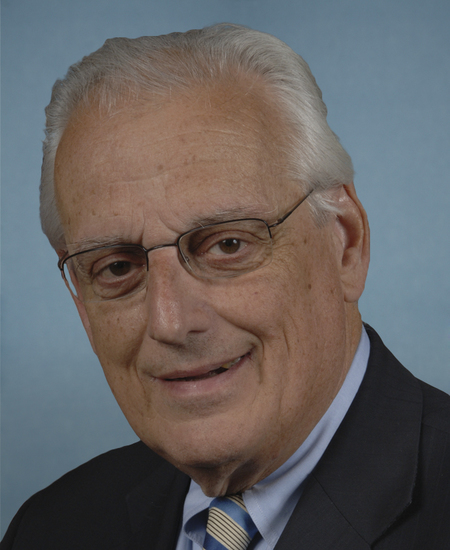
Rep. Bill Pascrell, Jr.
Sponsored bills
Maddy summaryThe Paycheck Fairness Act (HR 17) strengthens equal pay protections by amending the Fair Labor Standards Act. It prohibits pay discrimination based on sex, pregnancy, childbirth, sexual orientation, gender identity, and sex characteristics. The bill modifies employer defenses for pay differences to require demonstration that any disparity is job-related, consistent with business necessity, and accounts for the entire pay differential. It also prohibits employers from relying on wage history when making hiring decisions or setting pay, enhances penalties for violations, and requires the EEOC to collect compensation data disaggregated by sex, race, and national origin.
Maddy summaryHCONRES 22 is a symbolic resolution recognizing the persistent gender pay gap in the U.S., documenting that women earn significantly less than men across racial groups (e.g., Black women earn 67 cents for every dollar earned by White men). It highlights the economic impact of this disparity, noting women lose over $958 billion annually in wages and face barriers like occupational segregation and workplace harassment. The resolution does not create new laws or policies but formally acknowledges the issue and reaffirms Congress’s commitment to addressing the gap. It references specific Equal Pay Days (e.g., March 14 for all women) to underscore the time women must work to earn what men did the previous year.
Maddy summaryHR 1478 requires federal firearm dealers to implement physical security measures, including locked cabinets, security systems, and video surveillance, to prevent gun thefts. The bill mandates quarterly inventory checks, extends background check record retention from 24 hours to 90 days, and repeals restrictions that prevented the ATF from disclosing crime gun trace data. It increases penalties for violations, including fines up to $20,000 and license suspension or revocation for repeated failures. The bill directly affects all federally licensed firearm dealers, manufacturers, and importers by holding them accountable for security failures and recordkeeping. This legislation aims to reduce gun trafficking by strengthening enforcement and transparency in the firearm industry.
Maddy summaryHR 1511 amends Section 249 of the Immigration and Nationality Act to change eligibility criteria for certain immigration provisions. The bill replaces outdated language about entry dates (prior to July 1, 1924, or January 1, 1972) with a requirement that applicants must have been long-term residents of the United States for at least seven years before applying. This change would directly affect individuals seeking immigration status under the amended provisions who meet the new residency timeline. The bill is procedural in nature, updating the legal definition of qualifying residency without creating new benefits or restrictions. (Note: The bill's title incorrectly references the "Immigration Act of 1929," which never existed; the actual law amended is part of the 1952 Immigration and Nationality Act.)
Maddy summaryHRES 200 is a non-binding House resolution condemning two mass shootings in California: 11 victims in Monterey Park (January 21, 2023) at a Lunar New Year celebration and 7 victims in Half Moon Bay (January 23, 2023) at a farm. It honors all victims - primarily Asian-American seniors and immigrant farmworkers - expresses condolences to their families, and reaffirms the House’s commitment to supporting Asian-American and Pacific Islander communities. The resolution specifically addresses the rise in anti-Asian hate crimes during the pandemic and recognizes the vulnerability of immigrant communities. As a symbolic gesture, it does not create new laws or allocate funding but formally condemns the violence and affirms solidarity.
This resolution calls for the federal government to establish a national biodiversity strategy, which must include a goal of conserving at least 30% of U.S. lands and waters to protect biodiversity and address climate change by 2030 and other goals necessary to reduce the threats to biodiversity.
Maddy summaryThe Protecting America's Meatpacking Workers Act of 2023 establishes new safety standards for meat and poultry processing facilities to protect workers from injuries and unsafe conditions. The bill prohibits "no fault attendance policies" that penalize workers for taking legally protected leave and requires employers to provide adequate toilet facilities without punishment. It mandates new ergonomic standards to prevent musculoskeletal injuries, increases OSHA inspection resources through $60 million in annual funding, and requires facilities to report infections and deaths during pandemics. The bill directly affects meat and poultry processing workers, their employers, and federal agencies overseeing workplace safety through concrete policy changes to improve working conditions.
Maddy summaryThe LEO Fair Retirement Act of 2023 would allow federal law enforcement officers to include unpaid overtime hours toward their retirement benefits. Currently, these officers work significant overtime that isn't compensated due to pay caps, meaning they don't receive full credit for those hours in retirement calculations. The bill would amend retirement systems to include this unpaid overtime in retirement calculations, but officers would need to make a lump-sum payment to cover the difference between what they would have contributed to retirement if paid for the overtime versus what they actually contributed. This applies to specific federal law enforcement roles including criminal investigators, federal air marshals, special agents in the Diplomatic Security Service, probation officers, and pretrial services officers. The changes would take effect one year after the bill's enactment.
Maddy summaryHR 1322 expands federal retirement benefits to include specific non-traditional law enforcement roles. It adds IRS employees focused on tax collection, U.S. Postal Inspection Service staff, Department of Veterans Affairs police officers, and U.S. Customs and Border Protection seized property specialists to the definition of "law enforcement officer" under federal retirement systems. Current employees in these newly covered positions must elect to pay deposits for past service to receive full retirement credit, while their agencies must contribute additional funds for that past service. The bill also temporarily prevents mandatory separation for current law enforcement officers for three years after enactment.