

Maddy summaryHR 1794 authorizes the minting of commemorative coins to honor the 2028 Los Angeles Olympic and Paralympic Games. It specifies four coin types ($5 gold, $1 silver, half-dollar clad, and proof silver $1) with defined weights, sizes, and mintage limits (e.g., up to 100,000 gold coins). A surcharge is added to each coin sale (e.g., $35 for gold coins), with all surcharge funds directed to the U.S. Olympic and Paralympic Properties to support legacy programs and the Games' operations. The coins must be issued only during 2028 and are legal tender, though the bill focuses solely on commemorative coinage, not policy changes.
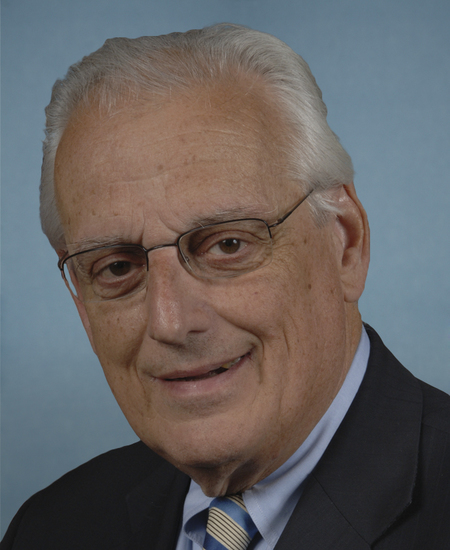
Rep. Bill Pascrell, Jr.
Sponsored bills
Maddy summaryHR 1777 establishes a $50 million annual fund (2024-2028) for collaborative defense research between the U.S. and Israel in emerging technologies like artificial intelligence, cybersecurity, directed energy, and automation. The bill directly supports U.S. and Israeli military forces by enabling joint development of new warfare capabilities to address current and future defense challenges. Key provisions include authorizing $50 million per year for collaborative projects, building on existing U.S.-Israel defense partnerships like counter-tunnel and counter-drone systems. This funding aims to strengthen bilateral defense innovation without altering existing military aid structures.
Maddy summaryHCONRES 28 is a symbolic resolution expressing Congress's view that tax-exempt fraternal benefit societies - organizations providing life, health, and accident benefits to members - have long delivered critical community support. It states these societies, with about 7 million members nationwide, generate significant annual value through charitable work and volunteer activities (estimated at over $3.8 billion yearly). The resolution affirms that their tax-exempt status under Section 501(c)(8) of the tax code is essential for sustaining their volunteer-driven model and relieving pressure on government safety programs. As a non-binding expression of congressional sentiment, it does not alter existing laws or create new obligations.
This resolution recognizes the Islamic faith as one of the great religions of the world, acknowledges the onset of Ramadan (the holy month of fasting and spiritual renewal for Muslims), and expresses respect to Muslims in the United States and throughout the world on this occasion.
Maddy summaryThe Office of Gun Violence Prevention Act of 2023 establishes a new office within the Department of Justice to coordinate federal efforts on gun violence prevention. The office, led by a Director appointed by the Attorney General, will evaluate existing programs, identify data gaps, and make evidence-based policy recommendations to Congress and the President. It will work with an advisory council including DOJ officials and external members like gun violence survivors, community service providers, and public health experts. The office must produce an annual report to Congress on gun violence trends and policy recommendations, and the bill authorizes funding to support these activities.
Maddy summaryHR 1723, the Abortion is Health Care Everywhere Act of 2023, amends the Foreign Assistance Act to remove restrictions on using U.S. foreign aid funds for abortion services. It explicitly allows U.S. foreign assistance programs to fund comprehensive reproductive health care, including abortion services, training, and equipment. This change directly affects U.S. international health programs and recipient countries, enabling them to integrate safe abortion care into broader reproductive health services. The bill aims to align U.S. policy with global health guidelines by making abortion services a standard part of reproductive health care funded through foreign assistance.
Maddy summaryHR 1320, the COAST Anti-Drilling Act, bans new oil and gas leasing in four specific coastal areas: the Mid-Atlantic, South Atlantic, North Atlantic, and Straits of Florida planning areas of the outer Continental Shelf. The bill amends federal law to prohibit the Secretary of the Interior from issuing any leases or authorizations for exploration, development, or production of oil, natural gas, or minerals in these regions. This directly affects coastal states and marine ecosystems in those areas by preventing new offshore drilling projects. The law creates a permanent restriction on new leasing in these designated zones.
Maddy summaryThis bill authorizes a Congressional Gold Medal to honor the "Hello Girls" - female telephone operators who served in the Army Signal Corps during World War I. They provided critical battlefield communications in France (connecting 26 million calls), wore military uniforms, and faced combat risks, but were denied veteran benefits for 60 years due to being classified as civilian contractors. The medal recognizes their pioneering service, devotion, and the decades-long struggle to gain military recognition. The award follows similar recognition for other WWII women veterans and aims to correct the historical injustice they faced.
Mental Health in International Development and Humanitarian Settings Act or the MINDS Act This bill authorizes and requires certain actions by the U.S. Agency for International Development (USAID) to integrate mental health and psychosocial support (MHPSS) activities across U.S. development and humanitarian assistance programs. The bill authorizes USAID to designate an MHPSS coordinator. The coordinator's duties include (1) guiding, overseeing, and directing MHPSS programming and integration across U.S. development and humanitarian assistance programs; and (2) promoting best practices, coordination, and reporting in MHPSS across such programs. Focus populations for the coordinator include adult caretakers, children separated from a family unit, and displaced populations. In addition, the bill establishes a working group comprised of representatives from relevant USAID bureaus, the Department of State, and other federal agencies. The purpose of the working group is to ensure continuity and integration of MHPSS across U.S. development and humanitarian assistance programs. The provisions of the bill expire five years after enactment.
Maddy summaryHR 1499, the Good Jobs for Good Airports Act, requires airports receiving federal funding to pay covered service workers a minimum wage of at least $15 per hour (or higher if state/local laws or federal standards require it) and provide minimum fringe benefits. It directly affects workers in specific airport roles like security, ticketing, concessions, cleaning, and ramp services at small, medium, or large hub airports. The bill mandates annual certification from airport operators to verify compliance with these wage and benefit standards, tied to eligibility for federal airport grants under the Infrastructure Investment and Jobs Act. It does not override stricter state or local laws but ensures minimum standards for workers supporting airport operations.