

Diversity and Inclusion at the Department of State Act This bill establishes a new position and requires other activities to promote diversity and inclusion in the Department of State. The bill creates the presidentially-appointed position of Chief Diversity and Inclusion Officer in the Office of the Deputy Secretary of State to, among other activities, develop a strategic plan to guide implementation of diversity and inclusion efforts and support State Department personnel from traditionally underrepresented groups. The officer reports directly to the Secretary of State. Additionally, the State Department must establish a Diversity and Inclusion Leadership Council to coordinate applicable strategic plans, initiatives, and policies. The bill also modifies merit selection processes for promotions, performance pay, and related matters to promote diversity and inclusion in the Foreign Service. Specifically, it adds factors (e.g., testimony from peers and subordinates or demonstrated support for diversity and inclusion) that may be considered in recommendations and rankings related to a Foreign Service officer's performance. The State Department must also establish a mentorship program for entry- and mid-level members of the Foreign Service and periodically offer a Senior Executive Service development program to members of the civil service in the top two pay grades. Senior Executive Service members serve as high-level managers within federal agencies. The bill requires the State Department to report on its diversity and inclusion efforts, as well as demographic information about members of boards that make personnel decisions and candidates for the Senior Executive Service.
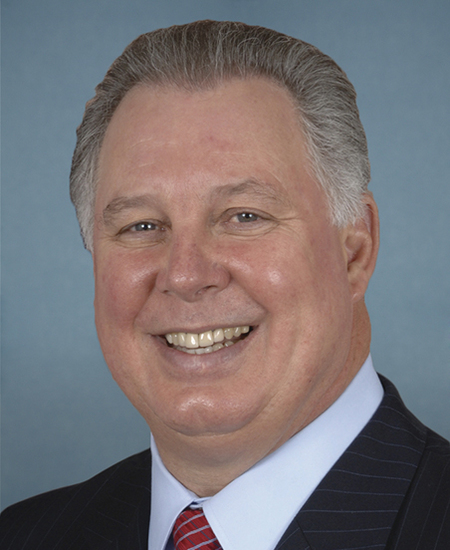
Rep. Albio Sires
Sponsored bills
City and State Diplomacy Act This bill establishes within the Department of State the Office of City and State Diplomacy, which shall coordinate federal support for engagement by state and municipal governments with foreign governments. The head of the office shall be the Ambassador-at-Large for City and State Diplomacy, who shall be appointed by the President with the advice and consent of the Senate.
Extinction Prevention Act of 2021 This bill requires the Department of the Interior to provide financial assistance for the conservation of butterflies and moths in North America; plant species in Hawaii, Guam, American Samoa, and the Northern Mariana Islands; freshwater mussels in the United States; and bony fish found in desert ecosystems in Arizona, California, Colorado, Nevada, New Mexico, and Utah. Among other things, the bill establishes the North America Butterfly Conservation Fund, the Pacific Islands Plant Conservation Fund, the Freshwater Mussels Conservation Fund, and the Southwest Desert Fish Conservation Fund. In selecting projects for assistance, Interior must prioritize projects that conserve threatened and endangered species.
Captive Primate Safety Act This bill limits the trade and possession of nonhuman primates. For example, the bill prohibits most individuals from owning a nonhuman primate as a pet.
Critically Endangered Animals Conservation Act of 2021 This bill provides statutory authority for the Critically Endangered Animals Conservation Fund, which finances a grant program to protect critically endangered species. Specifically, the bill requires the Department of the Interior to establish the fund as a separate account in the Multinational Species Conservation Fund. Critically endangered species means any animal species categorized on the International Union for Conservation of Nature (IUCN) Red List of Threatened Species as either endangered or critically endangered. The term also means any other animals species categorized on such list as data deficient or under a threat category lower than endangered if Interior determines that (1) the most recent IUCN Red List assessment indicates that the population is decreasing, or (2) such species is facing new or emerging threats.
This resolution (1) commits to advancing policies that will end roadway fatalities by 2050, and (2) calls on Congress and the Department of Transportation to commit to working together to achieve zero roadway fatalities by the year 2050.
Closing the Meal Gap Act of 202 1 This bill revises the requirements for calculating Supplemental Nutrition Assistance Program (SNAP) benefits. The bill increases the minimum SNAP benefit and requires benefits to be calculated using the value of a low-cost food plan. The Department of Agriculture (USDA) must determine the requirements for the low-cost food plan, which is the diet required to feed a family of four, consisting of a man and a woman 19-50 years of age, a child 6-8 years of age, and a child 9-11 years of age. USDA must (1) reevaluate and publish the market baskets of the plan by January 1, 2027, and every five years thereafter, based on current food prices, food composition data, consumption patterns, and dietary guidance; and (2) make adjustments to the plan to account for household size, changes in the cost of the diet, and the costs of food in specified areas. The bill modifies the requirements for calculating household income to determine SNAP eligibility by (1) authorizing a standard medical expense deduction for households containing an elderly or disabled member, and (2) eliminating the cap on the excess shelter expense deduction. The bill eliminates certain work requirements for SNAP. The requirements apply to able-bodied adults who are ages 18-49 and have no dependent children. The bill allows Puerto Rico, American Samoa, and the Northern Mariana Islands to participate in SNAP. Currently, the three territories receive block grants instead of participating in SNAP.
Securing Universal Communications Connectivity to Ensure Students Succeed Act or the SUCCESS Act This bill provides additional funding for the Emergency Connectivity Fund, which supports remote learning during the COVID-19 emergency period by covering reasonable costs of laptop and tablet computers, Wi-Fi hotspots, modems, routers, and broadband connectivity purchases for off-campus use by students, school staff, and library patrons.
American Workforce Investment in Next Generation of Students Act This bill directs the Secretary of Education to award grants to eligible entities to carry out a program for students to enroll in and complete science, technology, engineering, and mathematics (STEM) courses, STEM-focused career and technical education courses, and other career pathway courses during grades 11 and 12 at a secondary school served by a local educational agency (LEA) partner; enroll in a course of study related to such a career pathway or in a youth apprenticeship program at a partner community college upon graduating from the secondary school; enroll, for a two-year period, in the youth apprenticeship program or the joint-labor management training program upon receiving an associate's degree from a partner community college; receive assistance from a student career workforce navigator; and receive work training and job placement through a workforce development consortium employer established under the bill. An eligible entity is a partnership (1) among at least one LEA, at least one community college, and at least one youth apprenticeship program or joint labor-management training program; and (2) that works with an employer in a state-identified high-skill, high-wage, or in-demand industry sector or occupation that is serving, or seeking to expand its capacity to serve, youth apprenticeship programs.
Passport Emergency Extension Act of 2021 This bill requires the Department of State to establish an expedited procedure for providing individuals who wish to use their U.S. passport that expired during the COVID-19 emergency (or that is scheduled to expire by March 31, 2022) with a marker to be affixed to such passport indicating a renewal or extension of validity through July 31, 2022.