

9/11 Responder and Survivor Health Funding Correction Act This bill increases funding for and otherwise modifies a federal program that provides medical monitoring and treatment to responders and survivors who suffer from health conditions related to the September 11, 2001, attacks on the World Trade Center. Among the changes, the bill allows certain health care providers other than physicians to determine whether an individual's health condition is related to the attacks, and it establishes a research program to study the impacts of the attacks on health and educational outcomes of individuals who were 21 years of age or younger when the attacks occurred.
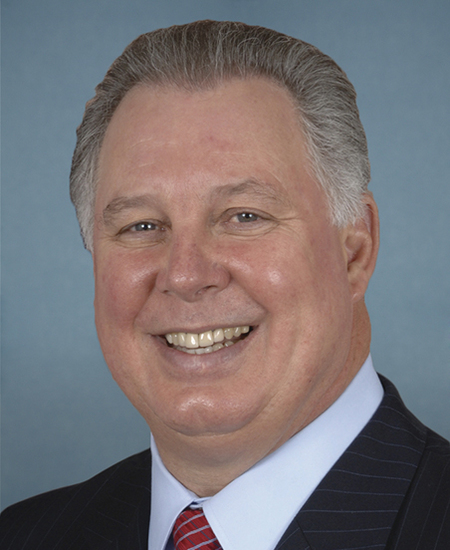
Rep. Albio Sires
Sponsored bills
Real Emergency Access for Aging and Disability Inclusion for Disasters Act or the REAADI for Disasters Act This bill establishes programs and requirements to assist individuals with disabilities and older adults (age 50 or older) with disaster preparedness. Among other provisions, the bill requires the establishment of an advisory committee that includes disabled individuals and older adults to oversee the use of funds made available by this bill; allows states to contract with Centers for Independent Living to provide services and support to disabled individuals in preparing for hazards; requires the Department of Health and Human Services to award grants to carry out projects of national significance that, among other things, create opportunities for disabled individuals and older adults to directly contribute to disaster preparedness, recovery, and mitigation; modifies and expands the membership of the National Advisory Committee on Individuals with Disabilities and Disasters to ensure that it represents the diversity of the disabled and older adult communities; and establishes the Disability and Disaster Preparedness Advisory Commission to review settlement agreements involving potential violations of the Rehabilitation Act of 1973 and the Americans with Disabilities Act of 1990. The Government Accountability Office must study the compliance of federal agencies with such enactments in expending funds to support disabled individuals and older adults in responding to, recovering from, and mitigating disasters.
Disaster Relief Medicaid Act This bill establishes a series of programs and requirements relating to Medicaid coverage of individuals affected by a federally declared major disaster. In particular, the bill provides for specific disaster relief coverage under Medicaid for individuals who meet specified income eligibility standards and, during the seven-day period preceding the disaster, were either residents of the impacted area or were employed in the impacted area (and subsequently lost employment). Coverage is effective for two years after the date of the disaster declaration. State Medicaid programs must provide disaster relief coverage that is at least as comprehensive as the state's Medicaid coverage and the Medicaid coverage of the individual's home state, as applicable. The bill applies a 100% Federal Medical Assistance Percentage (i.e., federal matching rate) to such coverage and related administrative expenses.
Children's Mental Health Infrastructure Act of 2021 This bill provides funding through FY2026 to the Health Resources and Services Administration for grants to improve the capacity of children's hospitals to provide pediatric behavioral health services, including by modernizing sites of care and enhancing telehealth capabilities.
Helping Kids Cope Act of 2021 This bill provides funding through FY2026 to the Health Resources and Services Administration (HRSA) for grants to enhance access to and provider training in pediatric behavioral health care. Specifically, HRSA must award grants to pediatricians, children's hospitals, and other providers to support pediatric behavioral health integration and coordination within communities. Grant-funded activities may include hiring community navigators to assist families in accessing appropriate services, incorporating behavioral health services in pediatric practices, and delivering services via telehealth. In addition, HRSA must award grants to children's hospitals to expand training for providers in the pediatric behavioral health workforce.
Central American Women and Children Protection Act of 2021 This bill temporarily authorizes the Department of State to enter into bilateral compacts with the governments of El Salvador, Guatemala, and Honduras to strengthen criminal justice systems, social supports, and other means to protect women and children from domestic and gender-based violence. At least 15 days before entering a compact, the State Department must submit to Congress a copy of the proposed agreement and related materials. Authority to enter a compact terminates on September 30, 2023, and a compact may last no more than six years. To support the objectives outlined in a compact, the State Department may provide assistance to international organizations, civil society, or other private entities for programs and activities to prevent and respond to domestic and gender-based violence in a compact country. The bill bars the provision of assistance to the government of a compact country as direct budgetary support. The State Department may suspend or terminate the assistance if a compact country or entity receiving the assistance engaged in conduct contrary to U.S. national security interests or inconsistent with the objectives of the compact. The State Department must notify Congress at least 15 days before suspending or terminating assistance. The bill also requires the State Department to annually report on progress made under each compact, including its effect on reported violence against women and children and other domestic and gender-based violence indicators.
Quiet Communities Act of 2021 This bill requires the Environmental Protection Agency to reestablish an Office of Noise Abatement and Control to promote the development of local noise control programs, carry out research, and develop and disseminate educational materials, among other duties.
Lonnie Kilpatrick Central Pacific Relief Act This bill provides a presumption of service-connection for diseases associated with exposure to certain herbicide agents to veterans who served on (1) Guam or American Samoa, or in the territorial waters thereof, between January 9, 1962, and July 31, 1980; or (2) Johnston Atoll or a ship that went to Johnston Atoll between January 1, 1972, and September 30, 1977. Under a presumption of service-connection, specific diseases diagnosed in certain veterans are presumed to have been caused by the circumstances of their military service. Health care benefits and disability compensation may then be awarded. Additionally, the bill expands eligibility for hospital care, medical services, and nursing home care to veterans with a disability associated with exposure to certain herbicides during specified times of military service on Guam, American Samoa, or Johnston Atoll.
Protecting the Information of our Vulnerable Children and Youth Act or the Kids PRIVCY Act This bill expands the requirements for digital services when handling the personal information of children. Specifically, the bill (1) requires digital services to obtain express, affirmative consent that is specific, informed, and unambiguous before processing the personal information of a child or teenager under the age of 18; (2) prohibits certain targeted advertising; and (3) allows individuals to access, correct, or delete their personal information. The bill increases the civil penalty for violations of the children's online privacy protections and provides for enforcement by the Federal Trade Commission and a private right of action.
This resolution condemns the assassination of Haitian President Jovenel Moise on July 7, 2021, and extends condolences to his family and the people of Haiti.