

Maddy summaryHR 1423, the Guard and Reserve GI Bill Parity Act of 2025, expands GI Bill benefits to National Guard members who serve on full-time National Guard duty or active duty under Title 32. It removes previous exclusions by counting this service toward eligibility for Post-9/11 educational benefits, just like active-duty service. The change applies retroactively to service performed since September 11, 2001, allowing affected veterans to access benefits they were previously denied. This policy adjustment directly affects National Guard members who completed qualifying full-time duty since 2001.
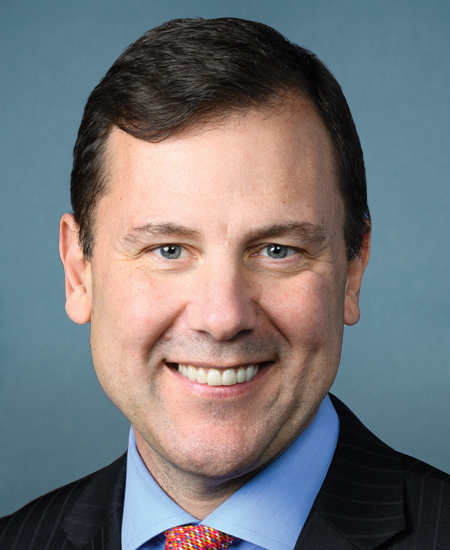
Rep. Thomas H. Kean, Jr.
Sponsored bills
Maddy summaryThis bill requires the Secretaries of Health and Human Services and Defense to develop a 10-year strategy within 180 days of enactment to maintain stockpiles of anthrax countermeasures (like treatments and vaccines) in the Strategic National Stockpile and for military personnel and families on U.S. bases. It mandates annual reports to Congress detailing anthrax threats from foreign adversaries and terrorist groups, government programs addressing these threats, and efforts to ensure countermeasures are available for military dependents abroad. The strategy must prioritize sustainable cooperation with manufacturers and address multidrug-resistant strains. The bill directly affects military personnel, their families, and civilians on military installations by strengthening anthrax defense capabilities.
Maddy summaryThe Affordable Housing Credit Improvement Act of 2025 would reform the Low-Income Housing Credit program, which provides tax credits to developers of affordable housing. It would increase state allocations based on population with annual cost-of-living adjustments, modify tenant eligibility rules to allow higher income limits for some residents, and add protections for domestic violence victims in housing. The bill would simplify rules for rural and Native American housing projects, clarify credit eligibility requirements, and require greater transparency in program administration. These changes would directly affect developers, property owners, and low-income tenants in housing projects that receive LIHC tax credits.
Maddy summaryThe Invest to Protect Act of 2025 establishes a $50 million annual grant program (2027-2031) for local governments employing fewer than 175 law enforcement officers, including counties, municipalities, and Tribal governments. Grants fund de-escalation training, victim-centered domestic violence response training, evidence-based safety training for scenarios like mental health crises or active shooters, recruitment/retention bonuses (capped at 20% of salary), and mental health resources for officers. Recipients must report on program use, disclose bonus amounts publicly, and comply with audits to prevent misuse of funds. The bill aims to improve officer safety and community relations through targeted support for smaller law enforcement agencies.
Maddy summaryHR 2244, the Michael Lecik Military Firefighters Protection Act, establishes a presumption that certain diseases suffered by military firefighters were incurred during service. It directly affects veterans who were trained in fire suppression and served at least five years in firefighting or damage control roles. The bill presumes service connection for 17 specific conditions - including heart disease, lung disease, and various cancers - if they manifest with at least 10% disability within 15 years of separation. This simplifies the process for these veterans to receive disability benefits without needing to prove direct service connection.
Maddy summaryThis bill, HR 2102 (Major Richard Star Act), allows veterans with combat-related disabilities to receive both full military retired pay and veterans' disability compensation simultaneously, without the previous offset that reduced retired pay. It directly affects veterans already eligible for both benefits due to combat-related injuries, removing the requirement that their retired pay be reduced by the disability compensation amount. The key provision amends Title 10 and Title 38 to eliminate the offset rule (sections 5304 and 5305 of Title 38) for these veterans. The change applies to payments starting after the bill’s enactment date, effective for all qualifying veterans. This is a policy change to increase financial support for affected veterans, not a new benefit.
Maddy summaryHR 2654, the Lifesaving Gear for Police Act of 2025, removes restrictions on state and local police departments accessing federal equipment by making certain federal regulations unenforceable. It targets rules issued after May 15, 2015, that limited the transfer of excess Department of Defense equipment (under Executive Orders 13688 and 14074) unless Congress passes them into law. The bill requires the federal government to return or replace equipment recalled under those rules at no cost to agencies that meet eligibility criteria under existing law. It also prohibits using federal funds to enforce any unenacted regulations restricting equipment transfers.
Maddy summaryHR 2588, the Improving Reporting to Prevent Hate Act of 2025, requires the Attorney General to evaluate whether local governments with populations over 100,000 (that apply for specific grants) are credibly reporting hate crimes. It flags jurisdictions that report zero hate crimes or no data annually, making them ineligible for grants unless they meet specific reporting standards. Jurisdictions can avoid penalties by conducting significant community education on hate crimes, such as adopting reporting policies or holding public forums. The Attorney General must publish an annual report on jurisdictions using the education exception. This bill focuses on improving data accuracy for hate crimes, not changing hate crime laws or definitions.
Maddy summaryThis bill raises the asset limits for Supplemental Security Income (SSI) recipients to allow more savings without losing benefits. It increases the individual resource limit from $2,250 to $20,000 (in 2025) and the couple limit from $1,500 to $10,000, with automatic annual inflation adjustments based on the Consumer Price Index. These changes directly affect low-income seniors and people with disabilities who rely on SSI. The bill eliminates the current "savings penalty" that previously forced recipients to spend down savings to qualify. The new limits will adjust each year to maintain their real value against inflation.
Maddy summaryHR 2582, the Expanding Partnerships for Innovation and Competitiveness Act, creates a nonprofit organization called the Foundation for Standards and Metrology to support the National Institute of Standards and Technology (NIST). The Foundation will work with researchers, universities, industry, and nonprofits to advance measurement science, technical standards, and technology commercialization to enhance U.S. economic security. It will be governed by a Board of Directors with 11 appointed members representing diverse stakeholders, and must become financially self-sustaining within five years. The Foundation will conduct studies, support research facilities, facilitate commercialization of federally funded research, and report annually to Congress on its activities and financial status. The bill authorizes $500,000-$1,250,000 annually from NIST's budget to fund the Foundation starting in fiscal year 2026.