

Maddy summaryThe TAKE IT DOWN Act makes it a crime to intentionally share intimate images or digital forgeries of people without their consent, with penalties of up to 2 years in prison for adults and 3 years for minors. It requires major online platforms to establish a 48-hour process for victims to request removal of such content, with platforms protected from liability when acting in good faith. The bill defines "digital forgery" as AI-generated content that appears authentic and applies to websites and apps primarily hosting user-generated content, excluding email services and broadband providers. The Federal Trade Commission will enforce these notice and takedown requirements. This legislation directly affects victims of nonconsensual intimate content, the platforms hosting such material, and individuals who distribute it.
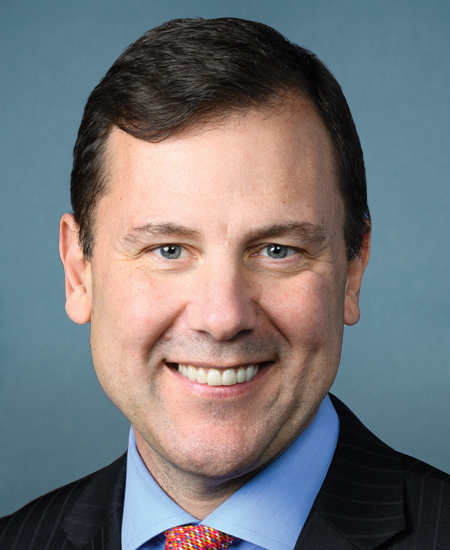
Rep. Thomas H. Kean, Jr.
Sponsored bills
Maddy summaryThis resolution designates April as Mathematics and Statistics Awareness Month to recognize the importance of math and statistics in STEM fields and everyday life. It supports efforts to increase public appreciation for these disciplines, highlights their role in innovation (including in AI, cybersecurity, and health), and notes ongoing diversity gaps in mathematical sciences PhD programs. The resolution has no binding policy changes - it is purely symbolic, celebrating the field without creating new requirements or funding. It was introduced by representatives in the U.S. House of Representatives with no further legislative action specified.
Maddy summaryHR 3028, the Duty Drawback Clarification Act, clarifies tariff classifications for whisky imports by updating the Harmonized Tariff Schedule. It replaces a general whisky tariff code with specific subheadings based on whisky type (Irish/Scotch, Bourbon, Rye, or "other") and container size (under or over 4 liters), adding 8 new statistical suffixes. This change directly affects whisky importers and U.S. Customs officials by standardizing how these products are classified for duty-free entry (as indicated by "Free" in the tariff). The new classifications take effect 15 days after the bill's enactment.
Maddy summaryThe BUILD Act of 2025 creates two federal grant programs to help small communities improve public safety infrastructure. It provides up to $4 million per project for law enforcement agencies serving communities under 50,000 residents to upgrade facilities focused on emergency services, officer training, recruitment, or community safety. Similarly, it offers grants for fire departments (career, combination, or volunteer) in the same size communities to enhance facilities for firefighting, emergency medical services, personnel training, or community safety. The bill authorizes $250 million annually from 2026 through 2028 for each program and requires annual reports on grant usage and infrastructure needs.
Maddy summaryHRES 337 is a symbolic House resolution honoring linemen for their critical role in maintaining power infrastructure and responding to emergencies. It recognizes them as first responders who work in dangerous conditions 24/7 to keep electricity flowing, supporting schools and businesses during storms. The resolution formally supports designating April 18, 2025, as "National Lineman Appreciation Day" to publicly acknowledge their contributions. As a non-binding resolution, it has no direct policy impact or effect on affected individuals.
Maddy summaryThe Housing Supply Frameworks Act (HR 2840) directs the Department of Housing and Urban Development (HUD) to create federal guidelines and best practices for state and local governments to reform zoning rules that restrict housing supply. It focuses on practical changes like reducing parking minimums, allowing more housing types (e.g., duplexes, accessory dwellings), streamlining approval processes, and increasing density near transit - aiming to address a nationwide housing shortage affecting cost-burdened households. The guidelines, developed with public input from planners, developers, and community groups, are intended to help states and localities voluntarily adopt reforms that increase housing availability across income levels. States and localities that adopt these recommendations must report progress to Congress within five years, though the bill does not mandate specific changes or provide direct housing construction funds.
Maddy summaryHR 2881, the COAST Anti-Drilling Act of 2025, prohibits the federal government from issuing new oil and gas leases in four specific coastal planning areas: the North Atlantic, Mid-Atlantic, South Atlantic, and Straits of Florida. This directly affects the Department of the Interior (specifically the Secretary) and oil and gas companies seeking to explore or develop resources in these regions. The bill amends the Outer Continental Shelf Lands Act to ban all new leasing authorizations in these areas, as defined by the 2024-2029 leasing program notice. It does not affect existing leases or operations but prevents future development in these designated coastal zones.
Supplemental Oxygen Access Reform Act of 2025 or the SOAR Act of 2025 This bill establishes certain requirements with respect to the payment and provision of supplemental oxygen and related services under Medicare. For example, the bill provides for separate payments, indexed to inflation, of oxygen and related equipment, supplies, and services under Medicare (rather than under the competitive acquisition program). It also specifically covers services that are provided by respiratory therapists under Medicare and provides for an additional payment adjustment for these services. Additionally, the bill (1) requires the Centers for Medicare & Medicaid Services to develop an electronic template for providers to use when prescribing oxygen and related equipment, supplies, and services; and (2) establishes certain rights for beneficiaries receiving these items and services, such as the right to choose their suppliers and to receive clear communications and be informed about the services provided.
Maddy summaryHR 2767, the BRAIN Act, aims to advance brain tumor research and improve patient care by requiring the NIH to create a public database of tumor samples collected with federal funding. It authorizes $50 million annually for a Glioblastoma Therapeutics Network to accelerate treatment development and $10 million for cellular immunotherapy research (including CAR-T therapies) targeting brain tumors. The bill also mandates a national awareness campaign to increase understanding of cancer clinical trials and biomarker testing, plus $5 million yearly for pilot programs studying survivor care coordination and follow-up services. Additionally, it directs the FDA to issue guidance ensuring brain tumor patients can access clinical trials. These provisions directly affect patients, researchers, and healthcare providers focused on brain tumors and rare cancers.
Maddy summaryThis bill requires the U.S. government to strengthen measures against hostage-taking by Iran and other adversaries. It mandates annual reports on $6 billion in Iranian funds transferred to Qatar (including certifications on humanitarian use), reviews of past hostage cases in Iran to identify individuals for sanctions, and restrictions on Iranian diplomats at the UN who face terrorism-related sanctions. The bill also directs the Secretary of State to evaluate whether U.S. passports should be invalid for travel to Iran due to detention risks, and requires a strategy to deter hostage-taking by U.S. adversaries. These provisions aim to hold accountable those involved in hostage-taking while protecting U.S. citizens.