

Raise the Age Act This bill establishes new restrictions on the sale or transfer of certain semiautomatic firearms to individuals under 21 years of age. Specifically, this bill makes it unlawful for a licensed gun dealer, importer, manufacturer, or collector to sell or deliver a semiautomatic center-fire rifle that has (or has the capacity to accept) an ammunition feeding device with a capacity of more than five rounds to an individual who the licensee knows or has reasonable cause to believe is under age 21. The prohibition does not apply if the individual under age 21 is a full-time law enforcement officer or active-duty member of the Armed Forces. The bill also requires the Federal Bureau of Investigation to report on the operation of its public access line, including a description of information sharing protocols and recommendations for improving such protocols.
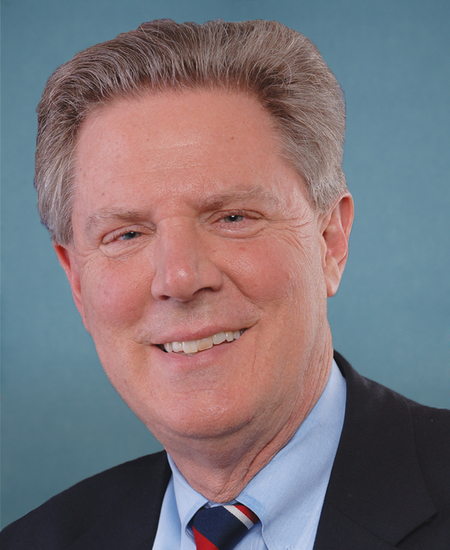
Rep. Frank Pallone, Jr.
Sponsored bills
Maddy summaryHR 5904, the Deepavali Day Act, would add "Deepavali Day" to the list of recognized days in federal law, specifically amending the U.S. Code section that lists federal holidays. It recognizes Deepavali - a festival celebrated by over six million Americans, including Hindu, Buddhist, Sikh, Jain, and Indo-Caribbean communities - as a day symbolizing the victory of light over darkness. The bill does not create a paid holiday or change government operations; it simply adds Deepavali Day to the existing federal holiday schedule. This recognition aligns with Congress's acknowledgment of Deepavali's cultural significance and its shared values with U.S. democratic principles.
National Flood Insurance Program Reauthorization and Reform Act of 2021 This bill generally revises the National Flood Insurance Program (NFIP) and reauthorizes the program through FY2026. The bill addresses NFIP coverage, cost, and availability, including by generally prohibiting the Federal Emergency Management Agency (FEMA) from raising certain premiums, surcharges, and fees more than 9% a year for five years; revising flood insurance coverage limits; establishing a means-tested program to provide financial assistance to low income households through policy discounts; and revising standards and certification requirements for flood insurance rate maps. The bill also revises administrative provisions of the NFIP, including by allowing for the continuous operation of the NFIP during a lapse in appropriations, and prohibiting the Department of the Treasury from charging FEMA interest for NFIP debt for five years. The bill sets forth requirements for Write Your Own companies related to reimbursements, agent commissions, and penalties for underpayment of claims. (A Write Your Own company writes and services federal standard flood insurance policies in its own name.) The bill establishes state or tribal government revolving funds for flood mitigation activities and also provides for loans, grants, and other incentives regarding mitigation.
Security After Sandy Act This bill cancels and waives certain debts owed to the United States. The bill cancels repayment for all uncollected amounts owed with respect to community disaster loans made by the federal government between January 1, 2006, and January 1, 2021, with respect to any major disaster declared under the Robert T. Stafford Disaster Relief and Emergency Assistance Act. The Federal Emergency Management Administration (FEMA), the Department of Housing and Urban Development, and the Small Business Administration shall waive a debt owed to the United States related to such assistance provided to an individual or household if (1) such debt owed is a result of an unauthorized use of funds for such assistance, and (2) the use of funds related to the same recovery for which the assistance was provided. Such debt may not be waived if it involves fraud by the debtor.
This resolution supports the designation of Oxi Day in commemoration of Greece's refusal to submit to the Axis Powers during World War II and notes that this resistance likely led to the ultimate defeat of Nazi Germany. (Greece's Prime Minister at the time, Ioannis Metaxas, had responded to Italy's demand for surrender with the single word Oxi! or No! )
Maddy summaryHRES 752 is a symbolic House resolution (not a binding law) introduced on October 28, 2021, that urges U.S. House members to stand in solidarity with workers advocating for fair pay, quality retirement benefits, and safer workplaces. It references widespread strike activity in 2021 (including nurses, auto workers, and theater employees) and highlights statistics showing growing worker demands and public support for unions (68% of Americans support labor unions). The resolution does not create new policies or change existing laws - it serves solely as a statement of support for workers' efforts to secure better compensation and working conditions through collective action.
Social Security 2100: A Sacred Trust This bill makes changes to Social Security benefits, taxes, and other aspects of the program, including by raising the primary insurance amount, increasing the maximum taxable earnings that are subject to Social Security payroll taxes, and requiring Social Security account statements to be mailed unless the individual recipient opts for electronic delivery.
Public Service Freedom to Negotiate Act of 20 21 This bill provides minimum collective bargaining rights and procedures for public employees and prohibits strikes by certain public safety workers. The Federal Labor Relations Authority (FLRA) shall determine for each state whether the laws of such state substantially provide for each of the minimum standard collective bargaining rights and procedures specified by this bill, including the right of public employees and supervisory employees to self-organize, form or join a labor organization, or collectively bargain. The FLRA must issue rules and take actions to establish and administer bargaining rights and procedures for those states that do not substantially provide for them. No employers, emergency services employees, or law enforcement officers may engage in a lockout, strike, or any other organized job action that is likely to result in a measurable disruption of the delivery of emergency or public safety services. Furthermore, no labor organization may be the cause of a violation of such prohibition.
This concurrent resolution recognizes the disparity between wages paid to Latina women, and its impact on women, families, and the nation and reaffirms Congress' commitment to supporting equal pay and to narrowing the gender wage gap.
National Centers of Excellence in Advanced and Continuous Pharmaceutical Manufacturing Act of 2021 This bill directs the Food and Drug Administration (FDA) to designate qualified institutions of higher education (or consortia of such institutions) as National Centers of Excellence in Advanced and Continuous Pharmaceutical Manufacturing and to provide grants to the centers. Each designated center must conduct research on advanced and continuous pharmaceutical manufacturing technologies and must share information from such research with the FDA. (Currently, most drug production involves batch manufacturing, which typically takes longer than continuous manufacturing processes.)