This resolution recognizes the cultural and historical significance of the Lunar New Year. The resolution expresses, in observance of this Lunar New Year, the Year of the Tiger, the deepest respect of the House of Representatives for Asian Americans and all individuals throughout the world who celebrate this significant occasion. The resolution wishes Asian Americans and all individuals who observe this holiday a happy and prosperous new year.
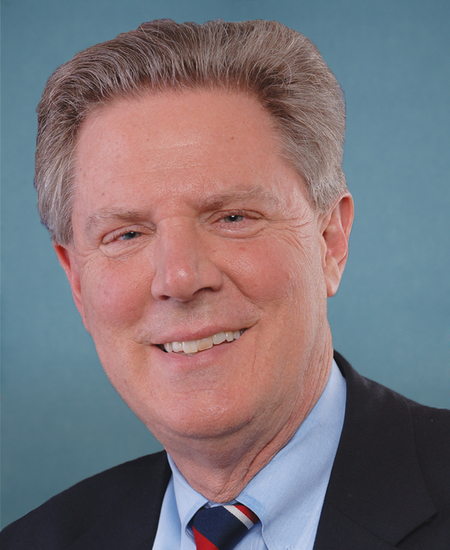
Rep. Frank Pallone, Jr.
Sponsored bills
Maddy summaryHR 6525, the Lunar New Year Day Act, would designate the Lunar New Year as an official federal holiday. The bill amends Section 6103(a) of Title 5 of the U.S. Code to add "Lunar New Year Day" to the list of holidays observed by federal employees. This holiday would be observed on the actual date of the Lunar New Year, which varies annually based on the lunar calendar. As a result, federal employees would receive a paid day off, and federal agencies would adjust operations to accommodate the new holiday.
Leading Infrastructure For Tomorrow’s America Act or the LIFT America Act This bill establishes several programs and incentives to modernize the nation's communications, drinking water, energy, transportation, health care, and other related infrastructure. For example, the bill provides incentives to make broadband internet more accessible and affordable. It also establishes grants to implement next generation 9-1-1 services. In addition, it supports drinking water programs, including the drinking water state revolving fund program. Further, it provides grants to treat perfluoroalkyl or polyfluoroalkyl substances (commonly referred to as PFAS) in drinking water and to replace lead service lines. The bill establishes a variety of programs to support clean energy infrastructure and address climate change, including efforts to (1) modernize the electric grid and make it more resilient, efficient, and secure; (2) increase energy efficiency in buildings; and (3) support renewable energy infrastructure. Further, it provides incentives for vehicle infrastructure, such as incentives to develop infrastructure for electric vehicles and grants to reduce air pollution at ports by electrifying port infrastructure. Additionally, the bill establishes grants and programs for health care infrastructure, including by providing support for the Centers for Disease Control and Prevention, laboratories, and state, local, tribal, and territorial health departments. Finally, the bill reauthorizes grant programs to remediate brownfield sites (i.e., sites contaminated with hazardous substances) through FY2026.
Maddy summaryThis bill (H.J.Res. 68) is a symbolic, procedural measure that would require the President to issue an annual proclamation designating a day as "Democracy Day." It directs the President to call on state/local governments and citizens to observe the day through programs and activities, with January 6 referenced as a potential date. The bill does not create new government programs or change existing laws - it only establishes a recurring presidential proclamation. It directly affects federal, state, and local governments by encouraging them to participate in annual observances. The bill has no budgetary impact and remains focused on promoting civic engagement through a designated day.
Protecting Our Democracy Act This bill addresses issues involving (1) abuses of presidential power; (2) checks and balances, accountability, and transparency; and (3) election integrity and security. Specifically, regarding abuses of presidential power, the bill requires the Department of Justice (DOJ) and the President to submit to Congress specified materials relating to certain pardons, prohibits presidential self-pardons, suspends the statute of limitations for federal offenses committed by a sitting President or Vice President, prohibits the acceptance of foreign or domestic emoluments, and sets forth provisions regarding Office of Government Ethics and Office of Special Counsel jurisdiction and enforcement authority. To address checks and balances, accountability, and transparency, the bill authorizes specified actions to enforce congressional subpoenas, imposes limits on presidential declarations of emergencies, requires DOJ to maintain a log of specified communications between it and the White House, requires cause for removal of inspectors general, increases whistleblower protections, and requires a candidate for President or Vice President to provide copies of tax returns for the 10 most recent taxable years to the Federal Election Commission. To address election integrity and security, the bill requires federal campaign reporting of foreign contacts, makes various changes to requirements concerning foreign donations to political campaigns and candidates and foreign contributions to online electioneering communications, prohibits distribution of materially deceptive audio or visual media prior to an election (i.e., deepfakes), and establishes a program to support states and localities transition to ranked choice voting systems.

This resolution condemns Turkey's continued occupation of Cyprus and calls on Turkey to withdraw all of its troops from the island. It also calls on Turkey to adhere to NATO's democratic principles and mission.
This resolution (1) censures Representative Paul Gosar for posting a certain video on his social media accounts that depicts violence against Representative Alexandria Ocasio-Cortez and President Joseph R. Biden , and (2) removes him from the Committee on Natural Resources and the Committee on Oversight and Reform.
Traveling Exotic Animal and Public Safety Protection Act of 2021 This bill prohibits the use of exotic or wild animals in performances of a traveling animal act, such as a circus, carnival, or parade. The prohibition does not apply to zoos, aquariums, research facilities, wildlife sanctuaries, and other entities. The prohibition also does not apply to domestic animals or farm animals.
IDEA Full Funding Act This bill provides permanent, mandatory funding for the grant program that assists states and outlying areas in providing special education and related services to children with disabilities.
Maddy summaryHRES 785 is a symbolic resolution designating November 8, 2021, as "National First-Generation College Celebration Day." It urges all Americans to celebrate this day, recognize the contributions of first-generation college students (those whose parents did not earn bachelor's degrees), and honor the Higher Education Act of 1965. The resolution highlights existing federal programs like TRIO and Pell Grants that support underrepresented students but does not create new laws or funding. As a non-binding resolution, it has no direct policy impact but aims to raise awareness about first-generation students' challenges and achievements.