

Maddy summaryHR 1269, the Honoring Our Fallen Heroes Act of 2025, expands benefits for public safety officers (like police and firefighters) who develop certain cancers linked to their work. It adds 22 specific cancers - including lung, mesothelioma, and breast cancer - to the list of conditions presumed to be "exposure-related" and sustained in the line of duty. This presumption applies if the officer served at least 5 years, was diagnosed with the cancer within 15 years after last active duty, and the cancer directly caused death or permanent disability. The bill also establishes a process for adding new cancers every 3 years based on medical evidence from agencies like NIOSH, and allows claims to be filed within 3 years of the law's enactment.
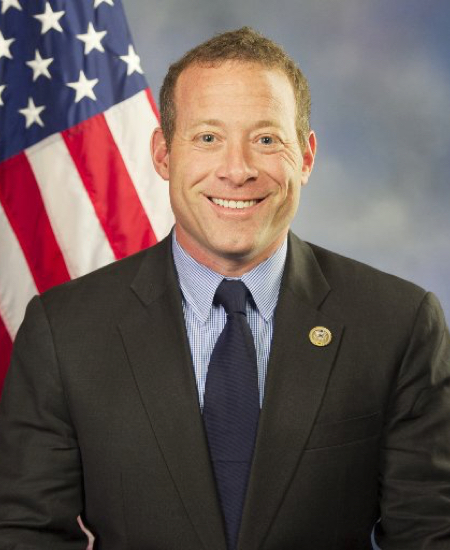
Rep. Josh Gottheimer
Sponsored bills
Maddy summaryHR 1260, the U.S. Park Police Modernization Act, updates salary schedules for U.S. Park Police officers. It adjusts pay rates to align with federal executive pay scales (specifically, 95% of Level V for most ranks, matching Level V for the Chief position), modifies step progression timelines (e.g., 52 weeks between steps for lower ranks), and sets a cutoff date (January 12, 2025) for disregarding prior pay adjustments. The bill directly affects all U.S. Park Police officers by changing their compensation structure and step advancement rules. It does not alter police duties, operations, or public policies.
Maddy summaryThis bill expands eligibility for death and disability benefits under the public safety officers' death benefits program to include retired law enforcement officers who die or become permanently disabled from targeted attacks directly related to their past service. It specifically covers officers who retired in good standing from public agencies, including those who served without compensation. The policy change applies retroactively to cases occurring since August 28, 2012, and amends the Omnibus Crime Control and Safe Streets Act of 1968. This provides financial support to retired officers and their families affected by violence targeting their law enforcement careers.
Doctors in our Borders Act This bill increases the number of Conrad 30 waivers available each year from 30 to 100. Typically, a J-1 visa holder (nonimmigrant exchange visitor) must leave the United States for two years after finishing the exchange visitor program, including J-1 visa holders who entered the United States to receive graduate medical training. The Conrad 30 waiver program waives this requirement for eligible foreign medical graduates who agree to practice medicine in an underserved area or for an underserved population in the United States.
Maddy summaryThis bill creates a 10% tax credit for businesses that modernize or replace freight railcars, directly affecting railcar owners and manufacturers. To qualify, railcars must meet an 8% improvement standard in capacity or fuel efficiency, be built or modernized after enactment, and replace two scrapped railcars. The credit is limited to 1,000 qualified railcars per business annually, with reporting requirements for the Treasury to track claimed credits, scrapped railcars, and new railcar production. The credit applies to railcars placed in service after December 2024, ending three years after enactment.
Maddy summaryHR 1189, the National Plan for Epilepsy Act, creates a coordinated federal strategy to address epilepsy through a National Plan for Epilepsy. The plan requires the Secretary of Health and Human Services to establish an annual assessment, maintain a diverse Advisory Council (including people with epilepsy, caregivers, and experts), and coordinate research and care across federal agencies. Key provisions include annual progress reports to Congress, data sharing between agencies, and recommendations to improve diagnosis, treatment access, and reduce epilepsy-related disparities. The plan expires December 31, 2035, and directly affects the estimated 3.4 million people in the U.S. living with epilepsy and their caregivers.
Maddy summaryThis bill restricts access to Treasury payment systems (including the Bureau of the Fiscal Service) to only Treasury employees with a "fully successful" performance rating and at least one year of civil service, or contractors/outsiders with security clearances, required privacy/cybersecurity training, ethics agreements, and no conflicts of interest. It treats non-government users accessing these systems as government employees for ethics rules and defines specific actions (like stopping payments) as "personal and substantial participation" in government matters. The Treasury Inspector General must investigate any unauthorized access within 30 days and report to Congress, detailing the breach, security risks, and any halted payments. The bill directly affects Treasury staff, contractors, and any external entities accessing federal payment systems.
Maddy summaryHR 965, the Housing Unhoused Disabled Veterans Act, amends the U.S. Housing Act of 1937 to exclude certain disability benefits from income calculations for housing assistance. Specifically, it removes benefits received under Chapters 11 or 15 of Title 38 (veterans' disability compensation) from income counts for the Section 8 supported housing program and eligibility for other housing assistance. This change directly helps disabled veterans receiving these benefits by making them more likely to qualify for HUD-administered housing programs. The bill applies to veterans renting residential units on Department property under HUD housing assistance programs established after the bill's enactment.
Maddy summaryThis proposed bill (HR 220) would expand VA healthcare benefits to cover infertility treatments like in vitro fertilization (IVF) and fertility preservation services for veterans with infertility or at risk of infertility (e.g., due to medical treatments), and their partners. It limits VA coverage to three successful IVF cycles or ten attempts, requires consent from veterans, partners, and donors, and allows use of donated eggs or embryos. Partners would receive travel reimbursement as if they were veterans, and temporary rules during implementation will immediately allow partners to access care without marriage requirements. The bill clarifies VA isn’t required to cover maternity care beyond existing rules and defers full implementation until VA issues final regulations within one year of enactment.
Maddy summaryThis bill requires the Comptroller General to study and report on menopause care provided by the Department of Veterans Affairs (VA) to women veterans experiencing perimenopause, menopause, or genitourinary syndrome of menopause. The study will examine current VA protocols for diagnosis, treatment, provider training, veteran access to care, outreach efforts, and quality of care, including veteran feedback. The VA Secretary must then develop a strategic plan within six months of the report's release to improve menopause care access and quality for women veterans under VA healthcare programs.