

Maddy summaryThe PRIDE Act of 2025 updates the Internal Revenue Code by replacing gender-specific terms like "husband and wife" with gender-neutral terms such as "married couple" or "spouse" across over 30 tax code provisions. This change affects all married couples filing federal taxes and the IRS, as it modernizes tax law language to be inclusive of all married individuals regardless of gender. The bill makes specific textual amendments to sections dealing with filing status, deductions, credits, and estate tax provisions without creating new tax benefits. It ensures tax law language does not assume the gender of spouses, making the tax code more equitable for all married couples. This is a language update to existing tax law, not a change in tax policy or benefits.
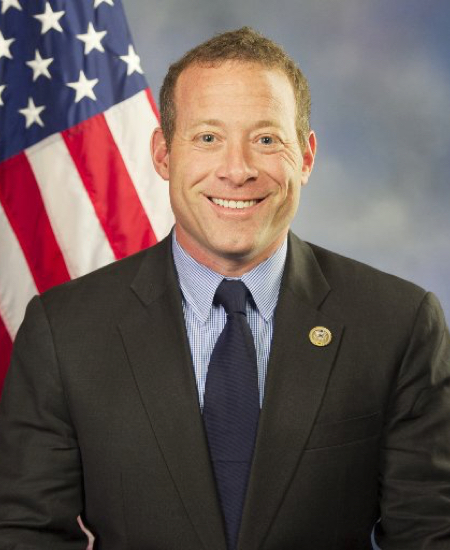
Rep. Josh Gottheimer
Sponsored bills
Maddy summaryThe Women's Health Protection Act of 2025 would protect access to abortion services across the United States by prohibiting states from imposing restrictions that are more burdensome than those on comparable medical procedures. The bill directly affects people seeking abortion care and health care providers by banning restrictions such as mandatory in-person visits, requirements for specific tests, limitations on telemedicine, and rules based on a patient's reason for seeking abortion. It prohibits state laws that single out abortion for unnecessary restrictions while allowing post-viability abortions when necessary to protect a patient's life or health. The bill preempts conflicting state laws and provides enforcement mechanisms through private lawsuits and actions by the Attorney General.
Maddy summaryThis bill prohibits state officials from blocking abortion access for patients traveling from other states, including restricting providers who offer legal abortions in their state to out-of-state patients. It protects people traveling across state lines for legal abortions, those assisting such travel, and the interstate transport of FDA-approved abortion medication. Violations can be challenged by the Justice Department or affected individuals through civil lawsuits seeking injunctions and damages. The law applies broadly across all states, territories, and tribal nations, defining "abortion service" to include both medical procedures and related care.
Maddy summaryThe HALOS Act of 2025 amends federal securities rules to allow startups to pitch to investors at certain events without triggering restrictions on "general solicitation." It requires the SEC to revise Regulation D so that events sponsored by colleges, nonprofits, angel investor groups, or incubators (with specific safeguards) can host issuer presentations. These events cannot reference specific securities offerings, charge fees for introductions, or involve investment advice. The bill directly affects early-stage companies seeking funding and angel investor groups organizing pitch events. It removes a key barrier for startups to access capital through structured, non-advertising-based investor meetings.
Maddy summaryHR 2225, the Access to Small Business Investor Capital Act, modifies how investment companies report fees related to business development companies (BDCs). It allows registered investment companies to exclude fees paid indirectly to BDCs (which primarily invest in small businesses) from their "Acquired Fund Fees and Expenses" calculation on SEC registration statements. This change simplifies reporting for investment companies holding BDC shares by removing those specific fees from expense calculations. The bill directly affects investment companies filing SEC forms (N-1A, N-2, N-3) that hold BDC investments, potentially reducing their reported expense ratios. It does not create new funding for small businesses but aims to streamline investment in BDCs by easing reporting burdens.
Maddy summaryThe Caring for Survivors Act of 2025 increases monthly dependency and indemnity compensation for surviving spouses of veterans. It changes the calculation method from a fixed $1,154 to 55% of a specific veteran compensation rate, effective six months after enactment. The bill also reduces the required continuous disability rating period for survivors from 10 years to 5 years, and provides a proportional payment for cases where the rating period is shorter than 10 years. Surviving spouses of veterans who died before January 1, 1993, receive the greater of their current benefit or the new calculation. This directly affects surviving spouses eligible for benefits under Title 38, U.S. Code, particularly those with veterans who died prior to 1993.
Maddy summaryThis bill prohibits transplant centers and healthcare providers from denying organ transplants or related services solely based on a patient's disability. It requires covered entities to make reasonable modifications to policies (like considering a patient's support network or using communication aids) and to avoid denying care due to lack of auxiliary aids. The law applies to all transplant stages - including evaluation, listing, and post-transplant care - and explicitly states it complements, rather than replaces, existing disability rights laws like the ADA. It allows medical considerations only if a physician determines a disability is medically significant to the transplant, after individual evaluation.
Maddy summaryHR 4084, the Access to Birth Control Act, requires pharmacies that stock contraception to provide it without delay when requested by a customer. If a requested method is out of stock, pharmacies must immediately offer referrals to nearby pharmacies or expedite an order. The bill prohibits pharmacists from intimidating customers, misrepresenting availability, breaching confidentiality, or refusing to fill valid prescriptions for contraception. It directly affects pharmacies nationwide, addressing reported refusals to provide birth control - particularly after the *Dobbs* decision - and ensures access to FDA-approved contraceptive methods without cost-sharing barriers.
Maddy summaryHR 4074, the Optimizing Postpartum Outcomes Act of 2025, requires the Health and Human Services Secretary to issue guidance within one year on improving Medicaid and CHIP coverage for pelvic health services during pregnancy and the postpartum period (defined as up to 6 months after birth or during lactation). The bill directs the GAO to study coverage gaps for these services and mandates a new CDC-led education campaign to train healthcare providers and inform postpartum women about pelvic floor exams and physical therapy. Key provisions include standardizing terminology for pelvic health conditions, sharing state best practices for payment models, and authorizing $2 million annually for the education program through 2030. This bill directly affects postpartum women covered by Medicaid or CHIP by aiming to increase access to evidence-based pelvic health care.
Maddy summaryThe Autism Family Caregivers Act of 2025 creates a 5-year pilot program funding grants to community organizations for free, evidence-based skills training for family caregivers of children (ages 0-9) with autism spectrum disorder or other developmental disabilities or delays. The program requires training in communication, social engagement, daily living skills, and caregiver self-care strategies, with emphasis on cultural competence and coordination with local health, education, and community services. Grants must support at least 25 organizations across 15+ states, using $10 million annually (2026-2030), and mandate stakeholder committees including caregivers and local providers. It directly affects families caring for young children with these conditions by expanding access to structured support, while requiring programs to supplement - rather than replace - existing Medicaid, education, or insurance-covered services.