

Treat and Reduce Obesity Act of 2025 This bill expands Medicare coverage of intensive behavioral therapy for obesity. Specifically, the bill allows coverage for therapy that is provided by (1) a physician who is not a primary care physician; or (2) other health care providers (e.g., physician assistants and nurse practitioners) and approved counseling programs, if provided upon a referral from, and in coordination with, a physician or primary care practitioner. Currently, such therapy is covered only if provided by a primary care practitioner. The bill also allows coverage under Medicare's prescription drug benefit of drugs used for the treatment of obesity or for weight loss management for individuals who are overweight.
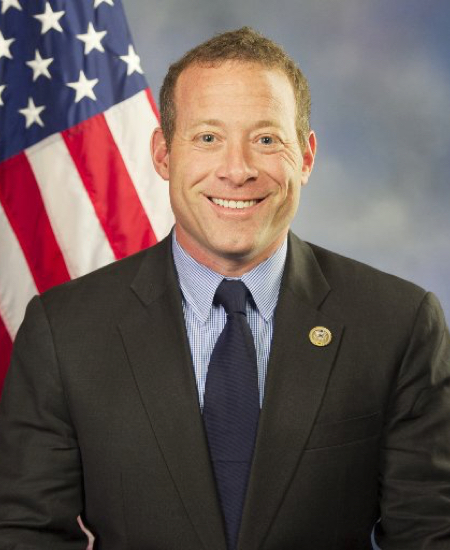
Rep. Josh Gottheimer
Sponsored bills
Maddy summaryThis bill clarifies the Holocaust Expropriated Art Recovery Act of 2016 by preventing courts from dismissing claims based on time-related defenses (like laches or adverse possession) or other non-merits arguments (such as the act of state doctrine or forum non-conveniens). It specifically bars these defenses for claims seeking recovery of art looted by Nazis during World War II, ensuring cases are resolved on their merits. The bill applies to all pending cases and new claims filed after enactment, regardless of the victim's nationality. It strengthens the original law's purpose of enabling victims' heirs to pursue rightful recovery without procedural barriers.
Maddy summaryHR 4170 requires federally funded bridge projects (including highway and railroad bridges) to use certified contractors trained in corrosion prevention. It mandates that contractors employ workers certified through qualified training programs meeting industry standards (like ANSI/NACE) for tasks like surface preparation, coating application, and hazardous material removal. The bill also expands federal grant eligibility to include corrosion control work on rail bridges and directs the Transportation Secretary to study best practices for inspecting and repairing weathering steel bridges within 18 months. These changes directly affect bridge contractors, federal agencies managing infrastructure funding, and state/local bridge maintenance entities.
Maddy summaryThe CONNECT for Health Act of 2025 expands Medicare telehealth coverage by removing geographic restrictions that limited where patients could receive care, expanding the types of health care providers who can offer telehealth services, and eliminating the requirement for an in-person visit before receiving telemental health services. The bill includes specific provisions to support telehealth use for Native American health facilities, rural health clinics, and Federally Qualified Health Centers. It requires the Centers for Medicare & Medicaid Services to collect and publish data on telehealth usage and impacts, and to develop resources to improve accessibility for people with disabilities and limited English proficiency. Program integrity measures are added to monitor telehealth billing practices and prevent fraud while maintaining coverage for telehealth services during public health emergencies.
Maddy summaryHR 4169, the Preventing Crimes Against Veterans Act of 2025, creates a new federal crime for schemes to defraud veterans of their benefits. It adds Section 1352 to Title 18, making it illegal to knowingly execute or attempt to execute a scheme to defraud an individual of veterans' benefits or to obtain such benefits fraudulently for them. The law specifically defines "veterans' benefits" as any federal benefit for veterans, dependents, or survivors, and sets penalties of fines, up to 5 years in prison, or both. This directly affects veterans and their families by strengthening legal tools to prosecute fraudsters targeting their benefits.
Maddy summaryThis bill creates a new designation for foreign countries that unlawfully detain U.S. citizens, allowing the State Department to label such nations as "State Sponsors of Unlawful or Wrongful Detention" based on specific criteria like failing to release detained Americans within 30 days or showing complicity. Designations require congressional approval within six months or expire automatically, and the State Department must submit detailed reports to Congress about the rationale, actions taken to prevent detentions, and potential sanctions. The law mandates annual briefings to Congress on targeted countries (including Iran, Russia, and Venezuela) and requires the department to review existing tools like visa restrictions, aid cuts, and sanctions to deter future detentions. It does not alter how detentions are legally determined but establishes a formal process to address them diplomatically.
Maddy summaryHR 4186, the Connecting Students with Mental Health Services Act, creates a federal grant program to expand mental health services for K-12 students in underserved areas. It authorizes $5 million annually (2026-2029) for grants to school districts partnering with community health providers to establish telehealth programs, focusing on rural, high-poverty, or health-professional-shortage-area schools. Funds can cover telehealth equipment, staffing, and facilities to deliver remote mental health care. The program requires grantees to comply with privacy laws and report on student access to services by 2027. This directly affects students lacking local mental health resources through concrete funding for telehealth infrastructure.
Maddy summaryThe Equal Dignity for Married Taxpayers Act amends the Internal Revenue Code to replace gendered terms like "husband and wife" with gender-neutral language such as "married couple" or "spouses" throughout tax law. This bill affects all married couples filing federal taxes by making the tax code consistent for all married couples regardless of gender. It makes over 30 specific changes to tax code sections, including replacing "his spouse" with "the individual's spouse" and updating references to marital status. The bill does not alter tax rates, deductions, or credits - it only updates language to be more inclusive. This is a technical language update to ensure the tax code treats all married couples equally without gendered references.
Maddy summaryThis bill amends the Older Americans Act of 1965 to better serve LGBTQI older adults (ages 60+). It adds specific definitions for "LGBTQI" and "HIV" in the law, redesignates "minority" to explicitly include LGBTQI individuals, and creates an Office of LGBTQI Inclusion within the Administration on Aging. The bill establishes a National Resource Center on LGBTQI Aging to provide training, technical assistance, and educational resources to organizations serving this community. It also requires the collection and analysis of data on discrimination against LGBTQI older adults in long-term care settings.
Maddy summaryThis bill prohibits defendants in federal criminal cases from using a victim's LGBTQ identity (sexual orientation, gender identity, or expression) as a defense to excuse or reduce punishment for violent crimes. It amends federal law to ban arguments that claim a "nonviolent sexual advance" or inaccurate perception of someone's LGBTQ status justified the defendant's actions. The law allows limited admission of past trauma evidence under standard federal rules but requires the Attorney General to annually report on federal prosecutions involving bias-motivated violence against LGBTQ individuals. This directly affects defendants in federal court cases where such defenses were previously used, aiming to end the practice of treating LGBTQ victims' identities as justification for violence.