

Prevent Government Shutdowns Act This bill provides continuing appropriations to prevent a government shutdown if the appropriations bills for a fiscal year have not been enacted before the fiscal year begins and continuing appropriations are not in effect. Specifically, the bill provides appropriations at the rate of operations that was provided for the prior fiscal year to continue programs, projects, and activities that were funded in the preceding fiscal year. The bill also limits official travel, congressional recesses or adjournments, and the consideration of legislation that is unrelated to appropriations after the beginning of a fiscal year if the appropriations process has not been completed.
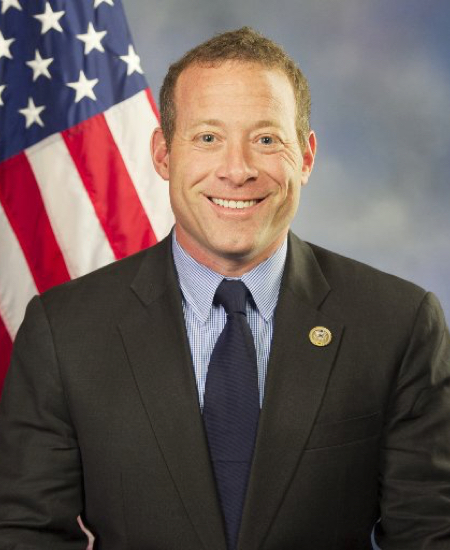
Rep. Josh Gottheimer
Sponsored bills
Maddy summaryThis bill requires semiconductor exporters to offer U.S. companies priority access to advanced chips before exporting them to entities in designated "countries of concern" (like China, Hong Kong, or Macau). Export license applications must include certification that U.S. buyers were given a 15-day right of first refusal, and applications lacking this certification will be denied. It creates an exemption for transactions destined for non-restricted countries where the chips remain under the control of a "trusted U.S. person" meeting security and ownership standards. The law directly affects chip manufacturers, exporters, and U.S. companies seeking to purchase advanced semiconductors for domestic use.
Maddy summaryThis House resolution condemns Hamas for killing civilians in Gaza since the October 10, 2025 ceasefire, citing executions used to suppress dissent. It references Hamas’s U.S. designation as a Foreign Terrorist Organization and reaffirms U.S. support for the ceasefire and civilian safety. As a non-binding statement, it does not create new laws or policies but expresses diplomatic disapproval of Hamas’s actions. The resolution directly addresses Hamas’s conduct and the U.S. position on Gaza stability.
Maddy summaryHR 5849, the USCP Act, ensures Capitol Police officers continue receiving pay during government shutdowns. It directs funds from the Treasury to cover Capitol Police salaries and expenses if discretionary funding lapses after the bill's enactment. This directly affects U.S. Capitol Police employees, guaranteeing they are paid even when the federal government is partially closed. The bill provides a specific funding mechanism to prevent pay interruptions during shutdowns. It does not alter Capitol Police duties or create new requirements.
Maddy summaryThe American Energy Independence and Affordability Act extends multiple clean energy tax credits that were set to expire between 2025 and 2026. It specifically extends residential clean energy credits through 2034, clean electricity investment credits for wind and solar through 2032, and clean vehicle credits for electric vehicles through 2032. The bill also reinstates special rates for sustainable aviation fuel and modifies requirements for energy-efficient home improvements. These provisions directly affect homeowners installing solar panels, businesses investing in clean energy infrastructure, and manufacturers producing clean energy equipment.
Maddy summaryHRES 831 is a symbolic resolution expressing the U.S. House of Representatives' support for designating October 2025 as "National Down Syndrome Awareness Month." It does not create new laws or allocate funds but publicly acknowledges the Down syndrome community, highlighting that about 6,000 babies are born with Down syndrome annually in the U.S. and noting increased federal research funding for Down syndrome (from $18 million in 2014 to $133 million in 2023). The resolution celebrates individuals with Down syndrome and their families, commends advocates and researchers, and reaffirms congressional commitment to supporting the community through policy and research. As a non-binding resolution, it directly affects public recognition and awareness, not legal or financial obligations.
Maddy summaryHRES 824 is a ceremonial House resolution recognizing the religious and historical significance of Diwali, the festival of lights. It acknowledges Diwali’s meaning across Hindu, Sikh, and Jain traditions - symbolizing light over darkness, good over evil, and marking spiritual milestones like Guru Hargobind’s release and Lord Mahavira’s Nirvana. The resolution expresses respect for Indian-Americans and the global Indian diaspora, highlighting Diwali’s role in U.S. religious diversity. As a non-binding recognition, it does not create new laws, policies, or funding, but formally honors the cultural observance.
Maddy summaryHR 5772, the "Remembering American Hostages Act of 2025," amends federal law to require the display of a special flag on designated dates at specific locations. It adds key dates to the existing flag display protocol, including November 4 and January 20 (Iranian hostage crisis), August 19 (James Foley's death), and October 7 (Hamas attack with American hostages). The bill mandates this flag be flown at all U.S. federal buildings, embassies, consulates, Department of Justice offices, and passport offices on these dates. It also encourages state/local governments and airports to fly the flag on these dates through a non-binding Congressional sense of the matter.
Head Start Shutdown Protection Act of 2025 This bill requires the Department of Health and Human Services to reimburse a state, local government, or school district that uses its funds to maintain participation in the Head Start program or the Early Head Start program during a government shutdown in which there is a lapse in federal appropriations for the programs. The Head Start programs provide comprehensive early childhood education and development services to low-income children. The programs seek to promote school readiness through the provision of educational, health, nutritional, social, and other services.
Maddy summaryHR 647, the Ensuring Veterans’ Final Resting Place Act of 2025, amends a provision in U.S. Code (38 U.S.C. § 2306(h)) to change how burial benefits are provided for veterans. It removes the requirement that a veteran’s family must provide an urn or plaque for the Department of Veterans Affairs (VA) to offer additional burial benefits; the VA will now automatically provide these benefits regardless of whether the family supplies such items. This change directly affects veterans’ families arranging burial services, making it easier to access burial benefits without needing to procure specific items first. The amendment applies to veterans who die on or after January 5, 2021, updating existing eligibility rules.