

Maddy summaryThe Panama Canal Zone Veterans Act of 2023 creates a presumption that veterans who served in the Panama Canal Zone between 1958 and 1999 (or until the last military member left) and developed specific illnesses are automatically eligible for VA benefits without needing to prove a direct link between their service and the condition. It lists 16 illnesses, including prostate cancer, lung cancer, diabetes, Parkinson's disease, and several other cancers, as qualifying for this presumption due to presumed exposure to herbicides like Agent Orange during service. The VA will use regulations based on medical evidence to determine which illnesses qualify under this provision. This change directly affects veterans who served in the Panama Canal Zone during the covered period and later developed one of the listed conditions.
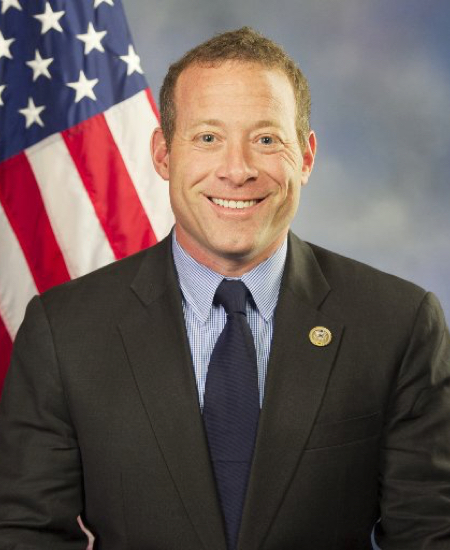
Rep. Josh Gottheimer
Sponsored bills
Maddy summaryHR 1569, the CLAMP Act of 2023, prohibits the U.S. Interior and Agriculture Departments from issuing or renewing federal leases for mineral, oil, gas, or timber extraction on public lands to entities affiliated with the Chinese Communist Party (CCP), the People’s Liberation Army, or specific Chinese military-linked companies. The bill directly affects Chinese state-owned entities, military organizations, and companies designated by the Defense or Treasury Departments as part of China’s military-industrial complex. Key provisions ban new leases, permits, or transfers of existing interests to these restricted entities for activities involving federal resource extraction. The law applies to all federal lands and submerged areas managed under relevant resource laws. This is a policy restriction on access to public resources, not a broader economic measure.
Freedom to Decide Act This concurrent resolution expresses the sense of Congress to (1) affirm that federal law authorizes the distribution of medication abortion, including by mail, as stated in a 2022 Department of Justice memorandum; and (2) condemn restrictions on the access and coverage of reproductive health care, including medication abortion.
Maddy summaryHR 2602, the Small Business Child Care Investment Act, reclassifies eligible nonprofit child care centers as "small business concerns" under federal loan programs. This allows organizations meeting specific criteria - like state licensing, 501(c)(3) tax status, and non-discrimination policies - to access SBA Section 7(a) loans and Title V financing. The bill requires loan guarantees for amounts over $500,000 but eliminates denial of loans solely due to religious activity (per First Amendment protections). It mandates annual SBA reports tracking loan numbers and amounts provided to these child care providers. The law directly affects nonprofit child care centers serving children from birth to school age.
Maddy summaryHR 2630, the Safe Step Act, requires group health plans and health insurance issuers to establish a clear, transparent process for patients or their doctors to request exceptions to medication step therapy protocols. These protocols typically force patients to try cheaper drugs first before covering more expensive alternatives. The bill mandates that plans must approve exceptions when prior treatments failed, delay would cause serious harm, a treatment is unsafe, or a patient is stable on a previously approved drug, with strict 72-hour (or 24-hour in emergencies) decision timelines. It also requires plans to publish the exception process online and limit documentation requests to only necessary medical information. This law directly affects health insurers, employers offering health plans, and patients using step therapy for prescription drugs.
Maddy summaryHR 2620, the Federal Firearms Licensee Protection Act of 2023, increases penalties for crimes targeting firearms licensees. It amends Section 924 of Title 18 to impose mandatory minimum sentences of 3 years for burglaries or 5 years for robberies committed at the business premises of licensed firearms dealers, manufacturers, or importers. The bill specifically targets violations of Section 922(u), which prohibits unauthorized access to these premises, and adds "attempts to do so" to the penalties. This directly affects licensed firearms businesses by strengthening legal protections against theft or violence at their locations. The law creates clearer, harsher consequences for crimes committed during burglaries or robberies at these specific business sites.
Securing Access to Lower Taxes by ensuring Deductibility Act or the SALT Deductibility Act This bill repeals the temporary restrictions in taxable years 2018 through 2025 on the deductibility of state and local taxes.
Maddy summaryThe School Meals Expansion Act (HR 2567) amends the National School Lunch Act to make it easier for schools to provide free meals to all students. It lowers the income threshold to 25% (from a higher previous rate) and increases the eligibility multiplier to 2.5 for school years starting July 1, 2023. This means school districts with 25% or more students from low-income families can now qualify for full federal funding to offer free meals to all students without requiring individual applications. The bill directly affects local school districts that choose to participate in the community eligibility program under the National School Lunch Act.
Maddy summaryHR 2402, the Alan Reinstein Ban Asbestos Now Act of 2023, bans the manufacture, processing, use, and sale of commercial asbestos (including specific types like chrysotile and crocidolite) in the U.S. starting one year after enactment, with key exceptions. It allows the chlor-alkali industry to continue using asbestos for diaphragm manufacturing until two years after enactment and permits limited national security exemptions for up to three years with public disclosure. The bill also requires the EPA and HHS to create public education resources about asbestos health risks and mitigation options. This directly affects manufacturers, distributors, and users of commercial asbestos products, excluding asbestos present only as an impurity.
Maddy summaryThis bill creates a 2-year pilot program to establish or improve state-based nursing workforce centers. It provides $1.5 million annually (2024-2025) for up to six state or regional centers, requiring non-Federal matching funds (1:4 ratio). These centers will analyze nursing workforce data - including education, retention, and shortages - and develop strategies to recruit, retain, and diversify nurses, especially in rural and underserved areas. The program mandates annual reports to Congress on outcomes and best practices for addressing nursing shortages. It directly affects states, nursing schools, healthcare employers, and nursing workforce centers through federal grants and data-driven planning.