Homeland and Cyber Threat Act or the HACT Act This bill allows claims in federal or state court against foreign states that conduct or participate in cyberattacks against U.S. nationals.
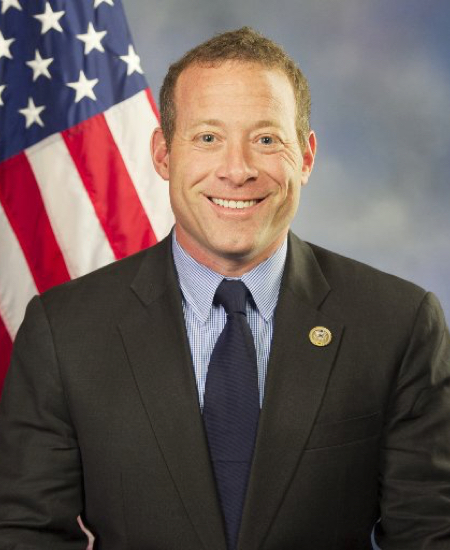
Rep. Josh Gottheimer
Sponsored bills
Maddy summaryThe SAD Act prohibits crisis pregnancy centers (CPCs) from making deceptive claims about offering abortion services, contraception, or employing licensed medical personnel. It directly affects CPCs nationwide - over 2,500 of which operate under false pretenses, often outnumbering abortion clinics by 3:1 in many states. The Federal Trade Commission (FTC) would enforce this by imposing civil penalties up to $100,000 or 50% of a CPC’s annual revenue for violations. The law requires CPCs to provide accurate information about reproductive health services, aiming to prevent misleading patients from accessing abortion care.
Maddy summaryHR 2777, the School Meals during School Closures Act, allows schools to continue providing meals during certain closures without following standard meal program rules. It directly affects schools and meal providers by enabling the Secretary to waive requirements under the National School Lunch Act for closures due to strikes (excluding employer lockouts), weather disasters, public health emergencies, unsafe facilities, construction, or other unanticipated events. The key provision creates a new waiver exception (added to Section 12 of the Act) that skips specific regulatory hurdles normally required for meal services during these closures. This change ensures students can still receive meals when schools close unexpectedly for covered reasons.

American Innovation and R&D Competitiveness Act of 2023 This bill eliminates the five-year amortization requirement for research and experimental expenditures, thus allowing continued expensing of such expenditures in the taxable years in which they are incurred.
This resolution expresses the sense of the House of Representatives that the Food and Drug Administration (FDA) has the authority to review and approve drugs pursuant to its own expertise, and that recent court decisions blocking the FDA's approval of mifepristone (which is used in medication abortion) violate congressional intent with respect to the FDA's authority.
Maddy summaryHRES 307 is a symbolic House resolution expressing support for National Child Abuse Prevention Month. It does not create new laws or funding but formally recognizes child abuse as preventable and affirms the need for public awareness, survivor healing, and justice. The resolution specifically supports efforts to increase education about child abuse prevention, aid survivors, and calls for more federal investment in prevention and support programs. It directly affects the public and organizations working on child abuse prevention by affirming congressional backing for their work. This resolution has no binding effect on policy or funding.
Maddy summaryHRES 269 is a non-binding resolution passed by the U.S. House of Representatives on March 30, 2023. It recognizes the federal government's duty to develop and implement a Transgender Bill of Rights to protect transgender and nonbinary people. The resolution outlines key provisions, including ensuring access to gender-affirming medical care, ending discrimination in employment and housing, and improving legal recognition of gender identity on government documents. It also calls for addressing systemic barriers in education, safety, and economic security faced by transgender and nonbinary individuals.
Maddy summaryHR 2715, the Keep Our PACT Act, mandates increased federal funding for two key education programs. It requires specific annual funding levels for Title I of the Elementary and Secondary Education Act (which supports high-poverty schools) and the Individuals with Disabilities Education Act (IDEA), guaranteeing students with disabilities access to a high-quality education. The bill sets mandatory funding amounts that rise each year, with IDEA funding gradually increasing to reach 40% of the national average per-pupil expenditure for students with disabilities by fiscal year 2033. This directly affects school districts receiving Title I funds and states administering IDEA services for students with disabilities. The bill fulfills a prior commitment made under the Individuals with Disabilities Education Improvement Act of 2004.
Maddy summaryHR 2728, the Young Farmer Success Act, expands student loan forgiveness eligibility under the Higher Education Act to include full-time farm and ranch workers. It directly affects young agricultural workers employed as employees or managers at farms meeting specific revenue thresholds. The key provision adds "full-time job engaged in farm work" as a qualifying employment type for loan forgiveness, requiring farms to earn at least $35,000 in gross revenue from agricultural sales in 2023 (with annual inflation adjustments based on the Consumer Price Index). This amendment modifies existing loan forgiveness rules without creating new programs, applying to workers meeting the farm revenue criteria.
Maddy summaryHR 2725, the "Do No Harm Act," amends the Religious Freedom Restoration Act (RFRA) to clarify that RFRA does not apply when federal laws protect against discrimination or promote equal opportunity. It specifically exempts protections under the Civil Rights Act, Americans with Disabilities Act, workplace benefits like leave, child labor safeguards, and healthcare access from RFRA challenges. The bill also clarifies that RFRA does not block private lawsuits between individuals, applying only to cases involving government entities. This amendment ensures that existing federal civil rights and workplace protections remain enforceable under RFRA.