

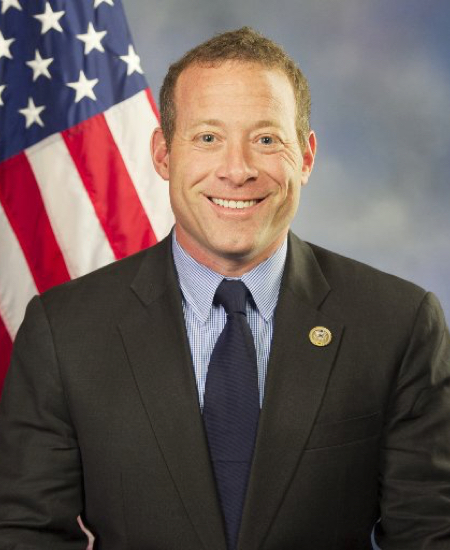
This resolution expresses U.S. support for Israel and its efforts to defend its right to existence. The resolution also declares that the United States and international community must prevent Iran from acquiring or building nuclear weapons.
Rep. Josh Gottheimer
Sponsored bills
Maddy summary# Summary of EDUCATORS for America Act Provisions This comprehensive legislation makes significant changes to educator preparation, certification, and support systems, with a strong focus on loan forgiveness and retention of educators in high-need settings. ## Key Provisions: 1. **Enhanced Loan Forgiveness Programs**: - Creates new "Educator Loan Forgiveness Programs" under sections 428J and 460 of the Higher Education Act - Provides 100% loan forgiveness for educators who complete 5 years of qualifying service in high-need schools or early childhood education programs - Offers monthly loan forgiveness/cancellation during the service period (in addition to annual forgiveness) 2. **Expanded Eligibility**: - Defines "high need school" as schools where: * Over 30% of students meet poverty measures * School is identified for comprehensive support * School is Bureau of Indian Education funded * School is operated by Tribal educational agencies - Includes Tribal early childhood programs, Native Hawaiian education systems, and Bureau of Indian Education programs as eligible settings - Special rule for educators providing instruction in Native American languages 3. **"Qualifying Educator" Definition**: - Includes elementary/secondary teachers (with full certification) - Includes school leaders (with full certification) - Includes early childhood educators and program directors - Includes educators working in Native American language instruction regardless of certification status 4. **New Support Programs**: - Centers of Excellence for teacher preparation at institutions serving underrepresented populations - Recruitment and completion grants for underrepresented students in education - Resiliency grants for technology integration and educator workforce partnerships - Doctoral fellowships to diversify faculty in high-need education areas 5. **Implementation Details**: - Monthly loan credit program for eligible educators in income-driven repayment plans - Allows counting of partial service years under specific conditions - Prevents double benefits with other service programs - Allows for promotions within qualifying schools without losing eligibility This legislation aims to create a more diverse, stable, and well-prepared educator workforce by reducing financial barriers to entering and remaining in the education profession, particularly in high-need schools and early childhood education settings.
Maddy summaryThe Postal Police Reform Act of 2023 updates federal law to explicitly include "Postal Service police officers" alongside Postal Inspectors as authorized personnel for enforcing regulations on U.S. Postal Service property. It clarifies that the Postmaster General can establish and post rules for protecting postal property, with violations punishable by fines or up to 30 days in jail. This change directly affects USPS police officers (by formalizing their role), the Postmaster General (by expanding regulatory authority), and anyone on postal property who must follow posted rules. The bill makes existing enforcement procedures more explicit without altering penalties or creating new requirements.
Maddy summaryHR 3009, the Military Suicide Prevention in the 21st Century Act, requires the Secretary of Defense to launch a two-year pilot program pre-loading the Virtual Hope Box app (a military behavioral health tool) and pre-programming the National Suicide Hotline and Veterans Crisis Line numbers into smartphones and other smart devices issued to service members. This directly affects active-duty military personnel who receive such devices from the Department of Defense. The pilot program mandates training on these resources during existing suicide awareness education and requires a final report with expansion recommendations. The bill focuses on making critical mental health tools immediately accessible on service-issued devices during crises.
Maddy summaryHR 3024, the Life Saving Leave Act, amends the Family and Medical Leave Act to provide eligible employees with up to 40 hours of additional unpaid leave per year for bone marrow or blood stem cell donation activities. This leave covers predonation, donation, and postdonation medical care, and can be taken intermittently. Employees may substitute accrued paid leave (like vacation or sick days) for this time, but employers cannot require it. The bill requires employees to give employers at least 30 days' notice (or as soon as practicable if urgent) and to schedule the leave to minimize disruption.
Maddy summaryHR 3011 establishes a 15-member task force within the Department of Defense to review and assess mental health services for active-duty military members, reservists, and their families. The task force, requiring half DOD personnel (including service surgeons and family members) and half external experts (like VA and SAMHSA staff), must submit a report within 12 months detailing improvements needed in areas like access to care, telehealth, reducing stigma, and transitioning care to veterans' services. The report will include specific recommendations for legislative or administrative changes, followed by annual progress reports to Congress over five years on implementing those recommendations. This bill creates a review mechanism but does not directly change existing mental health programs or funding.
Maddy summaryThis bill protects living organ donors from insurance discrimination by prohibiting life, disability, and long-term care insurers from denying coverage, raising premiums, or altering policy terms solely because someone donated an organ while alive. It also updates the Family and Medical Leave Act to include recovery from organ donation surgery as a qualifying health condition, allowing donors to take protected leave for this purpose. Additionally, the bill requires the Health and Human Services Secretary to update public educational materials about living donation benefits, risks, and insurance protections within six months of enactment. These changes directly affect living organ donors, insurers, employers, and healthcare systems by ensuring fair access to insurance and workplace leave.
Maddy summaryHR 2955, the Stop Institutional Child Abuse Act, establishes a Federal Work Group to improve data collection and best practices for youth in residential programs (like therapeutic schools, treatment centers, and group homes). The Work Group, composed of federal agency representatives and diverse stakeholders, must develop national data standards, create risk assessment tools, and issue biennial reports with recommendations to enhance safety, reduce restraints, and expand community-based alternatives. It directly affects youth with mental health, substance use, or disability needs placed in these facilities, as well as agencies overseeing them. The bill also mandates a National Academies study to examine funding, oversight, and barriers to community care. These mechanisms aim to standardize data tracking and promote less restrictive, trauma-informed care for youth in residential programs.
Maddy summaryHRES 335 is a symbolic resolution condemning two mass shootings in Louisville, Kentucky: one at the Old National Bank on April 10, 2023 (killing 5 people), and another at Chickasaw Park on April 15, 2023 (killing 2 people). It honors the victims' memories, expresses condolences to their families and the affected community, and reaffirms the House's commitment to supporting all gun violence victims. The resolution does not propose new laws or policies but serves as a formal statement of condemnation and solidarity. It directly affects the victims' families, Louisville residents, and the broader community impacted by these tragedies.
Maddy summaryHRES 334 is a symbolic resolution recognizing "Community College Month" to celebrate over 1,000 community colleges across the United States. It highlights how these institutions support accessible higher education, workforce training, and economic prosperity - serving 10.2 million students annually while charging affordable tuition (averaging $3,860 for in-district students). The resolution does not create new laws or requirements but formally acknowledges community colleges' role in strengthening local communities and the national economy. This acknowledgment applies broadly to all community colleges and their students, without imposing any obligations.