

Maddy summaryThis bill expands the tax deduction available to educators by adding coaches and interscholastic sports administrators to the list of eligible professionals. Previously excluded from the deduction due to specific wording, these roles now qualify under the revised tax code language. The change modifies Section 62 of the Internal Revenue Code to include "interscholastic sports administrator or coach" as part of the deduction for instructional school personnel. It affects school staff directly by allowing them to deduct qualified education expenses on their federal tax returns starting in 2023. The bill does not create new programs but adjusts existing tax rules for eligible educators.
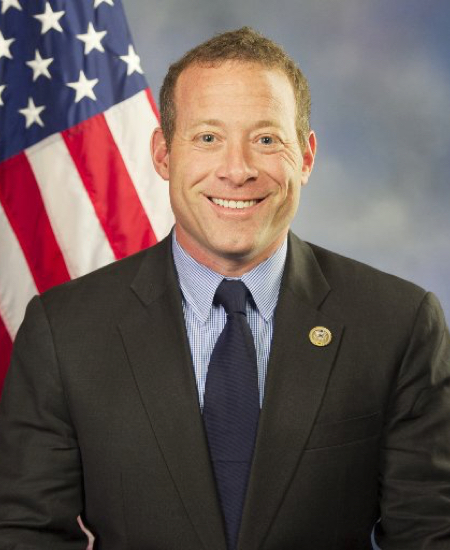
Rep. Josh Gottheimer
Sponsored bills
Maddy summaryThe FEND Off Fentanyl Act (HR 3333) establishes new sanctions targeting foreign persons and transnational criminal organizations involved in fentanyl trafficking, specifically naming Mexican cartels like the Sinaloa Cartel and Jalisco New Generation Cartel. It authorizes the President to block transactions with individuals facilitating fentanyl trafficking and requires annual reports to Congress on enforcement actions. The bill also designates fentanyl-related transactions as a primary money laundering concern for financial institutions and extends the statute of limitations for sanctions violations to eight years. These measures aim to disrupt fentanyl trafficking networks by targeting both the drug flow and the financial mechanisms supporting them.
AANAPISI Opportunity Act This bill requires the Department of Agriculture (USDA) to establish a scholarship grant program for covered Asian American and Native American Pacific Islander-serving institutions (AANAPISIs) to provide scholarships in agriculture-related fields. Covered institutions include community colleges, colleges, or universities that (1) have a student body consisting of at least 10% Asian American or Native American Pacific Islander students; and (2) offer associate, bachelors, or other accredited degree programs in agriculture-related fields. USDA may only award the grants to AANAPISIs that have established a competitive scholarship awards process for individuals who intend to pursue a career in agriculture, including in the agricultural disciplines of business, engineering, technology, food science, forestry, home economics, nutrition, soil conservation, non-medical biological sciences, and computer science. This bill also allows USDA to provide competitive grants for up to five years for integrated agricultural research, education, and extension projects at covered AANAPISIs to address U.S. agriculture priorities. The project grants include a 50% matching funds requirement that USDA may waive if certain requirements are met.
Maddy summaryThe FIGHT Act (HR 2742) amends the Animal Welfare Act to specifically target animal fighting events, such as cockfighting, by defining "rooster" as any male chicken over six months old and banning the live broadcasting (simulcasting) of such events. It prohibits using the postal service or interstate transport to move roosters for animal fighting purposes and adds civil enforcement tools allowing citizens to sue violators after a 60-day notice period. Fines up to $5,000 per violation may be imposed, and property used in animal fighting ventures can be seized. These changes strengthen enforcement against animal fighting by expanding legal remedies for the public and authorities.
Targeting Resources for Equitable Access to Treatment for Long COVID Act or the TREAT Long COVID Act This bill requires the Department of Health and Human Services to award competitive grants to create or expand the capacity of clinics that treat patients with persistent, long-term symptoms following recovery from acute COVID-19 (i.e., Long COVID) and associated conditions. Eligible recipients include federally qualified health centers, rural health clinics, urban Indian health centers, and state and local health departments.
Maddy summaryThe PAST Act of 2023 amends the Horse Protection Act to ban specific devices used to cause pain (soring) in horses at shows, particularly affecting Tennessee Walking Horses, Racking Horses, and Spotted Saddle Horses. It defines prohibited "action devices" (like boots or chains causing friction) and requires licensed, conflict-free inspectors at events to enforce rules. The bill increases penalties for violations to up to $5,000 fines or 3 years in jail, and mandates longer disqualifications for repeat offenses (180 days → 1 year → 3 years). Horse show organizers, exhibitors, and participants must comply with these new inspection and penalty requirements.
Maddy summaryHCONRES 41 is a non-binding congressional resolution expressing formal support for open water lifeguards. It reaffirms that lifeguards already qualify as first responders and emergency response providers under U.S. law, recognizing their essential role in protecting lives and property during water rescues, medical emergencies, and other incidents. The resolution specifically highlights that lifeguards perform the four defined duties of emergency response employees (responding, treating, assisting, and transporting victims) and aligns with the four tenets defining first responders (protecting life, property, evidence, and the environment). This resolution does not create new laws or funding but formally acknowledges lifeguards' existing status, directly affecting open water lifeguards nationwide who serve in coastal, lake, and river environments.
Maddy summaryHR 3228 establishes the Mental Health in Schools Excellence Program to expand the workforce of school-based mental health providers. It authorizes the Education Secretary to partner with eligible graduate schools (offering accredited programs in school counseling, psychology, or social work) to cover up to 50% of participating students' tuition costs, with schools matching that contribution. The program prioritizes students who received Federal Pell Grants or attended certain institutions as undergraduates. It directly affects graduate students in school-based mental health fields and participating institutions, aiming to increase the pipeline of licensed providers for schools.
Maddy summaryThe Nonprofit Stakeholders Engaging and Advancing Together Act of 2023 creates a White House Office on Nonprofit Sector Partnership led by a Nonprofit Advisor to coordinate federal efforts with the nonprofit sector. The bill establishes an Interagency Council and an Advisory Board to improve data collection on nonprofits, requiring agencies to gather more detailed information about nonprofit economic impact, volunteerism, and charitable giving. It includes provisions to streamline grant processes, reduce administrative burdens for nonprofits, and improve data on volunteerism and charitable giving through updated surveys and reporting requirements. The legislation directly affects the 1.8 million nonprofit organizations in the United States, which contributed $1.5 trillion to the economy in 2022 and employed over 12.5 million people.
Maddy summaryThis bill authorizes Congress to award a Congressional Gold Medal to honor the service of Army and Navy nurses who served during World War II. It directly recognizes over 73,000 nurses (59,000 Army and 14,000 Navy) who provided critical medical care under dangerous conditions, often without military status or full benefits. The medal, designed by the Treasury Secretary, will be presented by congressional leaders and permanently displayed at institutions like the Women in Military Service Memorial and the National World War II Museum. The bill does not create new benefits but provides formal recognition for their service, as noted in congressional findings about their contributions to saving lives and supporting military operations.