

Maddy summaryHR 4172, the Hate Crimes Commission Act of 2023, establishes a 12-member United States Commission on Hate Crimes to investigate trends and improve responses to hate crimes. The commission, appointed by Senate and House leaders plus the Attorney General and Secretary of Health and Human Services, will examine hate crime increases since 2015, factors driving them, and strategies to reduce underreporting to the FBI’s National Incident-Based Reporting System. It will also assess successful bias prevention efforts and online hate crime prevalence. Within one year of its formation, the commission must submit a report to Congress and the President with recommendations for federal agencies and community-based prevention programs. This bill directly affects local law enforcement agencies through reporting requirements and federal agencies through proposed policy changes.
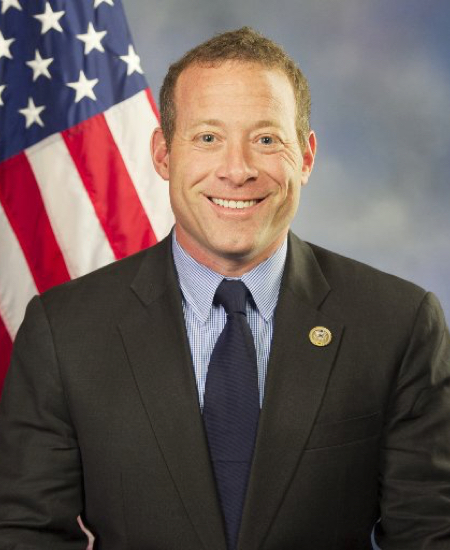
Rep. Josh Gottheimer
Sponsored bills
Maddy summaryHR 4184 repeals legal protections for gun manufacturers and sellers under the Protection of Lawful Commerce in Arms Act. It allows victims of gun violence to use gun trace data from the ATF's Firearms Trace System in civil court cases. This data, previously protected from discovery, can now be subpoenaed, admitted as evidence, and relied upon in lawsuits against gun sellers or manufacturers. The bill directly affects victims seeking legal recourse and gun industry defendants in civil litigation.
Northern Border Regional Commission Reauthorization Act of 2023 This bill makes changes to the authorities and programs of regional economic and infrastructure development commissions. Specifically, the bill reauthorizes the Northern Border Regional Commission (NBRC) and establishes and expands NBRC grant programs. Regional commissions may make grants for the planning, construction, equipment, and operation of health, nutrition, and child care projects. The bill also authorizes these regional commissions (as part of economic and infrastructure development grants) to promote the production of housing to meet economic development and workforce needs. Each commission may accept transfers of funds from other federal agencies. Discretionary grants made by a commission to implement significant regional initiatives, to take advantage of special development opportunities, or to respond to emergency economic distress may be made without regard to specified percentage limitations. The bill limits the aggregate amount of discretionary grants.
Maddy summaryHR 4166, the Support UNFPA Funding Act, authorizes annual U.S. funding for the United Nations Population Fund (UNFPA) over five years. It directly supports UNFPA’s global programs serving women and girls in over 150 countries, particularly focusing on reducing preventable maternal deaths, expanding access to contraception, ending gender-based violence, and addressing harmful practices like female genital mutilation and child marriage. The bill specifically directs funding toward UNFPA’s core work in developing nations, humanitarian crises (such as in Ukraine and Yemen), and rebuilding health systems post-pandemic, without altering UNFPA’s existing operations or policies.
Maddy summaryThe American Dream and Promise Act of 2023 would create two pathways to permanent residency for certain immigrants. The "Dream Act" portion would provide conditional permanent resident status to individuals who entered the U.S. as children, have lived continuously in the U.S. since January 1, 2021, and meet educational requirements (such as completing high school, earning a degree, or enrolling in education programs). The "American Promise Act" portion would provide permanent residency to individuals eligible for Temporary Protected Status (TPS) or Deferred Enforced Departure (DED) as of specific dates (January 1, 2017, or January 20, 2021). The bill includes provisions for background checks, fee exemptions for low-income applicants, and processes for removing conditional status after meeting specific criteria like completing higher education or earning income.
Maddy summaryHJRES 72 proposes a constitutional amendment to remove the exception in the Thirteenth Amendment that allows slavery and involuntary servitude as punishment for a crime. If ratified, this amendment would ban the use of forced labor in prisons as a criminal penalty, directly affecting how the U.S. criminal justice system handles sentencing. The resolution clarifies it does not interfere with voluntary work programs in correctional facilities, existing employment protections for incarcerated people, or community service alternatives. This change aims to eliminate a historical loophole that has disproportionately impacted Black Americans since the 1860s.
Maddy summaryHR 4122, the Henrietta Lacks Congressional Gold Medal Act, authorizes a posthumous Congressional Gold Medal to honor Henrietta Lacks for her contribution to medical science through the HeLa cell line. The bill directs the Treasury to strike the medal recognizing how her cells enabled major medical advances, including the polio vaccine and cancer treatments, without altering any laws or policies. The medal will be displayed at the Smithsonian Institution to commemorate her legacy in scientific research and bioethics. This is a purely commemorative measure with no direct effect on current legislation or affected individuals.
Maddy summaryHR 3962 establishes an Advisory Council to support victims of gun violence, directly affecting individuals impacted by gun violence (including survivors, witnesses, and relatives of victims) and the professionals who assist them. The council, composed of federal agency heads, victims, and victim assistance professionals, will assess needs, review existing programs, and compile accessible resources covering medical, financial, mental health, legal, and housing support. It must publish a public report within 180 days of enactment detailing best practices and gaps, with a follow-up report after two years. The council’s work will be shared online and distributed to congressional offices, state agencies, schools, and local prosecutors, with no new federal funding authorized for implementation.
Maddy summaryHR 3099 establishes a new Special Envoy for the Abraham Accords within the State Department, directly affecting U.S. diplomatic efforts and coordination. The envoy, appointed by the President with Senate confirmation, will coordinate U.S. government activities to expand diplomatic, economic, and security ties between Israel and Muslim-majority countries, including encouraging nations without formal relations with Israel to establish them. Key duties include strengthening existing Accords partnerships, fostering regional cooperation on issues like trade and water security, and providing diplomatic support for Israel’s regional engagement. The envoy must submit annual reports to Congress detailing specific diplomatic efforts and progress with partner countries.
Maddy summaryThis bill increases per diem payments for homeless veterans receiving VA services. It raises the daily payment rate from $115 to $200 for certain housing-related services, including emergency responses. The change directly affects homeless veterans who qualify for these VA-funded housing supports. The key provision adjusts the payment rate in Section 2012(a)(2)(B) of the U.S. Code to provide higher funding for services assisting homeless veterans.