

Maddy summaryThe John R. Lewis Voting Rights Advancement Act of 2023 would strengthen the Voting Rights Act of 1965 by updating the criteria for which states and localities must obtain federal preclearance before changing voting practices. It would establish new standards for proving vote dilution and vote denial by requiring courts to consider historical discrimination, racial polarization in voting, and whether voting practices disproportionately burden minority voters. The bill would also require states and localities to provide public notice of voting changes and share demographic data about polling locations. These changes would primarily affect jurisdictions with a history of voting rights violations, aiming to prevent discriminatory voting practices before they take effect.
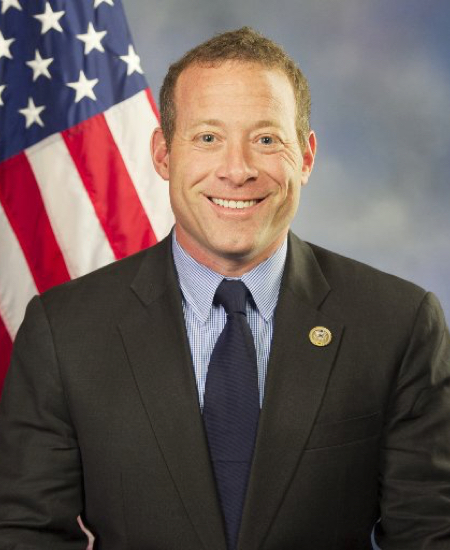
Rep. Josh Gottheimer
Sponsored bills
Maddy summaryHRES 697 is a non-binding resolution expressing the U.S. House of Representatives' concerns about China's "Made in China 2025" (MIC2025) industrial plan and associated actions. The resolution cites alleged Chinese practices - including state-backed intellectual property theft, forced labor, unfair subsidies, and cyber espionage - as undermining U.S. competitiveness in key technology sectors like semiconductors, AI, and clean energy. It directly affects U.S. businesses, researchers, and government entities operating in these MIC2025 priority areas, urging them to strengthen security measures against foreign interference. The resolution calls for coordinated U.S. public-private efforts to protect innovation but does not impose new legal requirements.
Maddy summaryHR 5467, the Gun Suicide Prevention Act, requires firearm manufacturers and retailers to attach a specific label to all firearms and their packaging. The label must be in both English and Spanish, display the National Suicide Prevention Lifeline phone number, and include a yellow triangle with an exclamation mark before the hotline message. This mandate applies to all firearms sold in the U.S. and takes effect two years after enactment. Violations would be enforced under the Consumer Product Safety Act, subjecting offenders to existing penalties for safety violations. The bill directly affects firearm sellers by requiring this standardized suicide prevention information on all products.
Maddy summaryHR 5455, the Collision Avoidance Systems Act of 2023, allows automakers to install pulsating light systems as rear-end collision avoidance technology on new vehicles. The bill requires the Secretary of Transportation to issue new regulations within 180 days updating Federal Safety Standard 108 to include performance-based rules for these systems. Specifically, it defines a "pulsating light system" as a high-mounted brake light that flashes rapidly (up to 4 times for no more than 1.2 seconds) before switching to steady light, with a 5-second lockout period after braking stops. This directly affects vehicle manufacturers who must comply with the updated safety standards for brake lights.
Maddy summaryThis bill modifies Medicaid and CHIP enrollment rules to provide 12-month continuous coverage for all eligible individuals, removing previous age restrictions that limited this benefit to children under 19. It changes language from "child" to "individual" in both programs, ensuring adults and children who qualify maintain coverage without annual renewal requirements. The changes apply to all Medicaid and CHIP participants meeting income and other eligibility criteria, preventing coverage loss due to administrative re-certification. The amendment takes effect one year after the bill's enactment, aligning with existing 2023 implementation timelines.
Maddy summaryThe Humane Cosmetics Act of 2023 bans cosmetic animal testing in the United States, prohibiting companies from conducting or contracting such testing after its enactment (effective 1 year later). It also bans selling or transporting cosmetics developed using animal testing conducted after that date within U.S. interstate commerce. The law directly affects cosmetic manufacturers, retailers, and suppliers operating in the U.S. market, requiring them to use non-animal testing methods for safety evaluations. Exceptions exist for foreign regulatory requirements or when no alternative testing methods are available for specific ingredients.
Fairness to Kids with Cancer Act of 2023 This bill requires the share of federal funds for cancer research that is allocated to pediatric cancer research to equal the percentage of the U.S. population that is under the age of 18.
Maddy summaryThe No Tax Breaks for Union Busting Act would deny tax deductions for employers who attempt to influence employees' decisions about union activities, including unfair labor practices like firing workers for organizing or using captive audience meetings. It targets expenses related to union-busting tactics, such as consulting fees and other costs used to sway workers' opinions about collective bargaining. Employers would need to report these expenses on tax returns and would no longer be able to deduct them from taxable income. The bill aims to prevent employers from using tax-deductible expenses to influence union elections, aligning with existing rules that deny tax deductions for political spending. It would apply to expenses incurred in taxable years beginning 240 days after enactment.
Maddy summaryThis bill designates an annual "African Diaspora Heritage Month" through a presidential proclamation. It requires the President to annually designate a month for observance, encouraging state/local governments and educational institutions to host related programs and activities. The bill does not create new funding or alter existing programs - it establishes a ceremonial recognition of the African diaspora community's contributions to U.S. society and U.S.-Africa relations.
Maddy summaryHR 5433, the Child Care Stabilization Act, provides $16 billion annually from 2024 to 2028 to stabilize the child care sector through grants administered by the Health and Human Services Secretary. It directly affects licensed child care providers by offering stable funding to cover operating costs, while supporting higher wages for early educators without raising family fees. Key provisions include expanding access to high-quality, affordable care - especially for infants/toddlers, rural communities, and children with disabilities - and addressing shortages in underserved areas. The funding builds on existing American Rescue Plan resources, aiming to strengthen the child care workforce and increase available options for working families.