

Maddy summaryThis bill creates a 40% tax credit for individuals and businesses purchasing zero-emission electric lawn, garden, and landscape equipment, such as electric mowers or trimmers. The credit covers 40% of the equipment's cost, with a yearly cap of $25,000 and a 10-year aggregate limit of $100,000 per taxpayer. Qualifying equipment must run on electricity (via solar, batteries, fuel cells, or grid power) and cannot use gasoline, diesel, or manual effort. The bill also includes related items like batteries, repair tools, and retrofitting equipment in the credit scope while preventing double benefits with other tax credits.
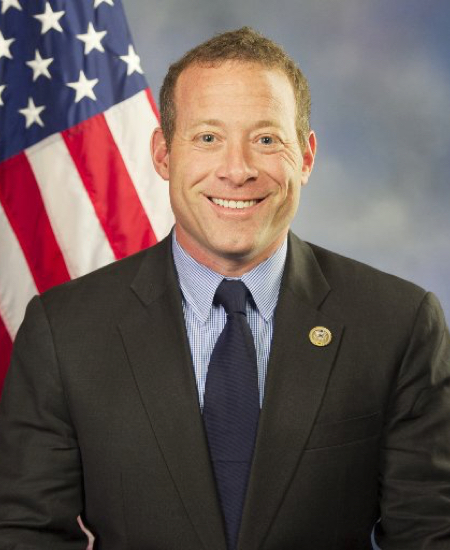
Rep. Josh Gottheimer
Sponsored bills
Maddy summaryThis bill removes a previous exclusion that prevented temporary federal employees (including U.S. Postal Service staff and Members of Congress) from counting service after January 1, 1988, toward their retirement benefits. It allows these workers to have their post-1988 temporary service counted toward retirement eligibility if they pay a deposit to the retirement system. The change applies to anyone employed by the federal government on or after the bill's enactment date. The Office of Personnel Management must notify affected employees and create rules to implement this change.
Maddy summaryHR 5979, the VA Home Loan Awareness Act of 2023, requires lenders using the standard home loan application form to add a specific disclaimer below the military service question. The disclaimer states: "If yes, you may qualify for a VA Home Loan. Consult your lender regarding eligibility." This change must be implemented within six months of the bill's enactment. The bill also mandates a Government Accountability Office (GAO) study within 18 months to check if less than 80% of lenders are including this disclaimer. The policy directly affects veterans and military service members who may qualify for VA home loans but are not currently being informed of this option during the loan application process.
Maddy summaryThe Streamlining Federal Grants Act of 2023 requires federal agencies to simplify grant application and reporting processes, with a focus on improving access for underserved communities, rural areas, and historically excluded organizations like faith-based groups. Key mechanisms include designating senior agency officials for grants, creating a Grants Council to coordinate improvements, and mandating plain-language notices of funding opportunities under 500 words. Agencies must develop annual plans to streamline procedures, ensure language accessibility for limited-English speakers, and report progress to Congress. The bill directly affects federal agencies managing grants and their recipients, aiming to reduce administrative burdens while expanding equitable access to federal funding.
Maddy summaryHR 5931 requires the U.S. Department of Defense to provide Congress with a briefing within 180 days of the bill's enactment. The briefing must detail Chinese activities in Africa that the Defense Department identifies as threatening U.S. national security, along with the department's plan to counter those actions. This bill directly affects the Department of Defense, Congress, and U.S. national security policy regarding Africa. It is a procedural measure focused on information gathering, not on creating new regulations or funding. The bill does not specify the content of the briefing or the nature of the Chinese activities, only mandating the delivery of the information to Congress.
Supporting Early-childhood Educators' Deductions Act of 2023 or the SEED Act of 2023 This bill expands the tax deduction for the expenses of elementary and secondary school teachers to include early childhood educators.
Maddy summaryThis bill, HR 5920 (Student Loan Marriage Penalty Elimination Act of 2023), changes how married couples can deduct student loan interest on their federal taxes. It amends the tax code to allow each spouse to claim a separate $2,500 deduction limit for student loan interest, instead of a single combined limit for the couple. This directly affects married couples filing jointly who pay student loan interest and qualify for the deduction. The change applies to tax years beginning after December 31, 2022, and ensures the deduction aligns with the tax treatment for individual filers.
'Operation Swords of Iron' Iron Dome Supplemental Appropriations Act This bill provides $2 billion in appropriations for the Department of Defense to provide to the government of Israel for the procurement of the Iron Dome defense system to counter short-range rocket threats. The funds must be provided to address emergent requirements in support of Operation Swords of Iron.
Maddy summaryHR 5907, the Stop Transnational Repression Act, creates a new federal crime for foreign governments or their agents to coerce, harass, threaten, or target U.S. persons (including activists, journalists, and dissidents) through physical or digital means, such as hacking, stalking, or intimidation, both within the U.S. and abroad. It establishes penalties of up to 10 years in prison for the offense, with enhanced penalties for violent acts or when committed under foreign government direction. The bill requires the Justice Department to centralize investigations and prosecutions of such cases and mandates annual reports to Congress detailing incidents, tactics used by foreign governments, and government efforts to disrupt transnational repression. This law directly affects U.S. citizens and residents targeted by foreign governments seeking to silence criticism or opposition.
Maddy summaryHR 5908, the "Strengthening Communities through Summer Employment Act," authorizes $200 million to $240 million annually (2024-2028) for the Department of Labor to fund summer youth employment programs. It requires grantees to provide subsidized summer jobs (minimum 4 weeks at minimum wage) for youth under 25, including mandatory mentoring, job training, and post-program support to improve graduation rates, college enrollment, employment, and reduce crime. Programs must prioritize communities with high youth unemployment and violent crime, and serve historically underserved youth in rural or suburban areas. The bill also mandates independent evaluations to measure long-term impacts on participants’ education, employment, and criminal justice outcomes.