

Maddy summaryThis bill establishes a competitive grant program to improve recycling access in underserved communities - defined as areas lacking full recycling services due to cost, distance, or insufficient processing capacity. It allocates $30 million annually (2023-2027) for grants to eligible entities like states, local governments, tribes, or public-private partnerships to fund projects such as expanding transfer stations, adding curbside collection, or creating hub-and-spoke infrastructure networks. Grants range from $500,000 to $15 million per project, with 70% of funds reserved for single or multiple underserved communities, and require 90% federal cost coverage (with possible waivers for financial hardship). The program prohibits grant use for education and mandates a congressional report on implementation and outcomes within two years.
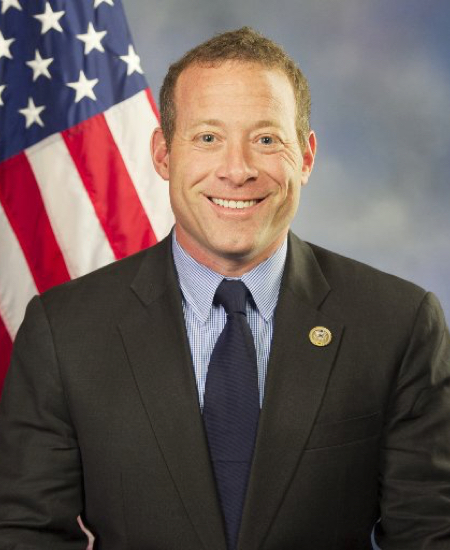
Rep. Josh Gottheimer
Sponsored bills
Maddy summaryThis resolution designates the week beginning November 13, 2023, as "National Apprenticeship Week" through symbolic congressional support. It does not create new laws or programs but formally recognizes the value of registered apprenticeships in providing paid on-the-job training, industry credentials, and career pathways. The resolution highlights apprenticeships' role in developing skilled workers, supporting high-wage sectors like healthcare and green energy, and promoting diversity in training opportunities. It aims to increase public awareness of apprenticeships as an effective "earn-and-learn" model for workers and employers.
Maddy summaryThis bill (HR 366, Korean American VALOR Act) changes VA healthcare eligibility rules to include Korean American veterans who served with South Korea's military in Vietnam during specific periods. It directly affects Korean American individuals who served as part of the Republic of Korea's armed forces in Vietnam between January 1962 and May 1975 (or a period the VA later determines). The key provision adds a new eligibility category under VA law, allowing these individuals to access the same healthcare benefits as U.S. veterans under the same rules and conditions. This is a concrete policy change that removes a prior barrier to VA healthcare for this group.
Maddy summaryHCONRES 75 is a non-binding resolution expressing Congress's support for issuing a new commemorative postage stamp honoring the Buffalo Soldiers. It directly affects the U.S. Postal Service by urging the Citizens’ Stamp Advisory Committee to recommend such a stamp to the Postmaster General. The resolution highlights the historical significance of the Buffalo Soldiers - African American soldiers who served in all-Black regiments from 1866 to 1948 - and references a previous 1994 stamp that was discontinued. It does not create a new law but formally requests the Postal Service consider this commemoration.
This concurrent resolution recognizes the difficult challenges Black veterans faced when returning home after serving in the Armed Forces, their heroic military sacrifices, and their patriotism in fighting for equal rights and for the dignity of a people and a nation. The concurrent resolution also recognizes the need for the Department of Veterans Affairs to continue to work to eliminate any health and benefit disparities for minority veterans.
Maddy summaryHRES 861 is a non-binding resolution calling on Azerbaijan to immediately release all detained Armenian prisoners of war, hostages, and civilians. It demands Azerbaijan provide information on missing persons, allow independent monitoring of detainees' conditions, and comply with international law. The resolution also urges the U.S. President to impose sanctions on Azerbaijani officials responsible for abuses and suspend military aid under existing law. This resolution directly addresses Azerbaijan’s government, targeting its actions regarding Armenians detained since the 2020 conflict and the 2023 Artsakh offensive.
Maddy summaryHRES 858 is a non-binding House resolution acknowledging the service of two groups: veterans who fought in the 1950-1953 Korean War (including 36,574 U.S. military deaths) and current U.S. troops stationed in South Korea as "Korean Defense Veterans" (nearly 25,000 personnel, with some having died protecting the armistice). It recognizes these veterans as "forgotten" compared to World War II veterans and highlights the ongoing U.S. military presence on the Korean Peninsula. The resolution does not create new benefits or policies but formally honors their sacrifices and contributions to defending democracy. It was introduced in November 2023 by a bipartisan group of representatives.
Maddy summaryThe Hire Student Veterans Act expands the Work Opportunity Tax Credit to include veterans using educational benefits (like the GI Bill) to attend school. It directly affects employers who hire veterans receiving education assistance under specific veterans' education laws (such as Chapter 30, 33, or 1606/1607 of U.S. Code). The bill adds these veterans to the tax credit program, allowing employers to claim a credit for hiring them, while adjusting the minimum employment period requirement to exclude this group. This change applies to veterans hired after the bill's enactment, providing a financial incentive for employers to hire student veterans.
Maddy summaryThe CLARITY Act of 2023 prohibits U.S. federal agencies from acquiring or contracting for equipment, systems, or services that use specific foreign adversarial blockchain networks (including China's Blockchain-based Services Network, Spartan Network, and others) as a substantial or essential component. It requires a two-year transition period for agencies to switch to alternative technologies, with limited waivers allowed only for compelling national security reasons and requiring detailed phase-out plans. The bill also mandates annual reports to Congress assessing risks to U.S. national security, economic interests, sanctions enforcement, and global financial systems from these technologies. This directly affects federal agencies and companies providing the banned blockchain services, focusing on mitigating threats from foreign adversaries' infrastructure.
Maddy summaryHR 6297, the Payer State Transparency Act of 2023, requires the federal government to calculate each state's annual federal tax burden and federal spending. It mandates that individual tax payments be counted as a burden on the state where the person resides, and business taxes be allocated proportionally based on where business activity occurs. Similarly, federal spending (including contracts) must be allocated by state based on where work is performed. The results will be published annually in a public report to Congress and online by the Bureau of Economic Analysis.