

This resolution recognizes that Charcot-Marie-Tooth (CMT) disease is significant and expresses the sense that CMT should receive robust funding for research. CMT disease is a neurological disorder that causes damage to the peripheral nerves.
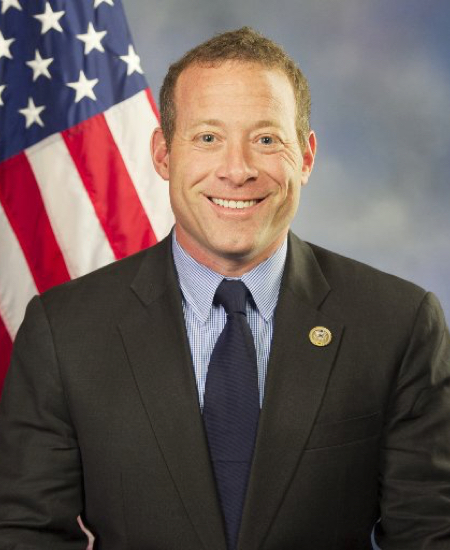
Rep. Josh Gottheimer
Sponsored bills
Maddy summaryThe Stop CMV Act of 2024 requires hospitals and healthcare entities caring for infants under 21 days old to administer congenital Cytomegalovirus (CMV) screening tests. It mandates states to establish screening standards within two years of enactment, with federal oversight by the Advisory Committee on Heritable Disorders if states fail to act. The bill allocates federal grants to states for implementing screening, improving data systems, and funding research on CMV diagnostics, prevention, and treatments through the National Institutes of Health. These provisions directly affect newborns, hospitals, and state health agencies by standardizing early CMV detection and supporting related public health efforts.
Long-term Opportunities for Advancing New Studies for Biomedical Research Act or the LOANS for Biomedical Research Act This bill requires the Department of the Treasury to establish the BioBonds Program to support loans for clinical trials for eligible drugs and medical devices for unmet medical needs. Under the program, fiscal agents purchase loans (up to $25 million per recipient) and issue collateralized bonds that are sold to investors and that are guaranteed by Treasury. An eligible borrower under this program is one conducting (or seeking to conduct) research related to a drug or device that is (1) intended to meet an unmet medical need; and (2) under investigation in certain types of controlled clinical trials, including a trial to investigate the safety and effectiveness of the drug or device. The Government Accountability Office (GAO) and Treasury must report on the program; GAO must also study whether similar programs should be established for other biomedical research projects.
Maddy summaryThis bill establishes a 5-year pilot program to connect eligible veterans with manufacturing careers. It authorizes $10 million annually (2025-2029) to award competitive grants to three states, which will then provide funding to manufacturing employers. The program reimburses employers for training costs related to covered manufacturing-specific skills (like on-the-job training or apprenticeships), exclusively for eligible veterans. States must demonstrate sufficient veteran populations, a strong manufacturing sector, and plans for sustainable high-wage employment. The program requires quarterly reporting on participant pay rates and annual evaluations to Congress.
Military Family Leave Act of 2024 This bill entitles an employed family member of a member of the Armed Forces who receives notification of a call or order to active duty in support of a contingency operation, or who is deployed in connection with a contingency operation, to two workweeks of leave per year for each family member who is so called or deployed. Such leave may (1) be taken intermittently or on a reduced leave schedule; and (2) consist of paid or unpaid leave, as the employer considers appropriate. Additionally, the bill (1) allows an employer to require certification of entitlement to such leave within a leave request, (2) provides employment and benefits protection for employees upon their return from such leave, and (3) prohibits an employer from interfering with or otherwise denying the exercise of such leave rights.
Maddy summaryThis bill reauthorizes the Preventing Maternal Deaths program through 2028, extending existing provisions under the Public Health Service Act. It requires maternal mortality review committees to include obstetricians and gynecologists and improves death certificate accuracy by directing coordination with death certifiers. The Centers for Disease Control and Prevention must annually share evidence-based best practices for preventing maternal mortality with hospitals, state health groups, and perinatal quality collaboratives. The changes directly affect state maternal mortality review committees, healthcare providers, and hospitals receiving CDC guidance. The bill does not create new funding but extends the current program's authorization period from 2019-2023 to 2024-2028.
Maddy summaryThis resolution (HRES 1050) designates March 2024 as National Colorectal Cancer Awareness Month. It symbolically supports existing public awareness efforts around colorectal cancer prevention, screening, and early detection, without creating new requirements or funding. The resolution encourages the public to observe the month with educational activities, aligning with ongoing annual campaigns. It directly affects public awareness efforts but has no binding policy impact.
Maddy summaryThe Increasing Access to Mental Health in Schools Act creates a federal grant program to increase mental health staff in low-income schools. It provides funding for partnerships between low-income schools (where at least 20% of students are from families below the poverty line) and graduate programs in school counseling, psychology, and social work. Grant funds can cover training costs, salary support for new mental health providers, recruitment of underrepresented students, and student loan repayment for mental health staff working in qualifying schools. The bill sets target ratios for staff-to-student ratios (like 1 counselor per 250 students) and requires annual reporting on program outcomes. The program is authorized for $200 million annually to address mental health staffing shortages in schools serving high-poverty communities.
Maddy summaryThis bill appropriates nearly $18 billion in emergency funding for international humanitarian assistance and security programs, primarily to address crises in Israel and Ukraine. It provides $5.655 billion for emergency food and shelter, $3.495 billion for refugee assistance, and $7.1 billion for military assistance with specific allocations for Israel ($3.5 billion), Ukraine ($1.6 billion), and the Indo-Pacific region ($2 billion). The bill includes strict oversight requirements, including third-party monitoring of aid to Gaza and detailed reporting to Congress on fund usage. It also establishes mechanisms for transferring funds between programs while requiring certification that assistance aligns with U.S. national security interests.
Maddy summaryHRES 1032 is a symbolic resolution designating the week of February 26-March 1, 2024, as "Public Schools Week" in the U.S. House of Representatives. It expresses congressional support for public education, highlighting its role in preparing students and communities. The resolution has no legal effect or funding provisions - it solely serves as a formal expression of backing for public schools. It directly affects no individuals or entities but aims to raise awareness about public education. This is a non-binding gesture, not a policy change.