

Maddy summaryHR 6727 establishes the United States Foundation for International Conservation, a nonprofit organization that will provide grants to support long-term management of protected and conserved areas in eligible countries. The Foundation requires a 2:1 cost match from other sources, demands host country and community consent through binding agreements, and prioritizes areas with high biodiversity or species of significant importance. It will be governed by a Board of Directors including government officials and private sector experts, operate for 10 years with $1 million authorized for 2024 and $100 million annually from 2025-2035, and must follow international conservation standards while prohibiting funding for countries supporting terrorism or violating human rights.
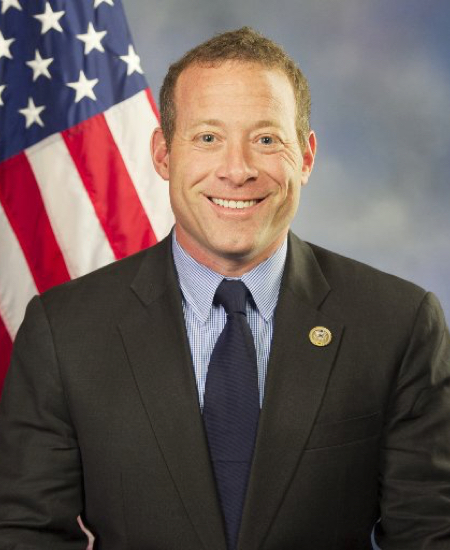
Rep. Josh Gottheimer
Sponsored bills
Maddy summaryHR 5247, the Expedited Hiring for VA Trained Psychiatrists Act of 2023, allows the Veterans Health Administration (VA) to hire psychiatrists who complete VA-residency programs without following standard civil service hiring rules. The bill permits immediate appointment after residency completion (or before, if the process begins early) for positions that have remained unfilled for at least 35 days. This directly affects VA psychiatrists completing specific residency programs and streamlines their hiring into VA clinical roles.
Maddy summaryThe Protecting Students on Campus Act of 2024 requires colleges and universities receiving federal funds to prominently display links to file discrimination complaints (based on race, color, or national origin) on their websites and post annual awareness materials about Title VI rights in high-traffic campus locations. It mandates schools to submit annual reports detailing discrimination complaints received, their analysis, and actions taken. The bill also prevents the Department of Education’s civil rights office from dismissing complaints resolved through school internal processes. These requirements aim to improve transparency and accessibility for students reporting discrimination, directly affecting all institutions of higher education receiving federal funding.
Maddy summaryHR 6610, the Passport System Reform and Backlog Prevention Act, aims to reduce delays in U.S. passport processing for citizens applying for routine new or renewal passports. It mandates a 30-day processing standard from document submission to mailing, requires technology upgrades like digital tracking dashboards and mobile apps for applicant updates, and authorizes hiring up to 100 temporary staff annually for passport offices. The bill also sets cybersecurity standards, maintains affordable fees, and requires regular progress reports to Congress on implementation. These changes directly affect U.S. citizens seeking passports, particularly those in remote areas with limited access to processing centers.
Maddy summaryThis bill prohibits U.S. app stores, hosting services, and distributors from enabling foreign adversary-controlled applications (like TikTok, owned by ByteDance) to operate within U.S. borders. It requires companies to provide users with their data in a machine-readable format before a ban takes effect, and imposes civil penalties of up to $5,000 per affected user for violations. The law directly affects major app platforms, app stores, and internet hosting services, targeting applications owned by entities controlled by designated "foreign adversary" countries (e.g., China). It includes exemptions for companies that divest U.S. operations to non-adversary entities before the ban date.
Maddy summaryHRES 1080 is a congressional resolution expressing that the U.S. and partner nations must coordinate to address humanitarian crises faced by North Koreans in China, particularly forced labor, trafficking, arbitrary detention, and forced repatriation. It directly affects North Korean refugees (especially women and girls) and U.S. import policies, urging action to stop seafood imports from China processed using North Korean labor - citing reports that such labor fuels North Korea’s nuclear program. Key mechanisms include enforcing the Countering America’s Adversaries Through Sanctions Act (which bans goods made with North Korean labor), pressuring China to comply with refugee conventions, and using sanctions authorities like the Global Magnitsky Act against Chinese officials. The resolution calls for diplomatic coordination with allies and UN action to protect refugees and end forced labor practices.
Maddy summaryHR 7634, the Plastic Pellet Free Waters Act, prohibits plastic pellets and pre-production plastic materials from being discharged into water through wastewater, spills, or runoff from specific facilities. It directly affects plastic polymer production facilities, plastic molding and forming facilities, and any point source (like packaging or transport operations) handling plastic pellets. The bill requires the EPA to issue a final rule within 60 days of enactment banning these discharges and updating all relevant wastewater, stormwater, and performance standards in permits and regulations. This creates a legal requirement for facilities to prevent plastic pellet pollution in waterways, targeting a major source of ocean plastic pollution.
Maddy summaryThis concurrent resolution (HCONRES 97) recognizes the gender wage gap, noting that women working full-time earn 84 cents for every dollar earned by men. It highlights racial disparities (e.g., Latinas earn 57 cents, Black women 69 cents) and the economic impact of the gap, including $965 billion in annual lost wages for women. As a symbolic resolution, it does not create new laws or policies but formally acknowledges the issue and reaffirms Congress’s commitment to addressing wage inequality.
Maddy summaryHR 7629, the Protect Our Letter Carriers Act of 2024, allocates $1.4 billion annually (2025-2029) to the U.S. Postal Service for high-security collection boxes and replacing physical universal mailbox keys with electronic versions, directly affecting USPS operations and letter carriers. It requires the Attorney General to appoint specialized prosecutors in each district to coordinate investigations and prosecutions of postal-related crimes, such as assaults on carriers or mail theft. The bill also mandates the U.S. Sentencing Commission to adjust guidelines so that assaults or robberies against postal employees are treated with the same severity as assaults against law enforcement officers. These provisions aim to enhance safety through infrastructure upgrades, improved prosecution, and stricter sentencing for crimes targeting postal workers.
Maddy summaryThe American High-Speed Rail Act authorizes $35 billion annually for high-speed rail corridor development (with $3 billion for corridor planning), requiring at least 20% of project costs to come from non-Federal sources. It defines "high-speed rail" as services reaching 186+ mph and "higher-speed rail" as 110-186 mph, with no more than 20% of funds allocated to higher-speed rail projects. Key provisions include allowing advance acquisition of rail corridors before environmental reviews, creating tax exclusions for rail carriers selling property to high-speed rail projects, and requiring consideration of equity, sustainability, and economic development impacts in planning. The bill affects federal agencies, state and local governments, rail carriers, and communities along proposed rail corridors.