

Maddy summaryHR 8061, the Crime Victims Fund Stabilization Act of 2024, ensures stable funding for the Crime Victims Fund by directing certain False Claims Act collections into it from 2024 through 2029. Specifically, it adds a provision requiring that amounts collected under the False Claims Act (excluding whistleblower rewards and government reimbursement for damages) be deposited into the fund during this period. This directly affects crime victims who rely on the fund for services like counseling and emergency aid, as it prevents potential shortfalls in funding. The bill makes a concrete policy change by redirecting specific federal civil penalties into the fund, rather than altering the fund's existing purposes or eligibility rules.
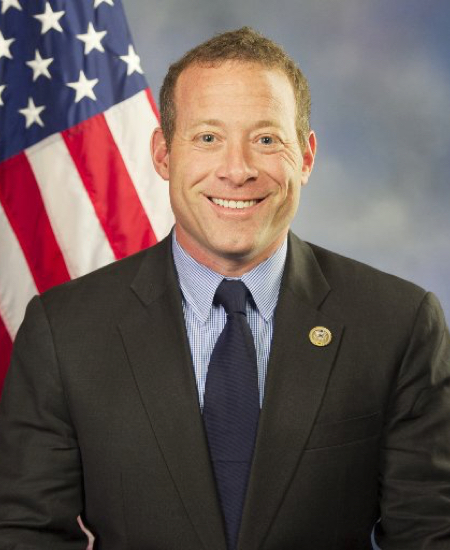
Rep. Josh Gottheimer
Sponsored bills
Maddy summaryHRES 1154 is a symbolic resolution supporting "Financial Literacy Month" to raise public awareness about the importance of personal financial education. It calls on the Federal Government, states, schools, businesses, and communities to observe the month with programs highlighting how financial literacy helps individuals manage money, credit, and debt. The resolution references statistics on financial challenges (like 37% of adults struggling with emergency expenses) but does not create new laws or funding. As a non-binding resolution, it has no direct effect on policy or affected individuals.
Maddy summaryHR 8043, the NO LIMITS Act of 2024, would authorize sanctions against Chinese companies providing material support to Russia's defense sector, including specific entities like AVIC, Huawei, and automobile exporters Chery and Haval. The bill requires the President to impose sanctions on Chinese military companies operating in Russia and creates new export controls on certain dual-use technologies that could contribute to Russia's military capabilities. It would take effect 90 days after enactment, with specific requirements for the Treasury to determine which Chinese arms manufacturers should face sanctions. The legislation directly affects Chinese entities with business ties to Russia's defense industry and aims to prevent technology transfers that could aid Russia's military operations in Ukraine.
Maddy summaryHR 5917, the "Strengthening Tools to Counter the Use of Human Shields Act," expands sanctions against foreign individuals and entities that direct the use of civilians as human shields. It specifically adds members or agents of Palestine Islamic Jihad (PIJ) to the list of targets for sanctions when they order or control civilians to shield military objectives. The bill requires the President to justify sanction decisions to Congress within 120 days and extends the sunset date for related sanctions from 2023 to 2030. Additionally, it mandates a Department of Defense report within 120 days detailing strategies to counter human shield tactics used by groups like Hamas and PIJ, including plans for international coordination.
Maddy summaryHRES 1151 is a symbolic resolution recognizing the Interstate Compact on Educational Opportunity for Military Children and designating April 2024 as "Month of the Military Child." It directly affects military-connected children (over 1.5 million in the U.S.) who face frequent school transitions due to parental service. The resolution expresses congressional support for the Compact - which helps streamline educational transitions for military students - and encourages nationwide recognition through events like "Purple Up!" to honor these children. As a non-binding resolution, it does not create new policies or funding but aims to raise awareness of military-connected students' educational challenges.
Maddy summaryThis non-binding House resolution condemns the slogan "from the river to the sea, Palestine will be free" as antisemitic, stating it promotes hatred against Jewish people and the State of Israel. It links the slogan to Hamas and other groups that reject Israel's existence, citing their charters and recent actions. The resolution calls for public condemnation of the slogan, noting it undermines peace efforts and aligns with positions of organizations like the Anti-Defamation League. It does not create new laws but expresses the House's stance on the phrase's harmful impact.
Maddy summaryThis resolution (HRES 288) urges the European Union to formally designate Iran's Islamic Revolutionary Guard Corps (IRGC) as a terrorist organization under EU legal framework Common Position 931. It does not create new laws but requests the EU take this specific action, noting the EU has previously sanctioned IRGC individuals but not the organization as a whole. The resolution cites the IRGC's role in human rights abuses, support for proxy groups, and involvement in conflicts like Ukraine as context for the request. Introduced in April 2023 by 20+ House members, it is a non-binding expression of congressional preference.
Maddy summaryHR 6408 would amend tax law to revoke the tax-exempt status of organizations providing material support (beyond a minimal amount) to groups designated as terrorists under existing law. It directly affects nonprofit organizations that, within three years of a Treasury designation, supplied resources like funds or equipment to terrorist organizations. Key mechanisms include requiring the Treasury Secretary to send written notice to the organization before designation, granting a 90-day "cure period" to prove no support was provided or return resources, and allowing rescission of the designation if errors occur or notice was not received. The bill applies to tax years beginning after its enactment.
Maddy summaryThis bill requires the Department of Veterans Affairs to provide annual preventative health evaluations to veterans with spinal cord injuries or disorders. The evaluations cover health risk assessments, chronic pain management, dietary needs, prosthetic equipment functionality, and assistive technology options (like mobility devices or speech generators). The VA must also report annually to Congress on how many veterans receive these evaluations and assistive technologies, and consider these evaluations when assessing VA network performance. The law directly affects veterans with spinal cord injuries/disorders by mandating proactive health checks focused on preventing complications and improving mobility.
Maddy summaryHR 5923, the Iran-China Energy Sanctions Act of 2023, requires the President to annually determine if Chinese financial institutions are purchasing Iranian petroleum or petroleum products. If such transactions are found, the President must report the findings to specific congressional committees within 180 days of enactment and annually for five years. This bill directly affects Chinese financial institutions engaging in significant transactions involving Iranian oil. The key mechanism adds these institutions to the scope of existing sanctions under the 2012 National Defense Authorization Act, mandating regular reporting to Congress rather than imposing immediate penalties.