

Maddy summaryHRES 1562 is a non-binding House resolution condemning Turkish President Recep Tayyip Erdoğan for specific statements and actions regarding Israel and NATO. It criticizes his rhetoric supporting Hamas (a U.S.-designated terrorist group), comparing Israeli leaders to Hitler, threatening Israel, obstructing NATO-Israel cooperation, and fostering antisemitism, citing examples like calling Netanyahu "the butcher of Gaza" and hosting Hamas leaders. The resolution urges Turkey to denounce Hamas, stop blocking NATO cooperation, extradite wanted Hamas members, and cease inflammatory rhetoric toward Greece and Cyprus. As a symbolic congressional statement - not a law - it expresses disapproval but does not impose legal consequences.
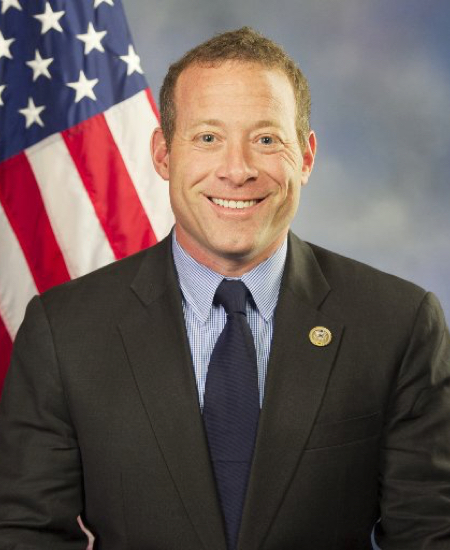
Rep. Josh Gottheimer
Sponsored bills
Maddy summaryThis bill modifies how disability benefits are treated for homeless disabled veterans seeking housing assistance. It excludes certain disability payments (under Chapter 11 or 15 of Title 38, U.S. Code) from income calculations when determining eligibility for HUD-assisted housing programs, including the supported housing program under Section 8(o)(19) and housing on Department property. Specifically, it ensures these benefits are not counted toward income for housing eligibility, though they still count for "adjusted income" definitions. The bill directly affects disabled veterans applying for HUD housing assistance who receive these specific disability benefits. It makes a concrete change to income calculation rules without altering benefit amounts or creating new funding.
Maddy summaryHRES 1555 is a symbolic House resolution condemning the spread of false claims and malicious rumors about disaster response efforts, which have led to credible threats against FEMA personnel and disrupted aid for survivors. It specifically references incidents after Hurricanes Helene and Milton, including a pause in North Carolina door-to-door assistance due to safety threats and antisemitic targeting of officials. The resolution formally condemns those spreading disinformation for political gain and commits Congress to supporting FEMA’s efforts to combat misinformation and promote accurate recovery information. As a non-binding resolution, it does not create new laws but expresses congressional support for protecting disaster response workers and ensuring survivors receive timely aid.
Maddy summaryThe COAST Act amends a 1946 flood control law to increase annual funding for emergency shoreline protection from $25 million to $45.5 million. It expands the types of infrastructure protected to include public recreational assets, public lands, and parks, while maintaining coverage for highways, bridges, historical lighthouses, schools, hospitals, and nonprofit services. The bill directly affects communities vulnerable to coastal erosion by enabling faster repairs to critical infrastructure during emergencies. Key changes are limited to the funding amount and the updated list of protected assets under the existing emergency protection program.
Maddy summaryHR 10041, the LITTLE Act of 2024, creates two new tax credits to reduce childcare costs. It provides childcare providers with a 30% tax credit for startup expenses (up to $10,000 total lifetime) to support new businesses. For families, it increases the dependent care credit to 50% of eligible expenses (capped at $7,500 for one child or $15,000 for two+ children) and makes the credit refundable, meaning families can receive money back even if they owe no tax. The credit percentage decreases for higher-income households, with adjustments for inflation starting in 2025.
Maddy summaryThis bill expands Medicaid coverage for low-income individuals diagnosed with breast or cervical cancer. It requires Medicaid programs to cover breast reconstruction surgery after a medically necessary mastectomy, adding this as a mandatory benefit under existing Medicaid rules. The bill also modifies eligibility criteria to ensure coverage for these specific cancer patients, aligning with prior Medicaid provisions. These changes apply to all states administering Medicaid, directly affecting eligible patients seeking cancer treatment and recovery services.
Maddy summaryThis bill limits states' ability to tax income earned by nonresident workers who telecommute or work across state lines. It prohibits states from taxing compensation when the worker is physically present in another state for work, and specifically bars states from claiming tax authority based on home office convenience or employer convenience tests. The law directly affects remote workers living in one state but working in another, ensuring they are only taxed by the state where they physically perform work. It applies solely to personal service income (wages/salary) and does not change rules for corporate taxes or unearned income like dividends.
Maddy summaryThe VA Employee Fairness Act of 2024 modifies collective bargaining rules for employees of the Veterans Health Administration (VHA). It removes existing subsections (b), (c), and (d) from the law governing VHA employee bargaining and renumbers the remaining provision. This change streamlines the collective bargaining framework but does not alter the Secretary of Veterans Affairs' existing authorities over incentive pay and expedited hiring. The bill directly affects VHA employees by changing how their collective bargaining rights are structured under federal law. The law remains neutral, focusing solely on procedural adjustments to the existing bargaining framework.
Maddy summaryThe WISER Act of 2024 provides automatic discharge status upgrades and a one-time $25,000 compensation payment to eligible female veterans who were involuntarily separated from military service under Executive Order 10240 between April 1951 and February 1976. It directly affects these veterans (and their surviving spouses if the veteran died after the bill's enactment) by treating them as if they completed their assigned duty for benefits purposes and authorizing the $25,000 payment. The bill establishes automatic eligibility for veterans separated under the executive order, with additional eligibility for those who gave birth, gained custody of a child, or experienced a pregnancy loss within 10 months of separation. The Secretary of Veterans Affairs and Secretary of Defense will administer the programs, requiring applications but not further proof of eligibility for the covered groups.
Maddy summaryThe FLOAT Act of 2024 creates a tax deduction for homeowners who pay flood insurance premiums on their primary residence. It allows individuals to deduct up to $1,000 annually for qualified flood insurance, including both private policies and government program coverage (like the National Flood Insurance Program). The deduction phases out for higher earners, with a $400,000 income threshold for joint filers and $200,000 for other individuals. This change applies to taxable years beginning after the bill’s enactment and directly affects homeowners in flood-prone areas who purchase flood insurance.