

Maddy summaryHR 3012 reauthorizes U.S. programs under the North Korean Human Rights Act of 2004 through 2028, extending funding and reporting requirements for existing initiatives. It directs the U.S. Agency for Global Media to continue broadcasting independent news into North Korea, supports transparent humanitarian aid delivery, and urges China to halt forcible repatriation of North Korean refugees. The bill directly affects North Korean citizens by promoting information access and refugee protection, and North Korean refugees in China by advocating for UNHCR access and refugee rights. Key provisions include extending program deadlines, reinforcing U.S. diplomatic efforts on human rights, and calling for swift confirmation of the Special Envoy on North Korean Human Rights Issues.
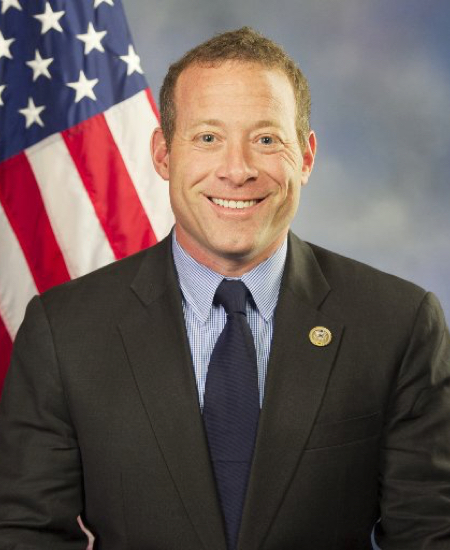
Rep. Josh Gottheimer
Sponsored bills
Maddy summaryHRES 837 is a non-binding resolution passed by the U.S. House of Representatives on November 1, 2023, reaffirming U.S. commitment to the Philippines. It specifically calls for invoking the U.S.-Philippines Mutual Defense Treaty if Philippine assets (including Coast Guard vessels) are attacked in the South China Sea, urges joint U.S.-Philippines patrols in the region, and objects to China's disputed territorial claims. The resolution does not create new laws or funding but expresses congressional support for existing defense agreements and diplomatic positions. It directly addresses U.S. foreign policy toward the Philippines and the South China Sea disputes.
Maddy summaryThis bill allows individuals to withdraw funds from retirement accounts without the usual 10% early withdrawal penalty if the money is used for qualified family caregiving expenses. It directly affects caregivers (like adult children or spouses) who pay for care for a family member certified by a doctor as needing long-term assistance with daily activities. Expenses covered include home modifications, medical supplies, respite care, counseling, lost wages for unpaid time off, and transportation for the care recipient. The total amount exempt from the penalty is capped at $10,000 per year per caregiver. The bill modifies existing tax code to make these withdrawals penalty-free while requiring documentation and certification of the care recipient's needs.
Maddy summaryThis bill prohibits Medicaid from covering conversion therapy for any enrollee. It amends federal law to block Medicaid payments for any therapy aimed at changing a person's sexual orientation or gender identity (defined as "conversion therapy" in the bill), starting in the first full quarter after the law takes effect. The prohibition applies to all Medicaid providers who offer such therapy for compensation, but explicitly excludes support for gender transition, acceptance-based care, and interventions focused on safety or unlawful conduct. It directly affects Medicaid recipients seeking therapy and providers who previously billed for conversion therapy services.
Maddy summaryThis bill (HR 9528) is a ceremonial renaming resolution. It redesignates two specific park features at Paterson Great Falls National Historical Park: the Great Falls Scenic Overlook Trail Bridge and Overlook Park, to honor Congressman Bill Pascrell, Jr. The bill updates all official references in government documents, maps, and records to reflect these new names. It has no policy impact beyond commemorating the congressman with permanent naming changes.
Maddy summaryThe Ballot Box Protection Act amends the Voting Rights Act to prohibit the destruction or damage of physical ballot boxes used for in-person voting in federal elections. It directly affects individuals who intentionally harm these secure, clearly labeled containers where voters drop off ballots. The law imposes fines up to $20,000 per box (or 20 years in prison) if no ballots are damaged, and up to $20,000 per damaged ballot (or 20 years in prison) if ballots are harmed, with similar penalties for conspiring to commit these acts. This creates specific criminal penalties for targeting physical ballot drop-off locations, enhancing protections for election infrastructure.
Maddy summaryThe Veteran Benefits Enhancement Act amends the Railroad Unemployment Insurance Act to clarify that military retirement pay is not counted as a social insurance payment. This ensures veterans receiving military retirement pay while eligible for railroad unemployment benefits will not have their benefits reduced due to their military pay. The bill specifically excludes "qualified military benefits" (as defined under IRS rules) from being considered when calculating railroad unemployment benefits. This directly affects veterans working in the railroad industry who receive both military retirement pay and railroad unemployment benefits.
Maddy summaryHRES 1566 is a symbolic House resolution honoring all U.S. veterans on Veterans Day 2024. It recognizes the service and sacrifice of the estimated 15.8 million veterans living in the U.S. as of 2023, including those who served in conflicts from World War II to post-9/11. The resolution calls on the American public to observe Veterans Day to acknowledge veterans' role in preserving national freedom. As a non-binding resolution, it has no direct policy impact but formally expresses congressional recognition of veterans' contributions.
Maddy summaryThis bill provides one-time financial assistance to U.S. farmers growing specific crops (like corn, soybeans, wheat, cotton, and rice) during the 2024 crop year if their expected costs exceed expected returns. Payments equal 60% of the difference between the expected cost of production per acre (based on USDA cost forecasts) and the expected gross return per acre (based on projected farm prices and yields). Payments are calculated using actual planted acreage plus 50% of acreage prevented from planting due to natural disasters, with annual caps of $175,000 or $350,000 depending on the farm’s primary income source. The program uses existing USDA data sources and applies standard farm payment limits.
Maddy summaryThe North American Grasslands Conservation Act of 2024 establishes a competitive grant program to support voluntary conservation and restoration of grassland ecosystems across North America. The bill creates a North American Grasslands Conservation Council and regional councils to recommend projects for funding, with a focus on protecting grasslands from conversion to cropland or development while supporting ranchers, farmers, and Tribal communities. It authorizes $60-90 million annually for fiscal years 2025-2029, including a 10% set-aside for Indian Tribes to incorporate Indigenous Traditional Ecological Knowledge into conservation efforts. The bill also includes provisions for native seed research and a pilot program studying regenerative grazing on federal lands to improve soil health and climate resilience.