

Maddy summaryThis bill reauthorizes the Emergency Medical Services for Children (EMSC) program through fiscal year 2029, increasing annual funding from $22.3 million (2020-2024) to $24.3 million (2025-2029). It directly supports states and communities providing specialized emergency medical care for children, including pediatric trauma and transport services. The key provision extends and increases federal funding to maintain existing EMSC grant programs that train healthcare providers and improve pediatric emergency response systems. This ensures continued access to coordinated care for children in emergency situations across the United States.
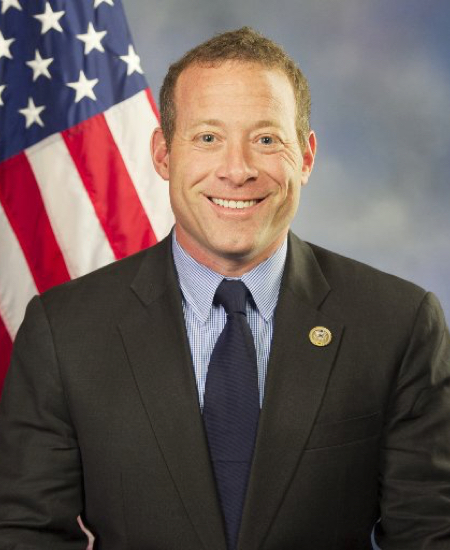
Rep. Josh Gottheimer
Sponsored bills
Maddy summaryThe Stop Campus Hazing Act requires colleges and universities to publicly report hazing incidents involving student organizations. It defines hazing as intentional acts causing physical or psychological harm during initiation or membership in student groups, including activities like forced substance consumption, sleep deprivation, or sexual acts. Institutions must include hazing statistics in annual security reports and publish a "Campus Hazing Transparency Report" on their websites by July 1, 2025, detailing findings about organizations violating hazing policies. The reports must include organization names, violation descriptions, and key dates while excluding personally identifiable student information. This applies to all colleges participating in federal student aid programs.
Maddy summaryThis bill, HR 1097 (Everett Alvarez, Jr. Congressional Gold Medal Act of 2023), authorizes the award of a Congressional Gold Medal to Everett Alvarez, Jr., in recognition of his service as a U.S. Navy pilot and Vietnam War prisoner of war. It directly honors Alvarez, who was the first U.S. pilot shot down in the Vietnam War, spent over 8.5 years in captivity, and later served in the Peace Corps and Veterans Administration. The bill’s key mechanism is directing the U.S. Mint to strike a gold medal bearing his name and image, with bronze duplicates available for sale to cover costs. It does not create new policies or affect any group beyond the honoree.
Maddy summaryThis bill allows Medicaid programs to enter into value-based purchasing (VBP) arrangements with drug manufacturers for innovative treatments like gene therapies. It codifies these arrangements by requiring states to report pricing structures based on patient outcomes and best prices for drugs sold under these agreements. The bill enables payments to be tied to treatment effectiveness, potentially reducing long-term healthcare costs by decreasing hospitalizations and other medical expenses. It also creates a requirement for a GAO study to evaluate how these arrangements impact patient access, outcomes, and healthcare system costs. The bill will sunset after 5 years, though existing VBP arrangements will continue beyond that date.
Maddy summaryHRES 1620 is a resolution calling on the FBI, DHS, and FAA to provide an immediate public briefing about drone sightings in New Jersey and New York. It follows multiple reported incidents, including 49 drone sightings in one night in New Jersey and disruptions to medical helicopters and airports. The resolution demands federal transparency on the drone situation and urges collaboration with local law enforcement to address unauthorized drone activity. It does not create new laws but requests existing agencies to share information with the public. The bill focuses on public awareness regarding current drone-related events in the region.
Maddy summaryHR 10485, the RADAR Act, authorizes $25 million in fiscal year 2025 funding for COPS Tech projects. These projects, defined under the 2024 Consolidated Appropriations Act, support law enforcement technologies and interoperable communications systems. The bill directly affects local and state law enforcement agencies that receive COPS Tech funding to upgrade equipment and communication capabilities. This is a funding authorization, not a policy change, with no specific provisions for drone-related technology despite the bill's title.
Maddy summaryThe SEARCH Act of 2024 directs the Department of Health and Human Services (HHS) to launch public awareness campaigns increasing women’s participation in NIH clinical trials, particularly for rare diseases disproportionately affecting women, with $10 million annually from 2025-2029. It also creates a permanent Interagency Task Force on Rare Diseases, including HHS agency heads, biopharma representatives, and patient advocates, to coordinate federal research efforts and assess funding for rare disease treatments. The bill requires HHS to submit an action plan within 180 days of enactment outlining how it will incentivize research on rare diseases that disproportionately impact women. These provisions directly affect women seeking clinical trial participation, NIH research programs, and HHS agencies responsible for rare disease initiatives.
Maddy summaryHR 5401, the 9/11 Memorial and Museum Act, provides a one-time federal grant of $5 million to $10 million to the National September 11 Memorial & Museum (operated by the World Trade Center Foundation). The grant funds the museum's operations, security, and maintenance, with specific requirements including free admission for veterans, first responders, and victims' families, dedicated weekly free public hours, and annual financial audits. The museum must also report annually to Congress on how the funds were used. This bill directly affects the museum's financial operations and access policies, not broader legislative changes.
Maddy summaryThis bill requires Medicare providers to inform patients about breast reconstruction coverage before performing a mastectomy. Specifically, it mandates that providers must tell patients their Medicare coverage includes breast reconstruction surgery following a medically necessary mastectomy (covered under Medicare's existing national policy 140.2) and document this discussion in the patient's medical record. The requirement applies to all mastectomies performed on or after one year after the bill's enactment. It directly affects Medicare beneficiaries undergoing mastectomies and the healthcare providers who perform these procedures, ensuring patients are aware of existing coverage options. The bill does not change Medicare's coverage rules but ensures patients receive clear information about available benefits.
Maddy summaryThis bill requires a study to examine insurance coverage for dyspraxia/developmental coordination disorder (DCD) treatments. The Comptroller General must report to Congress on coverage gaps under Medicare, Medicaid, private health plans, and other federal programs, including age limits, barriers to care, and compliance with existing laws. The study will specifically investigate why coverage might end when children with dyspraxia/DCD turn 18 and whether current policies adequately cover these conditions. It does not change coverage rules but aims to identify issues for potential future policy adjustments. The report will inform recommendations for improving access to treatment for people with dyspraxia/DCD.