

Maddy summaryThis bill (HR 7606) designates the U.S. Postal Service facility at 1087 Route 47 South in Rio Grande, New Jersey, as the "Carlton H. Hand Post Office Building." It directly affects the physical postal facility and all official references to it (such as maps, documents, or regulations). The bill updates all federal records to use the new name, with no substantive policy changes or impact on services or residents. It is a ceremonial naming resolution with no fiscal or operational provisions.
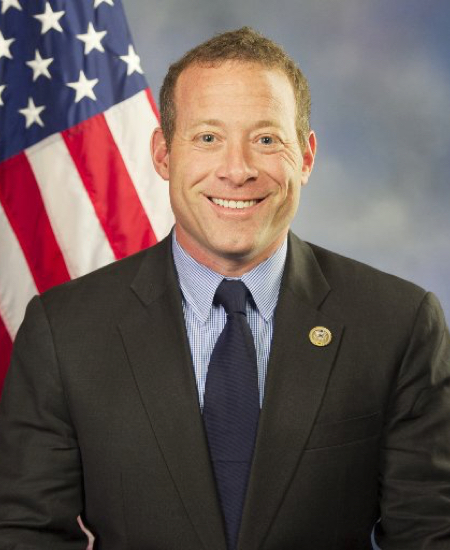
Rep. Josh Gottheimer
Sponsored bills
Maddy summaryHR 7365, the VETS Safe Travel Act, provides free TSA PreCheck access to veterans with specific service-connected disabilities. It applies to veterans enrolled in VA healthcare who have lost or lost use of an extremity, experience paralysis, or have permanent blindness, requiring mobility aids like wheelchairs or prosthetics. The bill requires TSA and the VA to coordinate implementation within one year, including outreach to veterans about this benefit and reporting to Congress on progress.
Maddy summaryThe Women’s Suffrage National Monument Location Act (HR 1318) authorizes the placement of a monument on the National Mall to honor the women’s suffrage movement and the 19th Amendment. The bill specifies that the monument must be located within a designated area on the National Mall known as the "Reserve," bypassing standard requirements for monument locations under existing law. This legislation sets the physical site for a monument already authorized by previous law (Public Law 116-217), without creating new policy or altering commemorative regulations beyond the location.
Maddy summaryThe Think Differently Database Act (HR 670) requires the U.S. Department of Health and Human Services (HHS) to create and maintain a public website within three years. The website will provide clear, accessible information about Medicaid eligibility for people with disabilities - including specific state requirements, contact details for state Medicaid offices, and wait times for home-based services. It directly affects individuals with disabilities, their caregivers, and families seeking support through Medicaid programs. The site will standardize resource access across states, using existing Medicaid rules and modeling after the thinkdifferently.net website.
Maddy summaryHR 171 requires the Transportation Department's inspector general to audit how the five largest public transit agencies (by 2019 ridership) spent coronavirus relief funds. It covers spending from specific pandemic aid bills like the CARES Act and American Rescue Plan. The audit must track all funds received and how they were used, with a report to Congress within 180 days of the bill's enactment. This aims to increase transparency around federal transit funding during the pandemic.
Washington, D.C. Admission Act This bill provides for the establishment of the State of Washington, Douglass Commonwealth, and its admission into the United States. The state is composed of most of the territory of the District of Columbia (DC), excluding a specified area that encompasses the U.S. Capitol, the White House, the U.S. Supreme Court building, federal monuments, and federal office buildings adjacent to the National Mall and the U.S. Capitol. The excluded territory shall be known as the Capital and serve as the seat of the government of the United States, as provided for in Article I of the Constitution. The state may not impose taxes on federal property except as Congress permits. The bill provides for the DC Mayor to issue a proclamation for the first elections to Congress of two Senators and one Representative of the state. The bill eliminates the office of Delegate to the House of Representatives. The bill applies current DC laws to the state. DC judicial proceedings and contractual obligations shall continue under the state’s authority. The bill also provides for specified federal obligations to transfer to the state upon its certification that it has funds and laws in place to assume the obligations. These include maintaining a retirement fund for judges and operating public defender services. The bill establishes a commission that is generally comprised of members who are appointed by DC and federal government officials to advise on an orderly transition to statehood.
Maddy summaryHR 138, the Lowering Costs for Caregivers Act of 2025, expands tax-advantaged health savings by allowing taxpayers to use funds in Health Savings Accounts (HSAs), Flexible Spending Accounts (FSAs), and Health Reimbursement Arrangements (HRAs) to cover medical expenses for their parents, not just their spouse. The bill amends the Internal Revenue Code to explicitly include parents as eligible dependents under these accounts, removing prior restrictions. This change directly affects caregivers - primarily adult children supporting aging parents - who will now have greater flexibility to use pre-tax funds for their parents' medical care. The provisions apply to expenses incurred after December 31, 2024, and aim to reduce out-of-pocket costs for family caregivers.
Maddy summaryThe Treat and Reduce Obesity Act of 2023 expands Medicare coverage for obesity treatment by allowing a wider range of healthcare providers - including nurse practitioners, dietitians, psychologists, and community-based counseling programs - to deliver intensive behavioral therapy for obesity, provided they coordinate with primary care providers. It also adds Medicare Part D coverage for medications used to treat obesity or for weight loss management in overweight individuals with related health conditions like diabetes or high blood pressure. These changes directly affect Medicare beneficiaries, particularly older adults (65+), who face higher obesity rates and associated costs, including $50 billion annually in Medicare spending for obesity-related care. The bill requires annual reports to Congress on implementation to improve coordination of obesity care across federal health programs.
Maddy summaryThis bill creates a 4-year transitional coverage period for Medicare to automatically cover "breakthrough medical devices" - new FDA-prioritized devices approved after March 2021 - as "reasonable and necessary" for treatment. During this period, these devices qualify for additional payments under Medicare's hospital and outpatient payment systems without requiring separate approval. After the 4-year period, Medicare must develop regular coverage based on additional data, with automatic coverage for all approved uses if no action is taken within two years. The bill requires Medicare to assign unique codes for these devices within three months of FDA approval and to update payment systems regularly. It also includes special provisions for "specified breakthrough devices" that lack existing Medicare benefit categories, requiring reports on their impact and cost to Congress.
Maddy summaryThe Autism CARES Act of 2024 reauthorizes and enhances federal programs supporting individuals with autism spectrum disorder. It requires the National Institutes of Health to expand research to include more fields like gerontology and psychiatry, and to ensure research reflects the full range of needs of people with autism, including those with co-occurring conditions. The bill mandates regular reports to Congress on progress, mental health needs, and transition services for young adults with autism, while increasing funding for autism-related programs from fiscal year 2025 through 2029. This legislation directly affects individuals with autism, their families, caregivers, and healthcare providers by improving access to evidence-based services and research.