

Maddy summaryHR 3788, "Hammers' Law," amends a section of U.S. law (46 U.S.C. § 30307) that sets liability limits for certain accidents. It expands the scope from "commercial aviation accidents" to also include "cruise ship voyages," directly affecting victims and operators of cruise ships meeting specific criteria. The bill defines a "cruise ship" as one carrying at least 250 passengers with sleeping accommodations on U.S.-embarking voyages (excluding coastwise travel), and clarifies "nonpecuniary damages" as compensation for loss of care, comfort, and companionship. This change applies existing liability rules for aviation accidents to similar incidents on qualifying cruise ships.
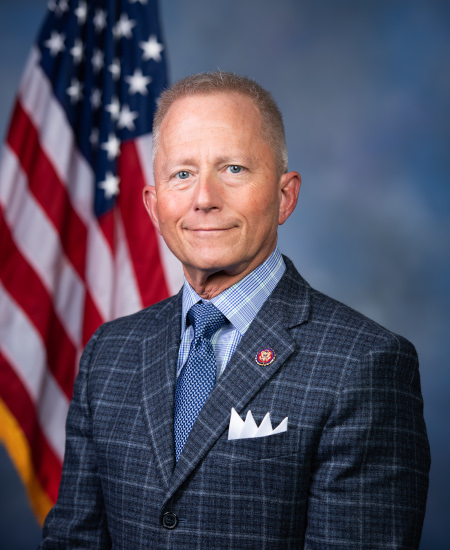
Rep. Jefferson Van Drew
Sponsored bills
Maddy summaryHR 3773, the Stop Anti-Semitism on College Campuses Act, requires colleges and universities receiving federal funding to prohibit any event promoting antisemitism on campus. This includes not hosting, facilitating, funding, or supporting such events. The bill adopts the International Holocaust Remembrance Alliance's 2016 definition of antisemitism - including contemporary examples - as the standard for determining prohibited conduct. The law directly affects all institutions covered by the Higher Education Act of 1965.
Maddy summaryThe HALT Fentanyl Act expands the definition of fentanyl-related substances in the Controlled Substances Act to include many structurally similar compounds, making it easier to regulate new fentanyl analogs without individual listing. It defines these substances based on specific chemical modifications to fentanyl, with limited exceptions for substances already controlled or listed elsewhere. The bill also streamlines research procedures for schedule I substances by creating expedited registration processes and allowing multiple studies under one registration, while requiring the Attorney General to publish a list of substances meeting the new definition.
Maddy summaryHR 3713 creates federal grants to fund comprehensive school-based mental health programs for students in grades K-12, including those in Bureau of Indian Education schools. It requires partnerships between schools and community mental health providers to deliver trauma-informed, culturally appropriate services addressing suicide risk, grief, violence, and trauma exposure. The bill authorizes $300 million annually (2024-2027) for these programs, mandating privacy protections under HIPAA and FERPA, and requires annual reporting on program effectiveness.
Maddy summaryHR 3176, the Veterans Health Care Freedom Act, creates a 3-year pilot program allowing eligible veterans (enrolled in VA care) to choose any provider within the VA healthcare system or approved non-VA facilities, removing prior location restrictions for VA care. Veterans can select primary and specialty care providers freely, with VA coordinating care through a designated primary provider. After the pilot, these expanded choices become permanent policy, requiring the VA to offer full provider selection without geographic or administrative barriers. The bill implements these changes using existing VA funding without new appropriations.
Maddy summaryHR 3186, the Supporting Veteran Families in Need Act, permanently authorizes funding for supportive services for very low-income veteran families living in permanent housing. It amends Section 2044(e) of the U.S. Code to establish ongoing annual funding authority starting in fiscal year 2025, replacing previous temporary or annual appropriations. This change ensures consistent financial assistance for essential services like childcare, transportation, and counseling that help these families maintain stable housing. The bill directly affects eligible veteran families meeting specific income and housing criteria, providing them with reliable support through a permanent funding mechanism.
Maddy summaryHRES 448 is a non-binding House resolution honoring Daniel Penny of West Islip, New York, for intervening during a subway incident on May 1, 2023. It recognizes Penny for apprehending Jordan Neely, who was threatening passengers on an F Train in Manhattan, including allegedly throwing trash and making violent threats. The resolution states Penny acted "with disregard for his personal well-being" to protect fellow commuters. It specifically rejects claims labeling Penny a "White supremacist" or "vigilante," calling such descriptions "without basis in fact." As a commemorative resolution, it has no legal effect and solely serves to publicly commend Penny's actions.
Maddy summaryThis bill changes TRICARE eligibility rules for National Guard and Reserve retirees under age 60 who are not yet receiving retired pay due to specific provisions (sections 5304/5305 of Title 38). It allows these members to access TRICARE coverage even if they haven't yet qualified for full retired pay under Chapter 1223. The key change removes the previous requirement that they must be receiving retired pay to qualify for TRICARE. The amendment takes effect January 1, 2024, directly benefiting eligible Reserve retirees who would otherwise face coverage gaps before age 60.
Maddy summaryThis bill creates a new tax credit for expenses related to "qualified access technology for the blind" under the Internal Revenue Code. It allows taxpayers to claim a credit of up to $2,000 per year (adjusted for inflation) for costs paid for hardware, software, or IT that converts visual information into formats usable by blind individuals, covering the taxpayer, their spouse, or a dependent who is blind. The credit is limited to $2,000 over any three consecutive tax years per blind individual and expires after 2028. It directly affects blind individuals and their families who purchase qualifying assistive technology. The credit cannot be claimed for expenses already covered by other tax deductions or credits.
Maddy summaryThis resolution, introduced by Rep. Marjorie Taylor Greene, proposes impeaching Attorney General Merrick Garland based on allegations of politicizing the justice system. It claims Garland failed to impartially enforce laws, targeted parents and religious groups, and pursued politically motivated prosecutions (like against former President Trump) while ignoring alleged misconduct by the Biden administration. As a procedural resolution, it has been referred to the Judiciary Committee but has not advanced to a vote or Senate trial. It does not enact any policy changes - it is solely a formal accusation seeking removal from office.