

Maddy summaryThe Neighborhood Homes Investment Act creates a new tax credit for developers who rehabilitate or build affordable homes in distressed communities. The credit is calculated based on the difference between rehabilitation costs and the sale price, with homes required to be sold at affordable prices to qualified homeowners with incomes up to 140% of the local median family income. The bill targets specific "qualified census tracts" defined by high poverty rates, low homeownership, and below-average home values. Developers must ensure homes are sold to qualified homeowners who use them as primary residences for at least five years, with additional safeguards to prevent program abuse and ensure fair housing practices.
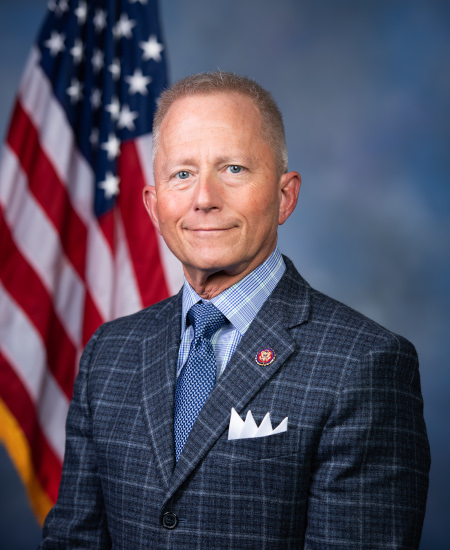
Rep. Jefferson Van Drew
Sponsored bills
Maddy summaryThis bill directs the Secretary of Defense to add the names of 74 crew members lost when the USS Frank E. Evans sank in 1969 to the Vietnam Veterans Memorial Wall within one year of the bill's enactment. It requires consultation with other agencies to address space limitations for name placement and explicitly exempts this addition from standard commemorative memorial rules under the Commemorative Works Act. The measure directly honors the deceased crew members and affects how their names are displayed on a national memorial.
This resolution states that BridgeUSA programs are vital to the economy and to U.S. national interests. The resolution also states that U.S. embassies and consulates should prioritize processing J-1 visas for such programs. (BridgeUSA is the name for what was formerly known as the Exchange Visitor Program. Participants from other countries come to the United States to participate in various exchange programs, such as exchange programs for professors, trainees, interns, and au pairs.)
Maddy summaryThis bill requires large credit card issuers (with over $100 billion in assets) to allow merchants to choose which payment networks process credit card transactions, ending restrictions that previously forced merchants to use only one network. It prohibits issuers from blocking merchants from routing transactions through competing networks or penalizing them for choosing non-exclusive processing options. The Federal Reserve must create rules within one year to implement these changes, ensuring merchants have more choice in payment processing. The law does not apply to credit cards issued in a "3-party payment system" model.
Maddy summaryHR 3907 increases annual funding for U.S.-Israel development cooperation from $2 million to $4 million, extending support through 2026 instead of 2023. It requires USAID to report within 180 days on expanding projects to include multilateral partnerships with Arab countries, particularly in Africa, and assesses the need for additional resources. The bill directly affects USAID, Israel's MASHAV agency, and developing nations in Africa, Eastern Europe, and Latin America where joint projects focus on water, agriculture, education, and health. Key provisions adjust funding levels and mandate a formal review of expanding cooperative development efforts. The legislation aims to strengthen existing U.S.-Israel collaboration on global development initiatives.
Maddy summaryHR 3919, the Asylum Claims Improvement Act of 2023, prohibits immigration officials from considering an applicant's mental health when reviewing asylum claims or requests for withholding of removal. It amends Sections 208(b) (asylum) and 241(b)(3) (withholding of removal) of the Immigration and Nationality Act to explicitly state that mental health status cannot be a factor in these determinations. This change directly affects immigrants seeking protection in the U.S. who apply for asylum or withholding of removal. The bill makes a specific policy change by removing mental health as a consideration in these immigration decisions.
Maddy summaryHR 3869, the Trucker Bathroom Access Act, requires certain businesses (like warehouses, distribution centers, and shipping/receiving facilities) to allow commercial truck drivers access to their restrooms when delivering or waiting to transport goods. It specifically applies to drivers regulated by the Department of Transportation and excludes small businesses (under 800 sq ft) with employee-only restrooms. The bill mandates that businesses provide access without requiring physical restroom modifications, and for port terminals, requires operators to provide sufficient restrooms with parking access for large cargo trucks (over 33,000 lbs) while avoiding obvious safety risks.
Maddy summaryThis bill prohibits the Department of Veterans Affairs from changing its anesthesia care policies to allow nurse anesthetists (CRNAs) to provide anesthesia independently without a physician anesthesiologist. It specifically blocks implementation of a 2016 proposed rule that would have expanded CRNAs' authority in VA facilities. The law maintains current requirements that physician anesthesiologists must oversee or provide anesthesia care for veterans during surgical procedures. Emergency orders for veteran safety during surgery remain permitted under the bill's exception clause.
Maddy summaryThis House resolution symbolically recognizes May as Jewish American Heritage Month, celebrating Jewish Americans' historical contributions to U.S. society and culture. It references rising antisemitism in 2022 (including ADL data showing a 36% increase in incidents) and includes a non-binding call for leaders to combat antisemitism. As a purely symbolic resolution, it does not create new policies or legal requirements.
Maddy summaryHR 3792 extends U.S. security funding for Israel through 2028 (Section 3) and expands energy cooperation to include advanced nuclear technologies and carbon capture (Section 5). It requires annual reports on regional security partnerships involving Israel (Section 6) and ensures countries in the Abraham Accords can access U.S. development programs (Section 8). The bill also mandates reports on diplomatic efforts against ICC investigations targeting the U.S. and Israel (Section 10) and encourages people-to-people programs to strengthen the Abraham Accords (Sections 7, 9). These provisions directly affect Israel’s diplomatic engagement, security partnerships, and economic cooperation in the Middle East.