

Maddy summaryHR 5012 (SHINE for Autumn Act of 2023) authorizes federal funding to improve stillbirth research and data collection. It provides $5 million annually for states to collect standardized stillbirth data (including risk factors) while protecting privacy, $1 million annually for developing public educational materials and data collection guidelines, and $3 million annually for medical fellowships training pathologists in perinatal autopsy and stillbirth research. The bill directly affects state health departments, medical professionals (like obstetricians and pathologists), and families who experience stillbirth by improving data quality for future research. It requires federal reports on guidelines and program effectiveness within five years but does not provide direct medical care or financial assistance to families.
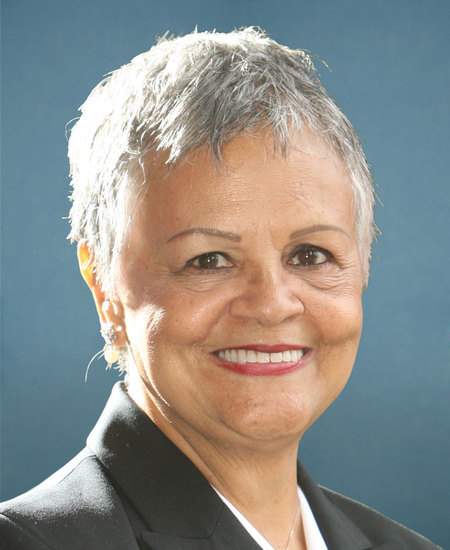
Rep. Bonnie Watson Coleman
Sponsored bills
Maddy summaryHR 537 authorizes a Congressional Gold Medal to honor 60 diplomats who saved Jewish lives during the Holocaust by issuing visas and passports against their governments' orders, risking expulsion and personal danger. The medal will be presented to the next of kin of these diplomats, alongside representatives from their home countries, and permanently displayed at the United States Holocaust Memorial Museum. The bill also permits the sale of bronze duplicates to cover production costs, with proceeds going to the U.S. Mint. This legislation recognizes the diplomats' humanitarian actions without creating new government programs or altering existing laws.
Maddy summaryThis resolution (HRES 1286) supports continued U.S. funding for Gavi, the Vaccine Alliance, to expand access to vaccines in low-income countries. It directly aids children and communities in these nations by enabling immunization against preventable diseases like measles, malaria, and polio, which has averted an estimated 17.3 million deaths since 2000. Key provisions highlight Gavi's role in reducing child mortality from vaccine-preventable diseases by 70%, achieving a $54 economic return for every $1 invested, and strengthening health systems through cold-chain infrastructure. The resolution urges sustained U.S. financial commitments to maintain Gavi's market-shaping impact, support malaria vaccine rollout, and ensure global health security.
Maddy summaryThe FAIR Costs Act (HR 8678) would reduce the percentage of income used to calculate rent for low-income tenants in federal housing assistance programs from 30% to 20%. This change directly affects tenants in public housing and those using tenant-based assistance programs like Section 8 vouchers, lowering their monthly rent payments. The bill amends key housing laws, including the United States Housing Act of 1937 and the Cranston-Gonzalez National Affordable Housing Act, to implement this rent calculation shift. It also updates funding authorizations to include fiscal year 2025 and future years for tenant-based assistance.
Maddy summaryHRES 1273 designates a day in May 2024 as "Disability Reproductive Equity Day" to raise awareness about reproductive rights barriers faced by people with disabilities. The resolution highlights historical and ongoing issues like forced sterilization laws, accessibility gaps in healthcare, and higher rates of sexual violence, while referencing existing protections under the Rehabilitation Act, ADA, and Affordable Care Act. It does not create new laws but calls for greater attention to ensuring people with disabilities can exercise reproductive autonomy. This resolution directly affects millions of people with disabilities, particularly women, people of color with disabilities, and those with low incomes, who face systemic barriers in reproductive healthcare.
Maddy summaryHRES 1279 is a non-binding House resolution expressing support for designating June 2024 as "Black Music Month." It honors Black musicians, creators, and communities whose contributions have shaped American music across genres like blues, jazz, hip-hop, and gospel. The resolution calls on all Americans to recognize the month through actions that elevate Black music's artistry, promote diversity, and spread awareness of its historical impact. It does not create new laws or allocate funding, but serves as a symbolic gesture to celebrate Black music's cultural significance. The resolution was introduced by multiple House members and refers to Black music's role in American history and the civil rights movement.
Maddy summaryThis bill bans rental property owners (with 4+ units) and software services from using algorithms that coordinate pricing or lease terms among landlords, which could enable price-fixing. It specifically prohibits "coordinating functions" like collecting and analyzing rental data to recommend prices or occupancy levels, deeming such use a per se violation of antitrust law. The Federal Trade Commission and state attorneys general can enforce these rules, and victims of violations can sue for triple damages. Pre-dispute arbitration agreements or waivers preventing class actions related to these violations are also invalidated.
Maddy summaryHR 8639, the Warehouse Worker Protection Act, requires employers in covered warehouse facilities (including distribution centers, storage facilities, and delivery services) to provide workers with clear written descriptions of any quotas they're subject to, including how performance is measured and monitored. The bill prohibits quotas that interfere with breaks, safety compliance, or anti-discrimination protections, and mandates that employers provide employee work speed data in human-readable formats. It creates new anti-retaliation protections for workers who exercise these rights or file complaints, and establishes a Fairness and Transparency Office within the Department of Labor to oversee implementation. The act also amends the National Labor Relations Act to explicitly prohibit quotas that discourage workers from exercising their labor rights.
Maddy summaryThe PROVE Act requires states to allow 16- and 17-year-olds to pre-register to vote in federal elections, with their registration automatically activating upon turning 18. States may also permit pre-registration for younger minors. The bill provides $25 million in grants to states for programs promoting youth civic engagement, including modifying school curricula to teach election processes and encouraging use of the pre-registration system. It directly affects minors aged 16-17 and aims to increase their participation in federal elections.
Maddy summaryHR 8609, the Supreme Court Ethics and Investigations Act, creates two new offices within the Supreme Court: an Office of Ethics Counsel to advise justices on ethical matters like financial disclosures and gift acceptance, and an Office of Investigative Counsel to review formal ethics complaints. The Ethics Counsel provides biannual training to justices and submits annual reports to Congress on ethics advice given, while the Investigative Counsel handles complaints filed only by specific congressional leaders (e.g., committee chairs, Senate leaders) and can issue subpoenas for investigations. If a complaint is validated, the Investigative Counsel submits a report to the Chief Justice (or senior associate justice if the Chief is the subject) with findings and recommendations, which must be shared with relevant congressional committees. The bill establishes specific qualifications, pay rates ($180,000-$225,000 annually), and term limits for both offices’ staff.