

Maddy summaryThis bill awards a Congressional Gold Medal to the 761st Tank Battalion (known as the "Black Panthers"), the first predominantly Black armored unit in World War II's European Theater. It recognizes their combat service from 1944-1946, including key roles in the Battle of the Bulge and breaking the Siegfried Line, despite facing racial prejudice during and after the war. The medal will be displayed at the National Museum of African American History and Culture, with bronze duplicates available for sale to cover costs. The bill commemorates the battalion's 130,000 enemy casualties inflicted, 50% casualty rate, and their 1978 Presidential Unit Citation. It does not create new laws or affect current policies.
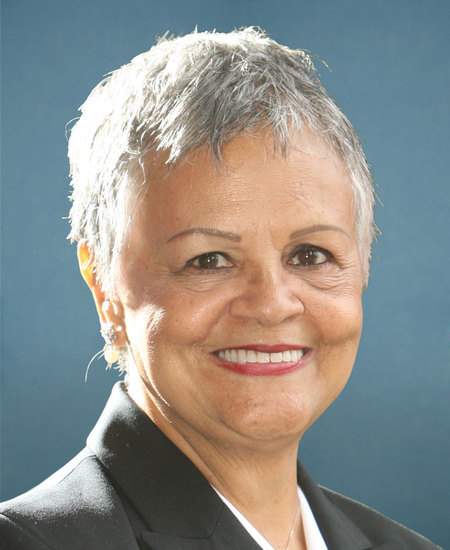
Rep. Bonnie Watson Coleman
Sponsored bills
Maddy summaryHR 1638, the CROWN Act of 2025, prohibits discrimination based on hair texture or hairstyle that is commonly associated with race or national origin, particularly affecting Black individuals who wear natural or protective styles like braids, locs, cornrows, twists, or Afros. The bill explicitly expands protections under existing federal civil rights laws (including the Civil Rights Act of 1964 and the Fair Housing Act) to cover hair-based discrimination in federally funded programs, housing, public accommodations, employment, and equal rights. It requires schools, employers, and other entities receiving federal funds to eliminate grooming policies that disproportionately target these hairstyles. The law clarifies that such discrimination violates federal law and provides enforcement through existing civil rights mechanisms.
Maddy summaryEthan's Law requires gun owners to store firearms securely in homes where minors live or where residents are legally prohibited from owning guns. It makes it unlawful to leave firearms unsecured if a minor or ineligible person could access them, with fines of $500 per violation and harsher penalties if injury or death occurs. The bill creates a federal grant program to help states implement similar secure storage laws and treats unsafe storage as negligence in legal cases. It directly affects households with children or residents who cannot legally possess firearms, aiming to reduce accidental shootings and unauthorized access.
Maddy summaryHRES 159 is a symbolic resolution expressing the U.S. House of Representatives' support for designating February 24-28, 2025, as "Public Schools Week." It does not create new laws or allocate funds but aims to highlight the importance of public schools in communities. The resolution cites reasons such as public schools serving 90% of U.S. students, fostering critical thinking, and requiring equitable funding - though these are context, not policy changes. It directly affects public schools and their communities by raising awareness of their role in education. As a non-binding resolution, it has no direct impact on school operations or funding.
Maddy summaryThis bill requires the Comptroller General to produce a report analyzing actions taken by the Department of Government Efficiency (created by an executive order). The report must evaluate how those actions - like reducing civil service staff, ending or pausing federal programs - affect the U.S.'s long-term financial, public health, and safety interests. It also must check if the department followed privacy laws (Privacy Act of 1974) and federal program rules. The report must be submitted to Congress by December 31, 2025. The bill directly affects the Department of Government Efficiency and Congress through this mandated oversight.
Maddy summaryHR 1544, the LEASH DOGE Act, requires the Department of Government Efficiency (DOGE) to report detailed information about its employees and operations to Congress. Specifically, it mandates a report listing all DOGE employees with their roles, background check results, security clearances, and conflict of interest disclosures; appearances before congressional committees; and a public website updated weekly with employee data, funding reductions, and contact information for public inquiries. The bill sets a March 31, 2025, deadline for compliance, with penalties including restrictions on using federal funds for DOGE activities or new DOGE Agency Teams until requirements are met. It directly affects DOGE leadership, its employees, and congressional oversight committees. The law focuses on transparency about DOGE’s staffing and budget decisions, not policy outcomes.
Maddy summaryThis resolution expresses support for designating February 16, 2025, as "International Black Aviation Professionals Day." It requests the President issue a proclamation encouraging schools to teach about Black aviation pioneers' contributions and support opportunities for Black Americans in the field. The resolution does not create new laws or funding but aims to raise public awareness of historical figures like Bessie Coleman, the Tuskegee Airmen, and Katherine Johnson. It affects recognition efforts rather than direct policy changes, focusing on honoring past contributions to aviation.
Maddy summaryHR 1448, the PEER Mental Health Act of 2025, provides federal grants to schools for mental health training. It requires training school staff, students, parents, and caregivers to recognize mental health symptoms in youth, refer students to services, and apply basic response techniques during immediate distress. The bill mandates that at least 25% of annual funding ($24.96 million per year for 2026-2030) supports rural schools, with streamlined application processes and technical assistance for grantees. The program directly affects public schools, their personnel, and students by expanding access to mental health awareness and community resource education.
Maddy summaryHR 1456, the Gun Trafficker Detection Act, requires private firearm owners (non-licensed individuals) to report lost or stolen firearms to the Attorney General within 48 hours via a new web portal. It imposes civil penalties of up to $1,000 for first violations and $5,000 for repeat violations, and prohibits individuals with two or three penalty assessments from receiving firearms for 1 year or 5 years, respectively. The bill mandates law enforcement agencies to use 5% of crime grant funds to study lost/stolen firearm data collection and updates the National Instant Background Check System to include these new restrictions. It directly affects private gun owners and law enforcement agencies, focusing on reporting compliance and background check adjustments.
Maddy summaryHR 1457, the "IDs for an Inclusive Democracy Act," requires the Social Security Administration to issue free federal identification cards within three years. These cards would be accepted as valid ID for the same purposes as state driver's licenses, including gender identity options (male, female, or X) chosen by the applicant. The bill establishes a process for applying via the U.S. Postal Service, with options for in-person service, online, or mail-in applications. It also mandates a public education campaign and special validity rules for minors (under 18) and seniors (65+), ensuring the ID remains valid without renewal after age 65.