

Maddy summaryThis bill requires most employers to provide workers with earned paid sick leave. Employees would earn 1 hour of paid sick time for every 30 hours worked, up to 56 hours per year, which can be used for their own illness, medical care, caring for family members (including children, parents, spouses, domestic partners, or other family-like relationships), or addressing domestic violence, sexual assault, or stalking situations. The bill prohibits employers from retaliating against workers who use this leave and requires employers to inform employees about their rights. It ensures that workers who leave and return to the same employer within a year can reinstate their unused sick leave. This law would not override more generous state or local paid leave policies.
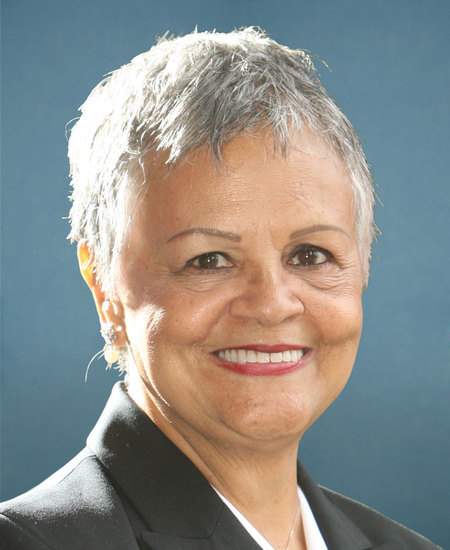
Rep. Bonnie Watson Coleman
Sponsored bills
Maddy summaryThis bill establishes a 12-member National Council on African American History and Culture within the National Endowment for the Humanities (NEH). The Council, appointed by the President with Senate approval, will include experts in African American history and culture who are not federal employees, with balanced representation (6 Democrats, 6 Republicans) and attention to diversity. Its duties include evaluating NEH programs related to African American history, preparing annual reports, and making recommendations to improve preservation and celebration efforts. The Council will operate for 10 years, with members serving five-year terms and receiving partial compensation for their service.
Maddy summaryHR 7566 establishes a federal pilot program to provide competitive grants for job guarantee programs in high-unemployment areas. Eligible entities (like states, tribes, or rural communities with unemployment at least 150% of the national rate) must offer jobs to all adults (18+) residing in their area, with wages meeting or exceeding prevailing rates, health insurance comparable to federal benefits, and paid family/sick leave. The program requires supportive services (childcare, training), prohibits displacing existing workers, and mandates annual audits. It runs for up to 3 years in 15 pilot sites, with evaluations tracking impacts on employment, poverty, and environmental outcomes.
Maddy summaryHR 7545 prohibits U.S. security assistance funds from being used to support Israeli military actions that violate international law, specifically targeting the detention of Palestinian minors, destruction of Palestinian property, and unilateral annexation of occupied land. It requires annual certifications from the State Department confirming U.S. funds aren't supporting these activities and mandates detailed reports on Israeli detention practices, property seizures, and settlement compliance. The bill directly affects U.S. security aid to Israel, including Foreign Military Financing and offshore procurement funds for defense articles. Key mechanisms include funding restrictions, annual reporting requirements, and a GAO report analyzing how offshore procurement funds impact Israel’s military budget and settlement activities.
Maddy summaryThis bill authorizes the U.S. Mint to produce two types of commemorative $2.50 coins for the 250th anniversary of the Declaration of Independence: a circulating coin for everyday use and a numismatic (collector) coin. Both would feature designs based on the 1926 Sesquicentennial coin - showing allegorical liberty holding the Declaration on one side and Independence Hall on the other - with "1776-2026" inscriptions. The bill requires the Mint to issue these coins by July 4, 2026, if technically and economically feasible, but does not mandate their production or affect any specific groups beyond the public who may purchase them.
Maddy summaryHRES 1058 is a non-binding House resolution recognizing the federal government’s duty to develop a Transgender Bill of Rights. It calls for specific policy changes, including amending civil rights laws to explicitly prohibit discrimination based on gender identity in employment, housing, and public accommodations; protecting access to gender-affirming medical care; and streamlining legal recognition of gender identity on federal documents like passports and voter registration. The resolution also proposes expanding protections for transgender and nonbinary individuals in healthcare, education, immigration, and correctional facilities, while emphasizing community-led policy development. As a resolution, it does not create new law but sets a framework for future legislative action.
Department of Homeland Security Appropriations Act, 2026 This bill provides FY2026 appropriations for various agencies and offices within the Department of Homeland Security (DHS), except for U.S. Immigration and Customs Enforcement (ICE), U.S. Customs and Border Protection (CBP), and management and oversight activities of the Office of the Secretary. Specifically, the bill provides appropriations to DHS for the Federal Protective Service, the Office of Inspector General, the Transportation Security Administration, the U.S. Coast Guard, the U.S. Secret Service, the Cybersecurity and Infrastructure Security Agency, the Federal Emergency Management Agency (FEMA), U.S. Citizenship and Immigration Services, the Federal Law Enforcement Training Centers, and the Science and Technology Directorate. The bill does not provide appropriations for some agencies and activities that have been funded in prior DHS appropriations acts, including ICE, CBP, and management and oversight activities of the Office of the Secretary.
Maddy summaryThe WORK to Save Lives Act requires the Occupational Safety and Health Administration (OSHA) to issue two types of guidance within 270 days of enactment. For private employers (excluding the U.S. Postal Service), OSHA must provide non-mandatory guidance on acquiring naloxone kits and offering annual employee training for opioid overdose emergencies. For all federal agencies (including the Veterans Health Administration), OSHA must issue mandatory regulations requiring agencies to maintain naloxone kits and provide annual employee training on their use. The bill directly affects private businesses and federal workplaces by establishing specific, time-bound requirements for opioid overdose response preparedness.
Maddy summaryThis bill requires U.S. Immigration and Customs Enforcement (ICE) and Customs and Border Protection (CBP) to visibly display license plates on all vehicles used for civil immigration enforcement activities, funded by federal money. It directly affects ICE and CBP operations by mandating that these vehicles show license plates at all times, making their presence more transparent to the public. The key provision ties federal funding for such vehicles to this transparency requirement, ensuring compliance with the rule. The bill aims to increase public awareness of enforcement vehicle locations during civil immigration activities.
Maddy summaryThe PART Act requires new vehicles to have catalytic converters marked with a unique identification number that links directly to the vehicle's identification number, stored in a law enforcement-accessible database. It establishes a $7 million grant program to help repair shops, dealers, law enforcement, and fleet owners purchase equipment for marking converters with visible, durable identifiers (using die or pin stamping and high-visibility paint). The bill also mandates that businesses buying catalytic converters keep detailed seller records (including vehicle information) for two years and use traceable payments, banning cash or cryptocurrency transactions. Additionally, it creates new federal criminal penalties for stealing or trafficking in catalytic converters, with potential sentences of up to five years in prison.