

Maddy summaryThis bill prohibits using federal funds - including the Judgment Fund or victim compensation programs - to pay any individual prosecuted for the January 6 Capitol attack, even if later pardoned. It also bans creating new compensation funds for these individuals and stops refunds of court-ordered payments like restitution or fines from being returned to rioters. Any funds that would have been refunded must instead be transferred to the Architect of the Capitol. The law directly affects those convicted or pardoned for involvement in the Capitol attack, blocking taxpayer-funded compensation for their actions.
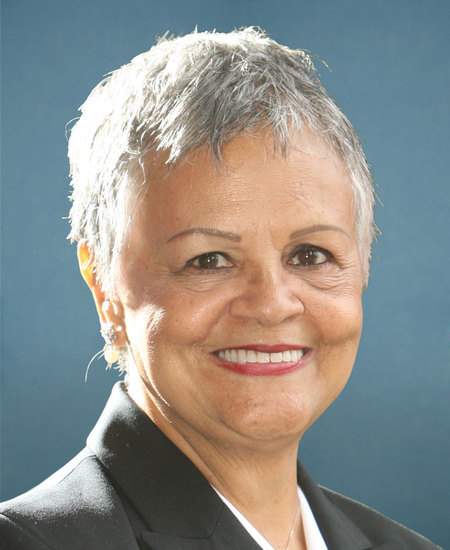
Rep. Bonnie Watson Coleman
Sponsored bills
Maddy summaryHR 7685, the Healthy Hair Act, amends the Federal Food, Drug, and Cosmetic Act to classify hair straightening or smoothing products containing formaldehyde (or formaldehyde-releasing substances) as "adulterated" when sold across state lines after an 180-day grace period. It directly affects hair product manufacturers, salons, and workers who use or handle these products. The bill mandates a two-part study by the FDA and NIOSH on health impacts like cancer and respiratory issues for salon workers exposed to formaldehyde, requiring an initial report within one year and a final report within two years and two months. The study will inform future regulatory actions but does not ban formaldehyde products immediately.
Maddy summaryThe Ceasefire Compliance Act of 2026 establishes requirements for Israel to comply with the October 10, 2025, ceasefire agreement, including allowing sufficient humanitarian aid into Gaza, halting military operations in Gaza, preventing settler violence, and supporting Palestinian governance. The bill requires the US government to submit quarterly reports certifying Israel's compliance with these conditions, with potential restrictions on US defense sales to Israel if violations occur. If Israel fails to meet the requirements, the US would prohibit the sale, export, or transfer of US-origin defense articles for use in the West Bank or Gaza. The bill also creates an end-use monitoring group to track if US defense articles are being used in those areas, with a 5-year sunset provision. This legislation directly affects US-Israel defense relations and the flow of military assistance.
Maddy summaryThe Head Start for America's Children Act amends the Head Start Act to enhance early childhood education services for low-income children, with specific provisions to improve culturally responsive programming for Native American and Native Hawaiian communities. It increases funding for Head Start programs, including $91.575 million for transportation, $37.5 million for workforce development, and $863 million for extended operations to provide full calendar year services. The bill updates definitions throughout the law to use more inclusive language, replacing "limited English proficient" with "children who are developing English proficiency," and establishes new requirements for staff compensation and benefits to improve recruitment and retention. Native American Head Start programs and migrant/seasonal programs are exempt from certain requirements, such as the full calendar year service requirement.
Maddy summaryHR 7591 requires the U.S. Department of Education to develop and distribute annual firearm safety best practices to schools, focusing on secure storage methods and suicide prevention resources. The bill mandates that local school districts create community-specific guidance incorporating these best practices, to be shared with students, parents, and staff annually before the start of each school year. It specifies that materials must include practical storage solutions (like locks and safes), mental health resources, and neutral information about firearm safety without promoting or discouraging gun ownership. The law directly affects schools receiving federal funding under the Elementary and Secondary Education Act, aiming to reduce firearm-related injuries and suicides through education, not by changing gun ownership laws.
Maddy summaryHRES 1065 is a House resolution condemning President Donald Trump for reposting a video on February 5, 2026, that depicted former President Barack Obama and First Lady Michelle Obama as primates - a depiction described in the resolution as a racist trope. The resolution formally censures Trump for this post, which violated his oath to uphold the Constitution, and calls on him to apologize. It directly affects the President by formally rebuking his conduct as head of the executive branch. The resolution has no legal effect but serves as a symbolic rebuke by the House of Representatives.
Maddy summaryHR 7543, the Plastic Pellet Free Waters Act, prohibits plastic pellets and pre-production plastic materials from being discharged into waterways through wastewater, spills, or runoff from specific facilities. It directly affects plastic manufacturing, molding, packaging, and transportation facilities regulated under existing environmental rules. Within 60 days of enactment, the EPA must issue a rule banning these discharges and update all relevant wastewater, stormwater, and performance standards in permits. The law requires all permits and standards for these facilities to reflect the new ban, ensuring plastic pellets cannot enter water systems. This is a concrete regulatory change to prevent plastic pollution at its source.
Maddy summaryHRES 1061 is a symbolic resolution recognizing the cultural and historical significance of Lunar New Year in 2026. It does not create new laws or policies, but formally acknowledges Lunar New Year's origins (over 4,000 years in China), its celebration as Seollal in Korea and Tết in Vietnam, and its observance by millions of Asian Americans and others in the U.S. The resolution expresses respect for Asian Americans and extends holiday wishes for a "happy and prosperous new year" during the Year of the Horse. As a non-binding resolution, it has no legal effect or direct impact on any individuals or groups.
Maddy summaryThis bill requires states to cover 12 annual telehealth mental health visits for Medicaid enrollees who were recently incarcerated in a public institution and are under court-ordered home confinement. It amends Medicaid law to mandate this coverage specifically for individuals released from prison and subject to home confinement, effective after the bill's enactment. The provision applies to all states operating under Medicaid plans or waivers, ensuring consistent access to mental health support during the reentry phase. It directly affects formerly incarcerated individuals transitioning from prison to home supervision, focusing on accessible mental health care through telehealth. The policy change is limited to Medicaid-covered telehealth visits during the period of home confinement, with no additional funding specified.
Maddy summaryThis bill requires the Department of Defense to obtain a clean audit opinion for its financial statements or face automatic spending reductions. If the Pentagon fails to achieve this by fiscal year 2026, non-exempt programs would lose 0.5% of funding in the first year of failure and 1% annually thereafter, with cuts applied across all programs within the affected department. Military personnel, reserve, National Guard, and Defense Health Program accounts are exempt from these reductions. Any funds saved through these cuts would be deposited into the General Fund for deficit reduction, not redirected to military operations.