

End For-Profit Prisons Act of 2023 This bill establishes a framework to phase out existing Bureau of Prisons (BOP) and U.S. Marshals Service contracts with private companies for correctional facilities and community confinement facilities (e.g., halfway houses). The bill requires the Department of Justice to develop guidelines for community reintegration programs at community confinement facilities. In carrying out prerelease and reentry planning procedures, the bill requires the BOP to ensure prisoners receive information and counseling about criminal record expungement; educational, employment, and treatment programs; and applications for public assistance programs, a driver's license, and voter registration. The BOP must also provide prisoners with postrelease information about fines, assessments, surcharges, restitution, and other penalties.
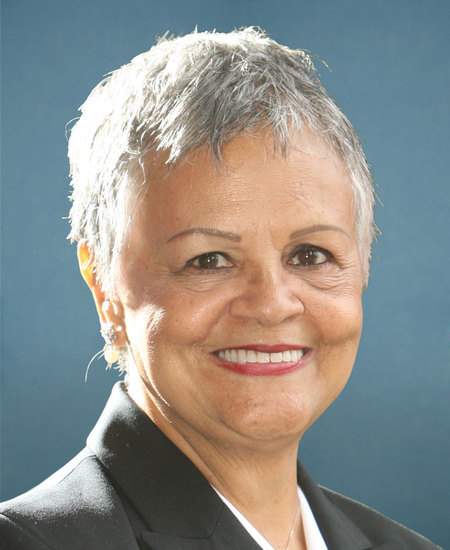
Rep. Bonnie Watson Coleman
Sponsored bills
Maddy summaryHR 408 amends the Fair Credit Reporting Act to remove certain eviction records from consumer credit reports. It specifically excludes eviction information (including related debt collection) for actions occurring between March 13, 2020, and 30 days after the end of the federal COVID-19 emergency. This applies to tenants in residential properties whose landlords initiated evictions during that period, excluding mortgage foreclosures. The change affects credit reports issued after the bill's enactment date, preventing these pandemic-era evictions from negatively impacting credit scores.
Maddy summaryHR 430, the Lunar New Year Day Act, would designate the Lunar New Year as a federal holiday by adding it to the official list of holidays observed by federal employees. This change would require federal offices to close and federal employees to receive a paid day off on the actual date of the Lunar New Year each year. The holiday would be observed annually on the date the Lunar New Year falls, which varies yearly based on the lunar calendar. This bill directly affects federal workers and operations, aligning with existing federal holiday practices.
Maddy summaryHR 286, the Health Care Providers Safety Act of 2023, provides federal grants to healthcare providers to improve security at their facilities. The bill authorizes the Secretary to fund security services and physical/cyber security enhancements, including video surveillance, data privacy measures, and structural improvements. These grants directly help healthcare facilities, personnel, and patients by addressing safety concerns. The law specifies that funds must be used for necessary security costs to ensure safe access to healthcare services. It does not create new mandates but offers financial support for security upgrades.
Maddy summaryHRES 42 is a symbolic resolution expressing the House's desire for the U.S. Postal Service's Citizens' Stamp Advisory Committee to consider issuing a commemorative stamp honoring late Congressman Elijah E. Cummings (D-MD). It does not create new law or affect any specific people or policies - it only requests the USPS committee recommend a stamp to the Postmaster General. The resolution highlights Cummings' career, including his service as Oversight Committee Chair and advocacy for issues like drug pricing and postal service stability. As a non-binding resolution, it has no legal effect but aims to formally recognize his legacy through a commemorative stamp.
Maddy summaryHR 396, the Closing the Bump Stock Loophole Act of 2023, defines "bump stock" as any device or modification that increases the firing rate of a semi-automatic weapon to mimic a machine gun. The bill amends federal tax and firearms laws to classify bump stocks as prohibited devices under the National Firearms Act, requiring existing owners to register them within one year of enactment. It directly affects individuals who currently own bump stocks by mandating registration to avoid future possession prohibitions. The law takes effect immediately for new sales but provides a one-year grace period for existing owners to comply with registration requirements.
Maddy summaryHRES 36 is a symbolic resolution supporting Korean American Day, introduced by multiple House members on January 13, 2023. It honors the 120th anniversary of the 1903 arrival of the first large wave of Korean immigrants to the U.S. and recognizes Korean Americans' contributions to U.S. society, economy, and the U.S.-South Korea alliance. The resolution urges all Americans to observe Korean American Day to appreciate these contributions but does not create new laws or affect any specific group through policy changes. It is a commemorative measure without binding requirements.
Maddy summaryHRES 30 is a ceremonial House resolution recognizing two milestones: the 94th anniversary of Dr. Martin Luther King, Jr.'s birth (January 15, 1929) and the 40th anniversary of the federal Martin Luther King, Jr. Holiday (observed January 16, 2023). It contains no policy changes or binding requirements, as it is purely commemorative. The resolution urges the House to observe both dates and encourages the public to honor Dr. King’s legacy and his vision of equality. It does not affect any individuals, groups, or government programs.
Maddy summaryHRES 35 is a procedural resolution that would amend House rules to require the House of Representatives to continue broadcasting the full chamber during legislative sessions, maintaining the same level of transparency as the broadcasts provided from January 3-6, 2023. This change would directly affect House broadcasting procedures, ensuring floor proceedings are covered as comprehensively as they were during the opening days of the 118th Congress. The resolution does not alter legislative content but mandates a specific standard for public access to chamber proceedings.
Maddy summaryHRES 31 is a ceremonial resolution honoring Alpha Kappa Alpha Sorority, Inc.® for its 115th anniversary of service, directly recognizing the sorority and its members. The resolution highlights the organization’s founding in 1908, its core values, global membership (over 120,000 members across 1,000+ chapters), and its 2022-2026 service initiatives focused on community empowerment. It has no policy or legal effect - it simply expresses congressional recognition through a formal resolution. This is a symbolic gesture, not a legislative action affecting any policy or funding.