

Maddy summaryHR 652, the Zero Food Waste Act, establishes a $650 million EPA grant program to reduce food waste by 50% by 2030 (compared to 2010 levels). It directly affects states, local governments, tribes, and nonprofits that apply for grants to fund food waste reduction activities, such as studying waste generation, collecting data, implementing diversion programs (like charging higher fees for landfill disposal), or supporting anaerobic digestion projects. Grants require grantees to collect data, publish reports, and prioritize projects in communities disproportionately affected by waste-related environmental or health impacts. The bill mandates annual EPA reports to Congress on progress toward the 50% reduction target.
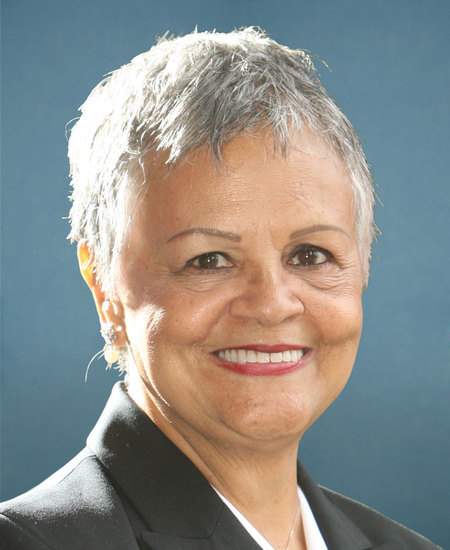
Rep. Bonnie Watson Coleman
Sponsored bills
Maddy summaryHRES 119 is a symbolic resolution expressing the U.S. House of Representatives' support for designating March 2023 as "Music in Our Schools Month." It highlights music's cultural importance, historical role in education, and documented benefits for student engagement and development. The resolution specifically notes inequitable access to music programs in underserved schools (including those in urban/rural areas, high-poverty districts, and majority-Black, Hispanic, or Native American communities). As a non-binding resolution, it does not create new policies, funding, or mandates - it solely serves to publicly recognize the value of music education.
Maddy summaryHR 927, the Supreme Court Ethics Act, establishes new ethics rules and oversight for Supreme Court justices. It requires the Judicial Conference to create a binding code of conduct within one year and mandates the appointment of an Ethics Investigations Counsel to receive public complaints, investigate potential violations, and issue annual public reports. The bill also requires justices to publicly disclose their reasons for recusing themselves or denying recusal motions in cases. These provisions directly affect Supreme Court justices by creating a formal process for handling ethics concerns and increasing transparency around their conduct.
Maddy summaryThe Child Care for Every Community Act establishes a federal program to provide universal, high-quality child care and early learning services for all young children not yet required to attend school. It provides 90% federal funding for most programs (100% for migrant/seasonal farmworkers and Native American children) with a sliding fee scale based on family income (maximum 7% of income). The bill requires states, tribes, and localities to develop comprehensive plans ensuring services are accessible, culturally appropriate, and meet national quality standards. It specifically focuses on serving low-income children, children with disabilities, dual language learners, homeless children, and children in foster care. The program emphasizes coordination with schools and other community services to support children's development and school readiness.
Maddy summaryHR 926 would require the Supreme Court to establish a code of conduct for justices within 180 days of enactment, along with procedures for handling ethics complaints against them. The bill mandates minimum disclosure standards for gifts, income, and reimbursements received by justices and their law clerks, and requires justices to recuse themselves when they or their family received gifts from parties in a case. It would also require parties and amici curiae to disclose gifts given to justices and lobbying contacts related to justices' nominations, and establish a judicial investigation panel to review complaints against justices. The legislation aims to increase transparency in Supreme Court ethics processes and provide clearer recusal standards for justices.
Maddy summaryThis bill makes significant changes to US corporate tax rules to prevent tax avoidance through foreign operations. It requires corporations to calculate foreign income tax liabilities country-by-country, limits interest deductions for large international financial reporting groups, and modifies rules for "inverted corporations" (where US companies move tax residence abroad). The bill also creates new rules treating foreign corporations managed primarily in the US as domestic corporations for tax purposes. These changes aim to close tax loopholes related to outsourcing and foreign tax planning.
Maddy summaryHR 969 (GAAME Act of 2023) requires public schools receiving federal funding under the Elementary and Secondary Education Act to provide structured, standards-aligned arts and music education. It mandates that schools offer sequential arts education (defined as dance, media arts, theater, and visual arts) taught by state-certified arts educators, and sequential music education taught by state-certified music educators. The bill also directs targeted funding for schools to support certified educators, professional development, supplies, instruments, and other resources needed for these programs. This directly affects all public elementary and secondary schools participating in federal education programs, aiming to ensure consistent access to arts and music instruction.
Maddy summaryHR 971, the Black History Matters Act, directs the Director of the National Museum of African American History and Culture to study Black history education in public elementary and secondary schools. The 3-year study will identify which schools require Black history curriculum, assess teaching quality through discussions and materials, and analyze how schools measure student understanding. It does not change school requirements but will produce a report for Congress on the current state of Black history education, including coverage of topics like slavery, Reconstruction, and systemic racism. The bill specifically defines "Black history education" as teaching the history of African Americans, including struggles against racism and discrimination. This is a procedural study bill, not a policy requiring new educational mandates.
Presidential Tax Transparency Act This bill requires the President, the Vice President, and certain candidates for President and Vice President to disclose federal income tax returns for the ten most recent taxable years. The returns must be disclosed to the Federal Election Commission (FEC), which must make the returns publicly available after redacting information that is necessary for protecting against identity theft, such as Social Security numbers. If the tax returns are not disclosed to the FEC as required by this bill, the Internal Revenue Service must provide the returns to the FEC upon receiving a written request from the FEC.
This resolution condemns Azerbaijan's blockade of the Lachin Corridor to Nagorno-Karabakh (also known as Artsakh). The resolution calls on the U.S. government to work with international partners to deploy observers to explore opportunities for security and peaceful development. The resolution also calls on the President to (1) suspend military and security assistance from the United States to Azerbaijan, and (2) fully enforce a U.S. law prohibiting certain bilateral assistance to Azerbaijan until Azerbaijan takes demonstrable steps to cease all offensive uses of force against Armenia and Nagorno-Karabakh.